
Lagos is a city defined by relentless ambition, aspiring to global architectural standards yet consistently challenged by its foundational infrastructure.
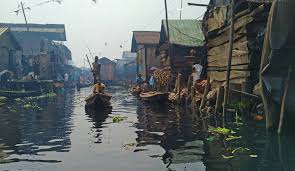
This contrast between aspiration and reality is starkly illustrated by recent urban renewal efforts. Beneath the rising glass towers and the refurbished spans of the Third Mainland Bridge, a familiar and grim ritual of demolition is unfolding. In the first weeks of 2026, the Lagos State government once again targeted Makoko, often called the “Venice of Africa”.
The focus was not on preserving its unique, stilt-supported heritage, but on dismantling it, forcibly displacing communities in the name of progress.
According to Nextier, while the Lagos State Government (LASG) frames the demolition as a necessary intervention for public safety and urban renewal, the operation has descended into a humanitarian crisis. The recent use of force, specifically the deployment of tear gas in a densely populated aquatic slum, has left the city’s most vulnerable residents paying the ultimate price for “megacity” status.
The catalyst for the latest wave of destruction is the high-tension power lines that crisscross the lagoon. Officials argue that structures built within the 100-metre buffer zone represent a ticking time bomb of electrocution and fire. Gbolahan Oki, the Permanent Secretary of the Office of Urban Development, has been firm: the state is “permitting” 100 metres where federal law demands 250, presenting the demolition as an act of administrative mercy. However, the reality on the water tells a different story. Residents and civil society groups allege that the state reneged on a negotiated 30-metre setback. Instead, amphibious excavators, the dreaded “swamp buggies”, pushed far beyond the agreed limits, razing homes that were thought to be safe.
The most harrowing reports emerge from the methods of enforcement. On January 5, the demolition squad, backed by police, allegedly met community resistance with a barrage of tear gas. In the cramped, poorly ventilated confines of wooden shacks and canoes, the chemical agent had a concentrated, devastating effect. Reports have surfaced of at least two children, an infant and a toddler, fighting for their lives in intensive care after inhaling the fumes. Social media has been flooded with heartbreaking footage of parents frantically paddling through the lagoon, clutching limp, coughing children, their eyes streaming. These videos, which have garnered thousands of views, provide a visceral counter-narrative to the government’s sterile press releases about “urban planning.”
This cycle of displacement is far from an isolated incident. For decades, Makoko has existed under the persistent shadow of the bulldozer. From the 2012 evictions that resulted in the tragic death of a local chief to the more recent clearings in Oworonshoki, the Lagos State Government’s playbook has remained grimly consistent. The process typically begins with sudden eviction notices served in a matter of hours or days, flagrantly ignoring the multi-week windows required by international law. This is followed by a total lack of resettlement plans, leaving thousands homeless and forcing entire families to seek refuge in open canoes on the lagoon. Furthermore, the operations often result in total economic ruin for these fishing communities, as the destruction of their homes frequently includes the seizure or wrecking of their boats, their sole means of survival. The humanitarian cost is compounded by the timing. These actions took place during a period of extreme economic hardship in Nigeria, with inflation and rising fuel costs pushing the urban poor to their breaking point. To destroy a home is one thing; to do so with tear gas while families are sleeping in canoes is quite another.
If Lagos is to truly become a world-class city, it must decide whether its poor are citizens to be protected or obstacles to be cleared. The current strategy of forced eviction without resettlement violates both the Nigerian Constitution and international human rights treaties to which Nigeria is a signatory, such as Article 27 of The Convention on the Rights of the Child (CRC), Article 11(1) of The International Covenant on Economic, Social and Cultural Rights (ICESCR), among others. True urban renewal involves “slum upgrading”, providing sanitation, legal tenure, and safety education, rather than the blunt-force trauma of the bulldozer. Until the state government adopts a more empathetic approach, the “aesthetic outlook” of the waterfront, which officials so desire, will continue to be stained by the tears of its youngest inhabitants.
