

After four years in the banking industry, Nigerian chef Ifeoma Ebelechukwu Emeghebo, professionally known as Chef Ifyy, followed her passion for food and emerged as the winner of the 2026 Akwaaba Jollof Rice War. Also a second runner-up at the 2026 Maggi Chef of the Year competition, she is building a culinary identity rooted in flavour, creativity and the preservation of African food heritage.
For Ifeoma Ebelechukwu Emeghebo, popularly known as Chef Ifyy, the journey into professional cooking began long before she imagined that food would become her career. What started as a childhood fascination with preparing meals gradually developed into a passion that would eventually take her away from the banking industry and into the competitive world of professional culinary arts.
A Nigerian from Anambra State and currently based in Lagos, Chef Ifyy is the woman behind Chefifyy’s Bistro, where she continues to develop her culinary identity as a residential chef with five years of professional experience. Her story is one of courage, self-discovery, and the determination to turn a lifelong passion into a profession.
Today, her name is associated with two significant achievements in Nigeria’s culinary scene: winning the 2026 Akwaaba Jollof Rice War and emerging as second runner-up at the 2026 Maggi Chef of the Year competition.
A childhood memory that became a lifelong passion
Growing up as one of six children in a loving family, Chef Ifyy describes her childhood as a period that instilled in her the values of family, hard work, respect, and perseverance.
Although her academic journey took her in a different direction, her connection with food began remarkably early. She recalls discovering her passion for cooking at about nine years old during a family visit to the village.
One Sunday afternoon, she decided to prepare banga stew, a familiar meal in her family. With the resourcefulness and imagination of a young child, she improvised a cooking pot from an empty tomato tin, placed it on a makeshift fire stand, cut ugu leaves with her little hands, and stirred the stew with a stick.
The experience may have appeared ordinary to those around her, but it left a lasting impression on her.
That childhood experiment became an early expression of a passion that would continue to grow. More importantly, it introduced her to the satisfaction of preparing food and seeing others enjoy it.
Her interest became even more evident during her university years. While studying Psychology at Ebonyi State University, she frequently prepared meals for friends, who would visit her room to enjoy her cooking. Their affection for her meals earned her the nickname “Mama Ify.”
For her, cooking gradually became more than a domestic activity. It became a way of expressing love, creating memories and bringing people together.
From the banking industry to the professional kitchen
Despite her natural passion for cooking, Chef Ifyy did not initially consider becoming a professional chef. Like many young Nigerians, she was more familiar with conventional career paths such as medicine, law and engineering.
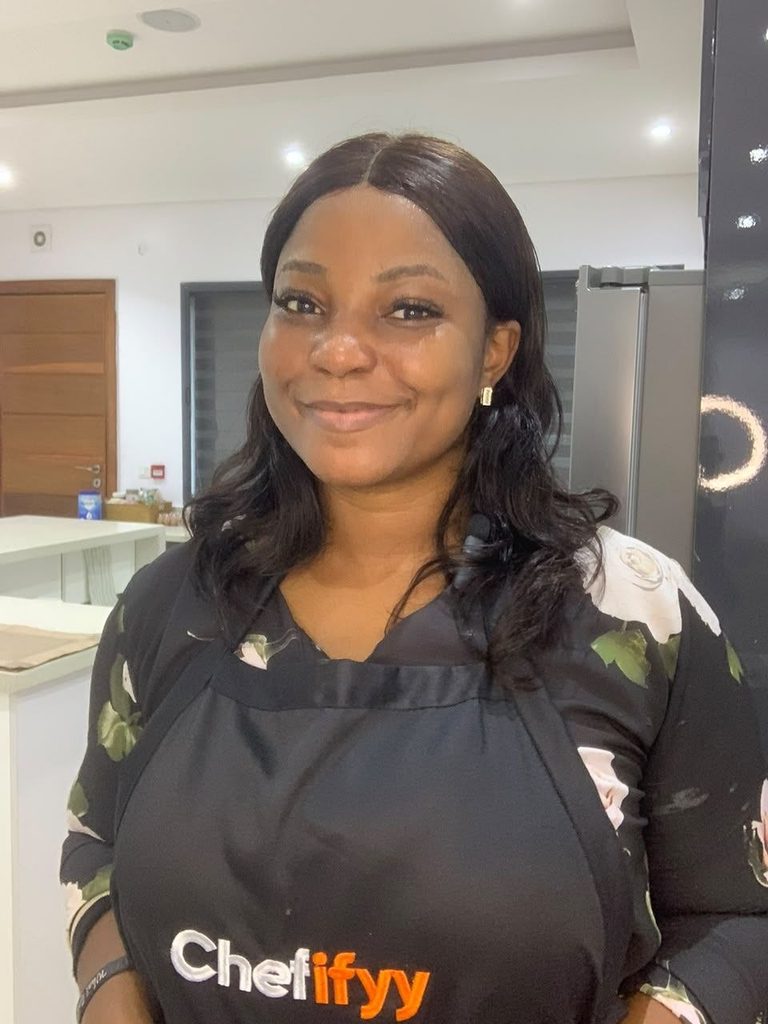
After studying Psychology, she entered the banking industry, where she worked for approximately four years. However, her passion for food remained alive even while she pursued a corporate career.
Her colleagues frequently requested that she prepare meals for office meetings, birthdays and other celebrations. Without fully recognising it at the time, she was already developing a reputation for her cooking and building relationships through food.
Her eventual transition into professional cooking was influenced by a friend, Mercy, popularly known as Chef Mea, who had attended culinary school. Through pictures and updates shared on WhatsApp, Chef Mea introduced her to the possibilities of formal culinary education.
Curious about the profession, Chef Ifyy reached out to her friend, who provided guidance on how to begin. After resigning from her banking job, she travelled to another state to pursue formal culinary training.
That decision marked a defining stage in her journey.
She subsequently gained practical experience working under a head chef, while continuing to develop her knowledge through research, experimentation and personal study. She believes that culinary school provides an important foundation, but professional excellence requires continuous learning beyond the classroom.
For Chef Ifyy, becoming a good chef is a lifelong process of acquiring knowledge, refining skills and remaining open to new experiences.
A culinary philosophy built around flavour
Chef Ifyy describes contemporary cuisine as her area of strength, although her cooking remains strongly influenced by Nigerian flavours and indigenous ingredients.
She enjoys exploring familiar dishes, experimenting with ingredients and discovering creative ways to present traditional meals without losing their original identity.
Her culinary approach reflects a balance between tradition and innovation. She believes that creativity should go beyond attractive presentation; a successful dish must also deliver exceptional taste, communicate a story and leave a memorable impression.
One of her strongest convictions is that flavour must never be compromised.
She takes time to experiment, taste, adjust and refine her dishes, paying close attention to how ingredients interact. Her personal philosophy is captured in the statement: “My palate is my superpower.”
For her, recipes are useful guides, but a chef’s understanding of ingredients and ability to recognise balanced flavours ultimately determine the quality of a meal.
This philosophy became particularly evident during the 2026 Akwaaba Jollof Rice War, where she demonstrated that outstanding Jollof rice does not necessarily require unusual or expensive ingredients. Rather, patience, technique and attention to detail can transform familiar ingredients into an exceptional meal.
Akwaaba Jollof Rice War: The journey to the Jollof crown
Chef Ifyy’s introduction to the Akwaaba African Travel Market and its Jollof Rice War came through her membership of the Association of Professional Chefs Nigeria (APCN).
When the opportunity was presented to members of the association, she immediately recognised it as a platform to test her abilities, showcase her culinary creativity and connect with other professionals.
Her participation in the 2026 edition, identified in her profile as the 22nd Akwaaba edition and the ninth edition of the Jollof Rice War, marked an important milestone in her professional journey. She competed alongside other chefs, bringing her interpretation of Nigerian Jollof to an audience that included judges and event participants.
Interestingly, one of her motivations was to discover whether the compliments she had regularly received about her cooking would stand up to the judgment of an unfamiliar audience.
She wanted to move beyond the reassuring opinions of friends and acquaintances and allow people to assess her cooking on its own merit.
The competition gave her that opportunity, and the outcome exceeded her expectations.
Chef Ifyy emerged as the winner of the 2026 Akwaaba Jollof Rice War, earning the affectionate title of Jollof Queen.
For her, the victory was especially meaningful because the appreciation came from a wider group of people who tasted and scored the food. It was confirmation that her cooking could connect with people beyond her immediate circle.
She also remembers the experience of cooking alongside chefs from established culinary establishments and being told afterwards that she had remained remarkably calm throughout the competition. It was a quality she had not even realised she was displaying.
The secret behind her winning Jollof
When discussing what made her Jollof stand out, Chef Ifyy does not attribute her victory to an extraordinary or unusual ingredient.
Instead, she points to patience and the deliberate development of flavour.
Her approach involved giving familiar ingredients such as onions, garlic, ginger, bay leaves, and other aromatics sufficient time to release their flavours. She believes Jollof rice is not a dish to be rushed, and every stage of preparation deserves careful attention.
Rather than relying on expensive ingredients or complicated techniques, she concentrated on bringing out the best in what was already available.
For her, the secret was understanding the ingredients, respecting the cooking process and allowing the flavours to develop naturally.
Her competition experience also reinforced the importance of teamwork. She particularly acknowledged her kitchen assistant, Ukamaka Nnakwe, whose support helped her manage the time constraints and logistical challenges of the competition.
With some equipment positioned far from the cooking station, preparation and time management were essential. The coordination between the two women helped ensure that the cooking process remained organised and efficient.
The experience strengthened her belief that although cooking allows an individual chef to express creativity, successful execution often depends on teamwork.
A victory that reached beyond the competition
The impact of Chef Ifyy’s Akwaaba victory extended beyond the event itself.
She was pleasantly surprised to receive calls from people in different parts of Nigeria and even from the United Kingdom and Thailand who had watched the competition and followed her performance.
The exposure introduced her cooking to a wider audience and created opportunities to connect with people who appreciated her work.
She also received invitations to prepare meals for some individuals who had tasted and enjoyed her Jollof at the event.
The title of Jollof Queen remains one of the most cherished parts of the experience, but the professional visibility and relationships that followed have also been significant.
Beyond the Akwaaba victory, her emergence as second runner-up at the 2026 Maggi Chef of the Year competition further strengthened her growing profile in the Nigerian culinary industry.
Together, these achievements represent important milestones in a journey that began with a young girl preparing banga stew in an improvised tomato-tin pot.
Jollof rivalry and the celebration of African identity
As a proud Nigerian chef, Chef Ifyy remains firmly appreciative of Nigerian Jollof. However, her understanding of the popular African food rivalry extends beyond national competition.
Having tasted Jollof from Ghana and Togo, she appreciates the different interpretations, ingredients and cooking traditions that make the dish special across the continent.
She considers the rivalry a beautiful expression of cultural pride and believes it should encourage culinary exchange rather than division.
For her, the debate over whose Jollof is best provides an opportunity to celebrate African food traditions, share knowledge and introduce different culinary identities to wider audiences.
She sees the popularity of Jollof rice as an important opportunity to promote African cuisine and strengthen the continent’s culinary presence internationally.
Her own travels to Ghana, Togo and the Benin Republic have also been influenced partly by her interest in experiencing their food and culinary cultures.
She believes that food can inspire curiosity about a destination and encourage people to travel to experience its culture firsthand.
African cuisine as a tourism asset
Chef Ifyy believes African cuisine, cultural identity and tourism are closely connected. In her view, food is one of the strongest expressions of a people’s history, traditions, heritage and way of life.
She argues that visitors can understand a destination more deeply by experiencing its food, making indigenous cuisine an attraction in its own right.
She also believes African chefs have an important responsibility to preserve traditional dishes, showcase indigenous ingredients and introduce African food stories to international audiences.
However, she cautions against placing the entire responsibility on chefs. Governments, tourism boards, hotels, restaurants, food businesses and other hospitality stakeholders must work together to develop culinary tourism.
She advocates more opportunities for indigenous chefs to showcase their abilities through food festivals, competitions, culinary education, grants and international collaborations.
She also wants tourism boards to incorporate local cuisine more deliberately into destination marketing campaigns, while hotels and restaurants should give greater attention to indigenous dishes and locally sourced ingredients.
Chef Ifyy expressed particular appreciation for initiatives supporting young people who participate in culinary activities, including the support she has observed from the First Lady of Lagos State for students involved in the cooking competition.
She believes such initiatives can inspire more young people to explore professional cooking and help develop the next generation of culinary talent.
Building a sustainable culinary brand
Beyond competitions and public recognition, Chef Ifyy is focused on developing Chefifyy’s Bistro into a recognised culinary brand.
As a residential chef, she is interested in creating memorable food experiences while maintaining standards of quality, creativity and consistency.
She identifies rising ingredient prices, equipment costs, energy expenses and logistics as some of the major challenges confronting Nigerian chefs and culinary entrepreneurs. Limited access to funding, professional training and modern kitchen facilities also makes it difficult for small culinary businesses to grow.
She believes the industry needs stronger collaboration among chefs, private organisations, government institutions and other stakeholders to create a more sustainable and competitive culinary environment.
For her, creativity must be supported by structure. Proper planning, standardised recipes, fresh ingredients, hygiene, teamwork and attention to detail are essential to maintaining consistency.
She also values customer feedback, seeing it as an important tool for improving both food quality and the overall dining experience.
Her philosophy is that creativity may attract customers, but consistency, quality and trust are what encourage them to return.
The woman behind the chef
Outside the kitchen, Chef Ifyy has a strong interest in teaching and sharing knowledge. Coming from generations of teachers, she finds satisfaction in helping others acquire skills and watching them grow.
She also enjoys travelling, exploring different cultures and cuisines, discovering new food ideas and experiencing activities that broaden her perspective.
Two major influences in her personal and professional development are her mother and the owner of Tico Culinary School, who also served as her head chef instructor.
She credits her mother with providing the values, support, and strength that have shaped her character. The owner of Tico Culinary School, meanwhile, played an important role in developing her technical abilities, confidence, discipline and understanding of professional culinary standards.
Her advice to aspiring chefs is to remain determined, curious and willing to learn from anyone, regardless of their level of experience.
She believes no chef should become so confident in their knowledge that they stop learning. Whether the opportunity comes from an experienced professional, a fellow student, a local cook or a grandmother in a village, valuable knowledge should always be welcomed.
Looking towards the future
Over the next five years, Chef Ifyy hopes to establish Chefifyy’s Bistro as a recognised name associated with quality, creativity, consistency and innovation.
Her ambitions extend beyond building a successful food business. She wants to create opportunities for others through teaching and mentorship, contribute to the development of young culinary talents and play a role in taking African cuisine to a wider global audience.
She also wants her work to make a lasting difference in people’s lives, building something meaningful that will outlive her immediate achievements.
Her message to the world is that African cuisine should embrace innovation without abandoning its roots.
Traditional cooking techniques, indigenous ingredients, distinctive flavours and cultural food practices are part of Africa’s identity and heritage. They should be preserved, celebrated and presented confidently to the world.
As she puts it, African cuisine does not need to lose its identity to earn a place on the global culinary stage. Its uniqueness is its strength.
From a nine-year-old girl preparing banga stew in an improvised cooking pot to the winner of the 2026 Akwaaba Jollof Rice War, Chef Ifyy’s journey demonstrates what can happen when passion is allowed to become a profession.
Her story is still unfolding, but one thing is clear: she is determined to make her mark not only through the meals she prepares, but also through the culture, memories, and opportunities she hopes to create with food.
_By: Sam Opoku_
