
The fourth edition of the Naija7Wonders Zoom Conference 3.0 took a bold and thought-provoking turn as discussions around Detty December shifted from celebration to critical reflection.
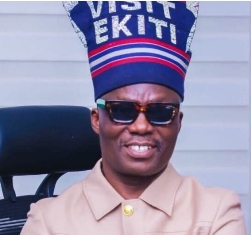
While previous sessions highlighted the economic gains and global attention surrounding Nigeria’s festive tourism season, Amb. Wale Ojo-Lanre, Director General of the Ekiti State Bureau of Tourism Development, brought a contrasting perspective—one that questioned the very foundation of the phenomenon.
Speaking with candor and conviction, Ojo-Lanre described Detty December as “overrated,” challenging participants to rethink what truly defines a tourism event and who ultimately benefits from it. His remarks introduced a deeper layer to the ongoing conversation, urging stakeholders to move beyond surface-level excitement and examine the structural realities behind the season.
At the heart of his argument was a fundamental question: Who benefits?
According to him, while hotels report full occupancy, clubs remain packed, and social media buzzes with activity, the economic gains appear concentrated within a narrow segment of society. “We are mistaking noise for impact,” he said, emphasizing that crowd size and visibility do not necessarily translate into sustainable development or widespread economic inclusion.
Ojo-Lanre argued that Detty December, in its current form, operates largely as an elite-driven event—one that caters to a specific demographic while leaving out the broader population. Rising costs during the season, including hotel rates, flights, and basic services, effectively exclude average Nigerians from participating in what is positioned as a national tourism experience.
“A tourism event must be inclusive, localized, and sustainable,” he stated. “But what we have is seasonal, expensive, and limited in reach.”
His critique extended beyond economic concerns to structural issues. He described the event as largely unorganized and lacking formalization, pointing out that its impact is concentrated within a short window in December, with little continuity throughout the rest of the year.
“What happens after December?” he asked. “Tourism should not be a two-week spectacle.”
The Director General also highlighted the absence of strong cultural and heritage integration within the Detty December framework. While the season is heavily defined by music, nightlife, and entertainment, he questioned whether these elements alone are sufficient to position Nigeria as a serious global tourism destination.
“A tourism event without heritage and culture cannot be fully sustainable,” he noted, calling for a more deliberate incorporation of Nigeria’s rich cultural assets into the experience.
Environmental concerns were also raised during his presentation. From noise pollution to urban congestion, Ojo-Lanre pointed out that the rapid influx of visitors during the period often places strain on infrastructure and local communities, particularly in Lagos.
“Tourism should not become a burden on the people,” he said, referencing traffic disruptions and the broader impact on daily life for residents.
Despite his critical stance, Ojo-Lanre’s message was not dismissive of Detty December’s potential. Instead, it was a call for transformation. He advocated for a more structured and inclusive approach, emphasizing the need for collaboration between the government and the private sector to formalize and regulate the season.
Among his key recommendations were the decentralization of activities across Nigeria’s states, the introduction of pricing frameworks to prevent extreme inflation, and the development of a year-round tourism calendar that extends beyond December.
He also stressed the importance of “democratizing” tourism—ensuring that opportunities and benefits are accessible to a wider population, including local communities, small businesses, and domestic travelers.
“Let us take it back to the states,” he urged. “Let it become something that reflects the whole country, not just a segment.”
His remarks resonated strongly with participants, many of whom acknowledged the need for a more balanced and inclusive model. While Detty December has undeniably placed Nigeria on the global tourism map, the conference made it clear that visibility alone is not enough.
In closing, Ojo-Lanre reaffirmed his support for the initiative—on the condition that it evolves. “I want it to be sustainable,” he said. “I want it to benefit the ordinary Nigerian.”
As the Naija7Wonders Zoom Conference 3.0 continues to unpack the lessons and impact of Detty December, his perspective serves as a crucial reminder: true tourism development goes beyond celebration—it requires structure, inclusivity, and a long-term vision that leaves no one behind.
For Nigeria, the opportunity remains vast. But as stakeholders reflect on the insights shared, one thing is clear—the future of Detty December will depend not just on how loudly it is celebrated, but on how deeply it is built.
Samuel Opoku
