
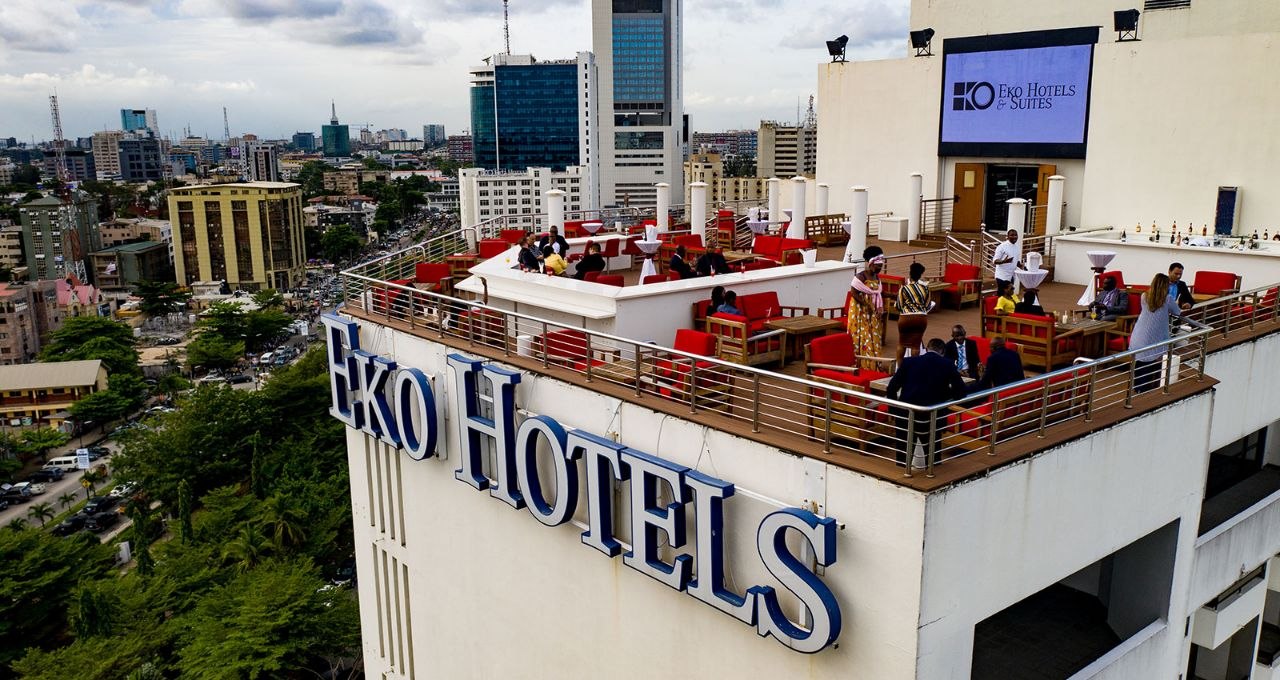
Dr. Iyadunni Gbadebo Highlights the Growing Impact of Eko Hotels Convention Centre, Indigenous Hospitality and World-Class Infrastructure on Nigeria’s Tourism Economy
For more than five decades, Eko Hotels has occupied a distinctive place in Nigeria’s hospitality landscape. But its significance today extends far beyond the provision of hotel rooms.
The Lagos-based hospitality institution has increasingly become part of the infrastructure supporting Nigeria’s meetings, conferences, exhibitions, business travel and tourism economy—with its convention facilities providing a major platform for bringing together people, businesses, destinations and ideas from across Nigeria, Africa and the wider world.
For Dr. Iyadunni Gbadebo, Director of Sales and Marketing at Eko Hotels, that role represents something much bigger: the ability of a proudly Nigerian hospitality brand to build infrastructure that enables Nigeria to compete for major events while creating a platform through which African tourism can connect, collaborate and grow.
Speaking during the 22nd Akwaaba African Travel Market, Gbadebo offered a strong defence of indigenous Nigerian hospitality and praised the management of Eko Hotels for its continued investment in modern infrastructure, equipment and facilities.
Her comments placed Eko Hotels at the centre of an important conversation about where Nigeria’s tourism industry is heading—and why the quality and capacity of local tourism infrastructure matter.
Eko Hotels as Tourism Infrastructure
A hotel is traditionally measured by its rooms, restaurants and guest services.
But a modern hospitality institution can play a much larger role in a destination’s economy.
Eko Hotels’ convention infrastructure illustrates this transformation.
By providing facilities capable of hosting major conferences, exhibitions and business events, the hotel becomes part of the machinery that brings visitors into Lagos.
That means the economic impact does not stop at the entrance of the hotel.
Visitors need transportation.
They require accommodation.
They eat in restaurants.
They interact with tour operators and travel companies.
They visit attractions and shopping destinations.
They conduct business.
They establish partnerships.
And many return to Nigeria for future engagements.
This is the wider economic value of what is commonly referred to as MICE tourism—Meetings, Incentives, Conferences and Exhibitions.
Gbadebo’s comments during Akwaaba underscored precisely this role.
She explained that the convention centre was built for events such as Akwaaba and other major gatherings that require sophisticated facilities capable of bringing tourism professionals and businesses together.
In doing so, Eko Hotels has created more than an events venue.
It has created a business gateway into Nigeria’s tourism economy.
The Eko Hotels Convention Centre and Nigeria’s MICE Ambition
For a country seeking to strengthen its position as a leading African destination for international conferences and exhibitions, convention infrastructure is strategically important.
Nigeria has a huge domestic market, a strong business community, a globally recognised creative sector and several tourism assets. But attractions alone cannot establish a destination as a major business-events hub.
The destination must also have places where large numbers of people can meet, exhibit, negotiate, network and conduct business.
This is where Eko Hotels’ convention facilities become particularly important.
The convention centre gives Lagos the capacity to host significant gatherings without relying exclusively on international hotel brands or facilities outside the country.
For Nigeria, that matters.
It means international and African organisations can bring their events into the country while relying on a Nigerian hospitality institution with the infrastructure to support them.
It also means Nigerian businesses and tourism organisations have a homegrown platform through which they can engage international markets.
A Platform Connecting Africa
Gbadebo particularly highlighted the way Akwaaba transforms the convention centre into a meeting point for African destinations.
During the exhibition, countries and tourism organisations arrive with their cultures, identities, products and destinations.
They meet Nigerian businesses.
They meet international visitors.
They establish commercial relationships.
They explore representation opportunities.
And, in some cases, business partnerships and deals emerge from those encounters.
This is one of the less visible but highly important contributions of a convention facility.
Its value is not only the number of people physically occupying the building.
Its real value can be found in the relationships and economic activity created inside it.
Gbadebo described the convention centre as a place where culture, business and tourism come together, noting that partnerships, agency relationships and business deals have emerged through such gatherings.
That makes Eko Hotels an important part of the ecosystem through which Nigeria connects with the wider African tourism market.
A Homegrown Brand Competing at International Standards
Perhaps the strongest part of Gbadebo’s message was her emphasis on the importance of Nigerian ownership and confidence in the hospitality industry.
She pointed to Eko Hotels’ history, noting that the property had operated under international identities including Holiday Inn and Le Méridien before becoming the distinctly Nigerian Eko Hotels.
The transformation, in her telling, represents more than a change of name.
It represents the development of a Nigerian hospitality brand capable of competing in a marketplace where international hotel brands have traditionally enjoyed significant recognition.
Gbadebo argued that Nigerian hospitality brands must be prepared to lead in their own market.
And she presented Eko Hotels as an example of that philosophy.
Her praise for the management was rooted particularly in its willingness to continue investing rather than becoming comfortable with past achievements.
According to her, the company has consistently sought to improve its facilities and think ahead about what the next generation of hospitality and events infrastructure will require.
Why This Matters to Nigeria’s Tourism Industry
The importance of Eko Hotels to Nigeria’s tourism industry can be viewed from several angles.
1. It strengthens Nigeria’s MICE tourism capacity
Major conferences and exhibitions bring business travellers into Nigeria and generate activity across accommodation, aviation, transportation, food, entertainment, retail and tourism services.
A strong convention facility therefore supports an entire economic chain.
2. It supports Lagos as an international destination
Lagos is Nigeria’s commercial capital and one of Africa’s most important business centres.
The availability of sophisticated convention and hospitality infrastructure strengthens the city’s ability to host regional and international events.
The more events Lagos can successfully accommodate, the more opportunities emerge to expose visitors to the wider Nigerian tourism offering.
3. It provides a platform for African tourism
Akwaaba’s presence at Eko Hotels demonstrates how the facility can function as a gathering point for African tourism stakeholders.
Destinations can exhibit.
Businesses can network.
Travel professionals can establish partnerships.
And visitors can discover destinations they might otherwise never have encountered.
4. It keeps tourism expenditure within the domestic economy
When major events are hosted locally, a substantial portion of the associated spending can flow through Nigerian businesses and workers.
Hotels, restaurants, transportation companies, event suppliers, travel agencies, tour operators and other service providers can all benefit.
5. It raises the standard for indigenous hospitality
The presence of a strong Nigerian-owned hospitality brand competing with international operators creates a more competitive environment.
It demonstrates that local companies can invest in facilities, service delivery and event infrastructure capable of serving demanding domestic and international markets.
Eko Hotels’ Investment Is About More Than Today
Gbadebo’s comments also revealed another important dimension of Eko Hotels’ strategy: long-term thinking.
She disclosed that the company has already begun thinking about a larger convention facility within the Eko Atlantic City development.
That announcement is significant because tourism infrastructure cannot be developed overnight.
A major convention facility requires substantial investment, planning and long-term confidence in future demand.
By thinking about additional capacity before the market reaches its limits, Eko Hotels is positioning itself for the future rather than simply responding to today’s requirements.
Gbadebo described this forward-looking approach as part of the company’s philosophy of building on legacy while considering what the next 100 years could look like.
That approach is particularly relevant to tourism, an industry where infrastructure decisions made today can influence a destination’s competitiveness for decades.
Eko Hotels and the Confidence to Build Nigerian
Gbadebo’s praise of Eko Hotels also formed part of a broader appeal for Africans to recognise and strengthen their own institutions.
She stressed that African businesses should not permanently assume that international brands are automatically better simply because they have international names.
For her, the Nigerian hospitality industry must develop the confidence to build, invest and compete.
Eko Hotels, she argued, has demonstrated that a Nigerian brand can operate in the same competitive environment as international hotel companies and continue to attract guests and major events.
That is important for Nigeria’s tourism industry because the development of strong domestic brands creates local expertise, employment, investment and institutional capacity.
It also gives Nigeria greater ownership of its tourism economy.
A Convention Centre That Creates Connections
One of the most important aspects of Eko Hotels’ convention infrastructure may ultimately be something that cannot be measured simply in square metres.
It is connection.
A tourism minister can meet a travel operator.
A destination can meet a Nigerian agency.
A hotel can meet an international buyer.
An airline can connect with a tourism board.
An African entrepreneur can discover a Nigerian business partner.
A conference delegate can discover Lagos beyond the conference venue.
These connections can become commercial relationships.
And commercial relationships can become tourism flows.
This is why the value of a convention centre extends far beyond the event calendar.
It becomes an economic platform.
Eko Hotels as Part of Nigeria’s Tourism Story
Gbadebo’s comments at Akwaaba ultimately present Eko Hotels as an important case study in what sustained private-sector investment can contribute to Nigeria’s tourism development.
The hotel has not simply provided accommodation to visitors.
It has invested in infrastructure capable of supporting conferences, exhibitions and major gatherings.
It has created a platform for international and African tourism stakeholders to meet in Lagos.
It has continued developing a Nigerian hospitality identity while competing with global brands.
And, according to Gbadebo, it is already thinking about the next generation of convention infrastructure.
For an industry that depends heavily on the movement of people, the existence of places capable of bringing those people together is fundamental.
Recognising the Value of Indigenous Tourism Infrastructure
Gbadebo’s message goes beyond Eko Hotels itself.
It is a reminder that Nigeria’s tourism development will require a combination of government support, private-sector investment, infrastructure development, strong domestic brands and platforms that connect the industry.
Government has an important role to play in creating the enabling environment.
But private-sector institutions must also be recognised for the infrastructure and opportunities they create.
In this regard, Eko Hotels represents an important part of Nigeria’s tourism infrastructure story.
Its convention centre provides a physical platform for the industry to meet.
Its hotel provides accommodation for visitors and delegates.
Its investment creates employment and business opportunities.
And its continued development contributes to Lagos’ capacity to compete for major events.
Looking Ahead
As Nigeria seeks to increase tourism’s contribution to the economy, attract more international visitors, strengthen intra-African travel and establish Lagos as a stronger global business and tourism destination, institutions such as Eko Hotels will remain important components of that ambition.
Dr. Iyadunni Gbadebo’s intervention at the 22nd Akwaaba African Travel Market was therefore more than a tribute to her employer.
It was an argument for the value of homegrown investment, modern tourism infrastructure and long-term thinking.
Her praise for Eko Hotels’ management reflected a conviction that Nigeria’s hospitality industry should not merely follow global standards—it should have indigenous brands capable of setting them.
For Eko Hotels, the story is no longer simply about being one of Nigeria’s leading hotels.
Its growing convention and events infrastructure is part of a larger story: developing the platforms through which Nigeria hosts Africa, connects with the world, and builds the business infrastructure needed for the future of tourism.
_By: Sam Opoku_
