
Conakry Ahmed Sékou Touré International Airport in Guinea is seeking to attract new international airlines as passenger traffic continues to grow, with Air Algérie planning a new route from Algiers and discussions under way with EgyptAir for a potential service in 2027.
According to Aviation Week, the airport recorded 545,330 passengers in the first half of 2026, representing a 22.2 per cent increase from 446,335 passengers in the corresponding period of 2025. The growth is strengthening efforts to expand Guinea’s international air connectivity and increase the capacity of its main aviation gateway.
Saïd Oumar Koulibaly, managing director of the Société de Gestion et d’Exploitation des Aéroports de Guinée (SOGEAG), said Air Algérie plans to introduce three weekly flights between Algiers and Conakry. Discussions with EgyptAir could also lead to the launch of flights during the northern summer 2027 season. The proposed services would strengthen Conakry’s links with North African aviation hubs, giving travellers additional options for connections to other international destinations.
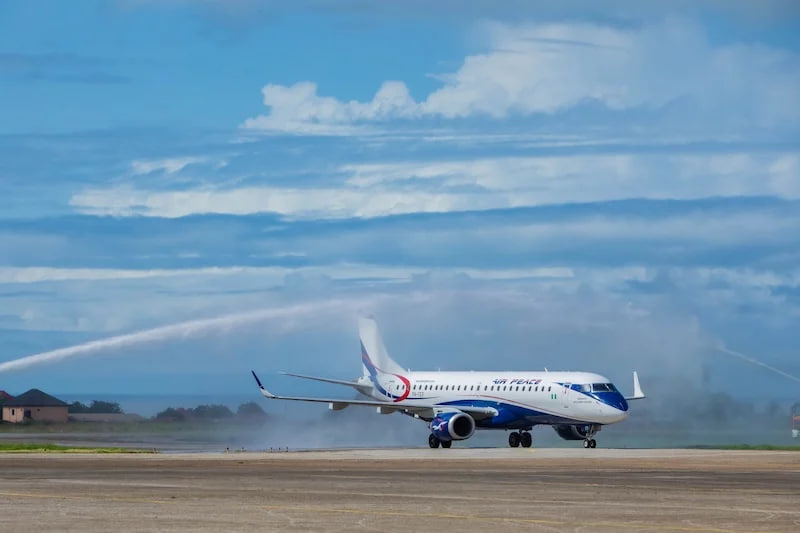
Conakry’s passenger growth follows a strong performance in 2025, when the airport handled 957,820 passengers, a 21.4 per cent increase on the previous year. The airport is now on course to surpass one million annual passengers for the first time in 2026 if the growth trend continues. Several airlines have already increased frequencies or capacity serving the Guinean capital, including Air France, Ethiopian Airlines, Air Sénégal, Air Côte d’Ivoire, ASKY Airlines, Brussels Airlines and Royal Air Maroc. Nigeria’s Air Peace also entered the Guinean market on August 1, 2026, adding another connection between West African markets and Conakry.
However, the airport’s rapid growth has created pressure on existing facilities. The current passenger terminal was designed to handle approximately 500,000 passengers annually, significantly below the volume now passing through the airport. To accommodate future growth, Guinea is planning a new 32,000-square-metre passenger terminal designed to increase annual capacity to three million passengers. The broader modernisation programme includes a new air traffic control tower, additional taxiways, runway improvements, administrative facilities, a fire station and expanded vehicle parking. The government and Turkish partner Albayrak signed a memorandum of understanding in December 2025 covering financing for the second phase of construction.
Cargo infrastructure has also been expanded. A new 3,600-square-metre cargo terminal, with an annual processing capacity of 20,000 metric tonnes, entered operation in 2026 to improve freight handling and support Guinea’s import and export activities.Despite its ambition to attract more carriers, SOGEAG is taking a measured approach to new airline recruitment while airport expansion work continues. In the near term, the airport is prioritising increased frequencies and larger aircraft from existing operators, alongside efforts to secure selected new routes.
Asia and South America have been identified as longer-term markets for potential connectivity, although new services would depend on sufficient passenger demand and viable connecting traffic.
