
Forests cover a significant share of the planet’s land surface and play a critical role in biodiversity conservation, climate regulation, carbon storage and the livelihoods of millions of people.
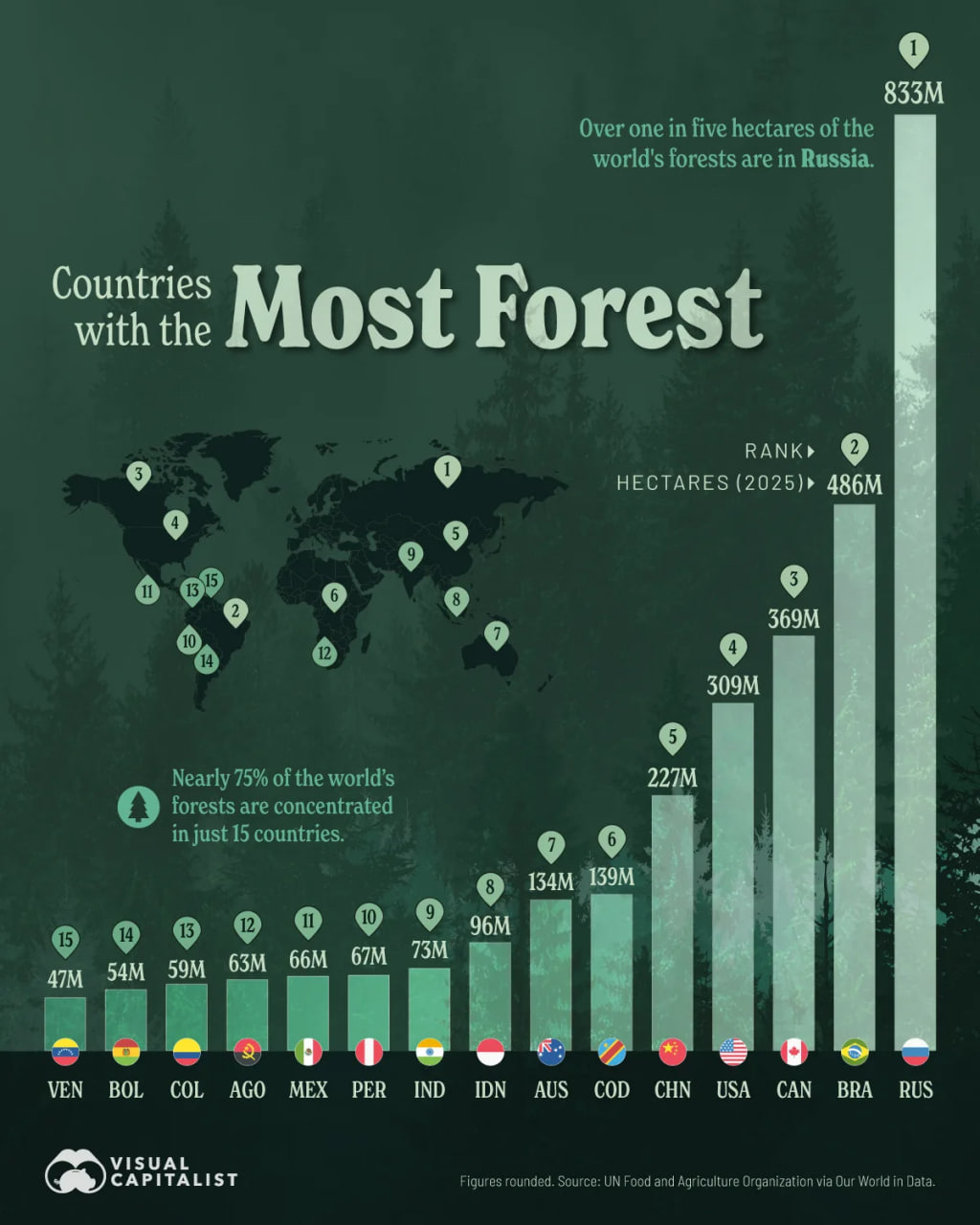
According to the ranking published by Visual Capitalist, the world’s forest resources are heavily concentrated in a relatively small number of countries. Russia, Brazil and Canada stand out as the three countries with the largest forest areas, reflecting the enormous scale of their territories and natural ecosystems.
Russia holds the world’s largest forest area, with its vast boreal forests stretching across much of Siberia. Brazil follows, containing a substantial share of the Amazon rainforest, the world’s largest tropical rainforest and one of the planet’s most important ecosystems. Canada ranks among the global leaders, with extensive boreal forests covering large parts of the country. Other countries featured among the leading forest holders include the United States, China, Australia, the Democratic Republic of the Congo, Indonesia, India and Peru.
The concentration of forests in these countries gives them an important role in global efforts to address deforestation, biodiversity loss and climate change. Forests absorb and store carbon while providing habitats for wildlife and supporting industries and communities. The ranking also highlights the importance of forest management. Having a large forest area does not necessarily mean those resources are secure, as forests in different parts of the world face pressures from agriculture, logging, infrastructure development, fires and climate change.
The latest Global Forest Resources Assessment 2025 from the Food and Agriculture Organization (FAO) provides comprehensive global data on forest resources and their condition, underscoring the continuing importance of sustainable forest management. For Africa, the Democratic Republic of the Congo stands out as the continent’s major forest power, largely because of its enormous share of the Congo Basin rainforest. Its forests are therefore important not only to the country’s economy and biodiversity but also to global climate and conservation efforts.
