
In a surprising turn of economic projections, the International Monetary Fund’s World Economic Outlook foresees South Africa surpassing Nigeria and Egypt to claim the title of Africa’s biggest economy in 2024, with a GDP of $401 billion.
According to africa.businessinsider.com, this one-year shift is attributed to challenges faced by Nigeria, including a decline in oil production, inflation, and currency depreciation.
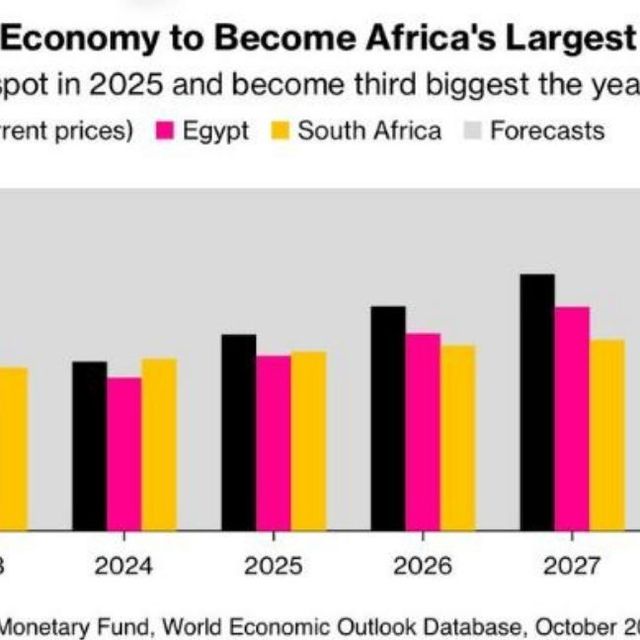
Nigeria, having held the economic lead since 2018, is expected to regain its top position in 2025. By 2026, however, the IMF predicts South Africa to fall to third place behind Egypt due to complex economic dynamics.
The economic fortunes of Nigeria have been affected by a decline in oil production, inflation, and a plunge in the value of the naira. President Bola Tinubu’s reforms, such as removing fuel subsidies and consolidating forex exchange windows, aim to restore financial strength but have impacted the cost of living for Nigerians. The IMF projects a GDP expansion of 3.1% in 2024, compared to 2.9% in 2023.
READ: Africa: Ethiopia, Angola economies set to overtake Kenya in IMF projections
Egypt faces its own challenges, with three currency devaluations since early 2022 in response to a foreign exchange shortage. An IMF package, obtained last year, includes a requirement for a flexible exchange rate, expected to occur after the December elections. Successful IMF reviews could grant Egypt access to delayed loan installments, a resilience fund, and potential investments from Gulf countries, potentially supporting economic growth of 5% or more from 2026.
In contrast, South Africa’s rand, a free-floating currency, has lost about 10% of its value against the dollar in the current year. The IMF anticipates South Africa’s economy to expand by 0.9% in 2023 and 1.8% in 2024. Significant improvements in the power sector, resolution of logistic bottlenecks, and other reforms could boost growth to 2.5% to 3%.
The economic landscape in Africa remains dynamic, with each country facing unique challenges and pursuing distinct reform agendas to navigate their paths to sustainable growth.
