
Africa’s passenger traffic is projected to increase from 160 million in 2024 to 469 million by 2050. Over the same period, aircraft movements are expected to double, from 1.77 million to 3.54 million.
Supporting this growth will require significant investment and stronger aviation infrastructure. Yet, AFCAC analysis has identified 60 infrastructure gaps across 41 African States: 37 in air navigation services, 11 in aerodromes and 12 in aircraft equipage.
These figures highlight the need to strengthen the systems that keep aviation safe as the industry expands. Effective regulatory oversight, resilient infrastructure, skilled people and reliable safety intelligence must all be part of Africa’s aviation development plans. This requires leaders to anticipate future demands and make the necessary investments before capacity constraints become safety concerns.
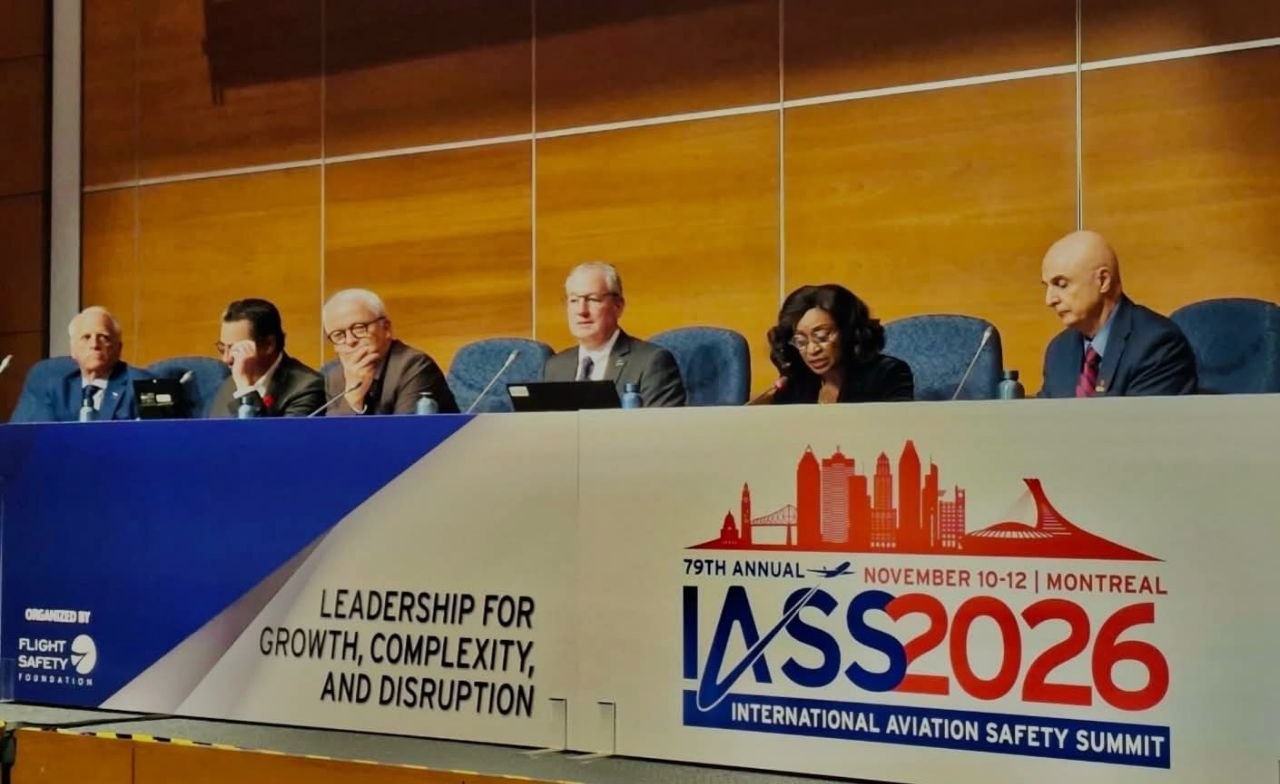
This was a key focus of my contribution to the executive panel on Leadership for Growth, Complexity and Disruption at the 79th Annual International Aviation Safety Summit (IASS 2026) in Montréal, Canada.
READ: Aviation: Africa’s Passenger Traffic Expected to Double to 300 Million by 2040, AFRAA Says
I emphasised that safety leadership must be forward-looking and accountable, with leaders taking responsibility for anticipating risks and ensuring that institutional capacity, resources and oversight keep pace with the industry’s expansion.
I also stressed that the effectiveness of a Safety Management System should be judged by more than the existence of policies and processes. It should be evident in the decisions organisations make, how emerging risks shape their priorities and whether their interventions deliver measurable safety improvements.
At the regional level, safety intelligence must translate into shared learning and action. Trusted information-sharing is essential to helping States and operators learn from safety occurrences and prevent their recurrence across the continent.
Leaders must make deliberate decisions today about the investments, institutional capacity and safety measures required to support Africa’s aviation growth. The continent’s ability to expand safely and sustainably will depend on how effectively these priorities are translated into action.
By Adesewa Adeyemi
