
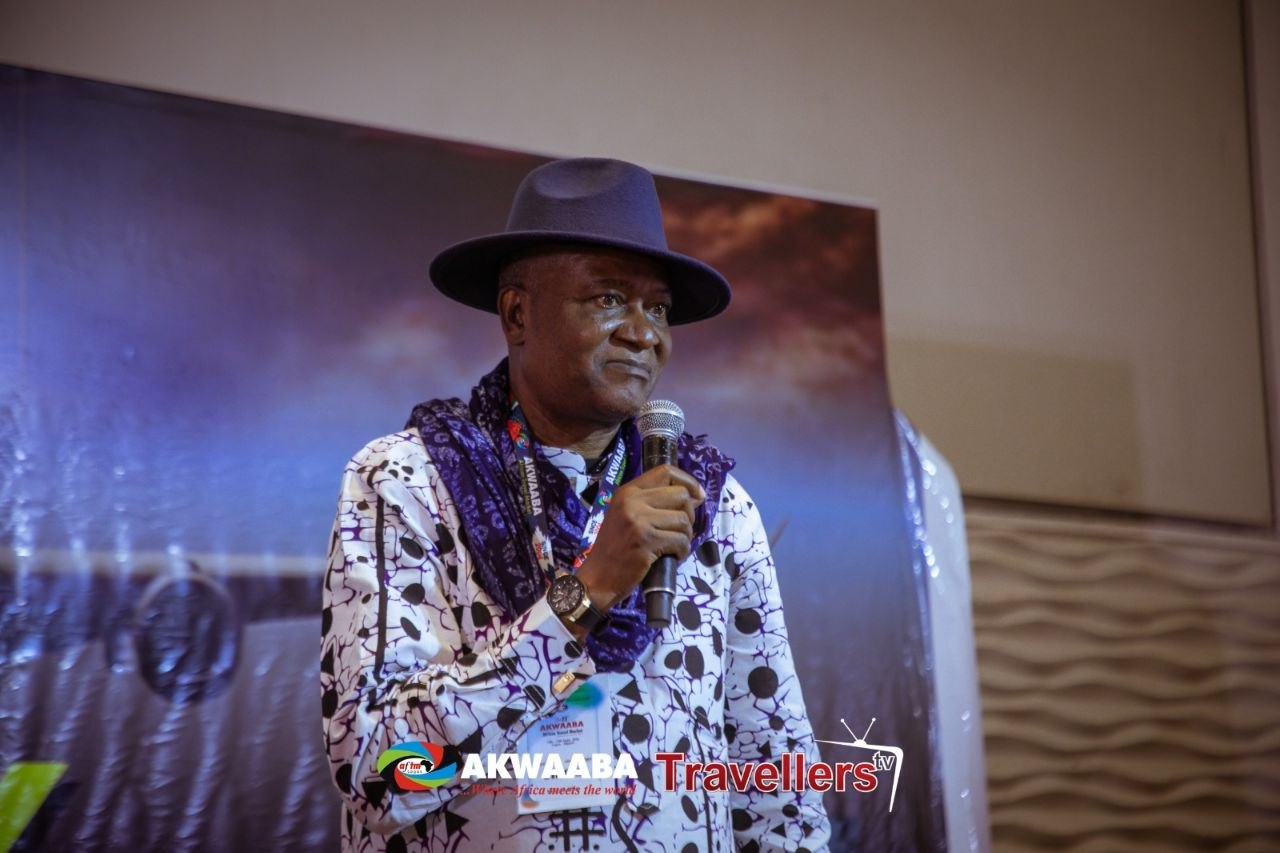
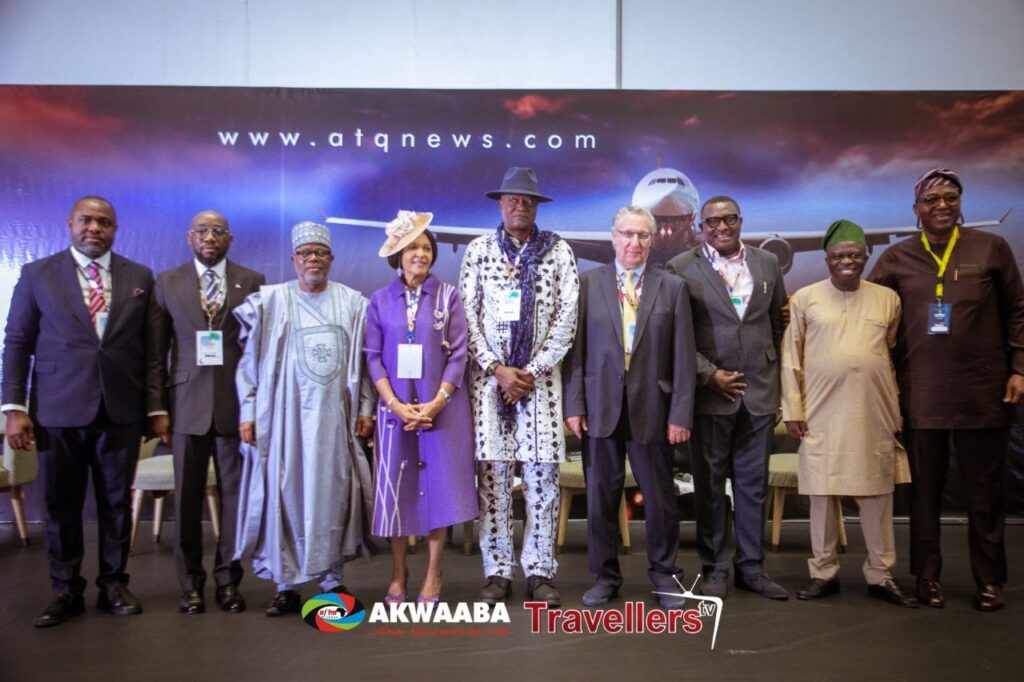
For three days, the 22nd edition of the Akwaaba African Travel Market turned Lagos into a meeting point for Africa’s tourism industry, bringing together destinations, airlines, hotels, tour operators, travel professionals, hospitality brands, government representatives, media and international visitors.
But as the exhibition closed, the man behind the platform was not simply celebrating another successful edition.
For Ikechi Uko, the Convenor of Akwaaba, the three-day event was a reminder of a much longer journey—one that began with an observation at a European travel exhibition, survived scepticism about whether Africans could build a successful African travel market, and eventually developed into a platform that he says others have increasingly sought to emulate.
Looking back after 22 editions, Uko’s message is perhaps best understood through one recurring theme: Akwaaba was built because somebody decided to believe that Africa could create its own tourism platforms, its own rules and its own experiences.
“When we decided to do Akwaaba, we decided to do something that would be purely African,” Uko said.
That decision, however, was not initially met with confidence.
“Everybody Said It Wasn’t Going to Work”
According to Uko, the idea was born partly from what he witnessed at the World Travel Market (WTM) in Europe.
He saw African destinations struggling to market themselves effectively to European audiences and began asking a different question: why couldn’t Africa develop a platform that reflected its own tourism realities?
The response from many people around him was discouraging.
Uko recalled two arguments he repeatedly heard.
First, that Africans did not travel enough within Africa to sustain such a market.
Second, that if Akwaaba did not simply copy the established European travel-show model, it would fail.
Those doubts became one of the defining challenges of the journey.
Yet Uko now looks back at those early objections as part of the story of how Akwaaba developed its identity.
Rather than copying European trade shows, Akwaaba deliberately pursued what he described as an authentic, African and experiential product.
READ: Africa: FTAN President Blames Poor Structure for Nigeria’s Slow Tourism Growth
And that distinction, he argues, has become one of its greatest strengths.
Building an African Travel Show, Not a European Imitation
Uko pointed to some of Akwaaba’s innovations, including its use of beauty queens and food as part of the travel-show experience.
He said the beauty-pageant concept was subsequently adopted by other events, while various attempts were made elsewhere to incorporate food into travel exhibitions.
But he believes simply copying an element of Akwaaba without understanding the culture behind it does not necessarily reproduce the experience.
The fundamental difference, he explained, lies in how Africans interact.
European travel shows often rely heavily on pre-arranged appointments and structured business meetings.
Akwaaba deliberately took another route.
Uko said some potential participants even withdrew because he refused to organise meetings with everyone in advance.
His argument was based on a practical understanding of the Nigerian environment. Traffic delays, changing schedules and what he described as the realities of “African time” could make rigid appointment systems difficult.
“If the meeting doesn’t hold, who will be held responsible?” he asked, explaining why he decided not to build Akwaaba around pre-arranged appointments. Instead, the exhibition allows relationships to develop organically.
For Uko, that is not a weakness.
It is part of the African character of the event.
“We wanted something authentic, something African, and something experiential,” he said.
Every Year Must Feel Different
But authenticity alone, Uko believes, is not enough.
An event that wants to remain relevant must continually reinvent its experience.
That is why, he explained, Akwaaba’s presentation and programming have to change from year to year. He compared the process to renewing one’s appearance—changing the “makeup,” getting a new “Gele” and presenting something fresh.
Even the way participants dress becomes part of the communication.
“We are communicating to people’s senses, perceptions,” he explained.
For a tourism marketplace, this is an important distinction.
The visitor is not only being given brochures or attending meetings. They are being invited to feel Africa, see Africa, taste Africa and experience Africa.
And that experience becomes particularly important because, according to Uko, one of Akwaaba’s biggest challenges has always been convincing people to come to Nigeria in the first place.
The Nigeria Problem
Uko openly acknowledged that Nigeria’s image can create hesitation among international visitors.
“Most people don’t want to come to Nigeria,” he said, pointing to concerns some international visitors have about the country.
That reality created another challenge for Akwaaba: the event had to become compelling enough to make people who might otherwise avoid Nigeria decide to travel to Lagos.
His answer was to make Akwaaba itself an experience.
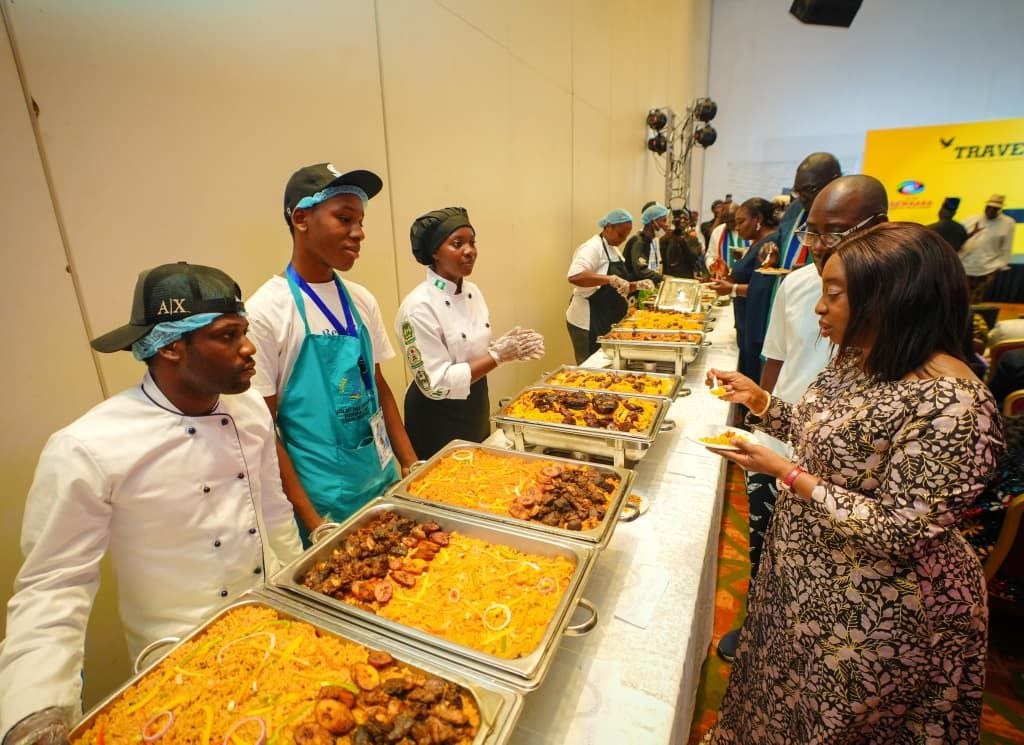
The strategy has been to give visitors reasons to come; not simply for a conference, but for the opportunity to encounter Nigerian culture, people, food, music and tourism products. In that sense, Akwaaba has become part travel marketplace and part destination showcase.
Finding Tourism’s Pain Points
Another major part of Uko’s philosophy is that Akwaaba should not create discussions simply because conferences are expected at travel exhibitions.
Instead, he wants the event to identify real pain points within the tourism industry and put the right people in the room to discuss them.
One example is the issue of flight delays and cancellations.
Uko said the subject became a major discussion because it directly affects Nigerian travellers.
After the issue was raised, industry stakeholders—including the National Association of Nigeria Travel Agencies (NANTA)—called for the conversation to be repeated.
The same approach has been applied to payment challenges and other issues affecting travellers and tourism businesses.
“The gift has been always solving problems,” Uko said.
He recalled an earlier example involving the country’s cargo challenges, saying that after the issue was highlighted through the platform, institutional responses followed, including the development of a cargo directory.
His philosophy is therefore simple: listen to what the industry is struggling with, provide a platform, bring the right stakeholders together and pursue solutions.
The Cost of Believing
Behind the glamour of Akwaaba, however, Uko said there is a less visible challenge: money.
The event is hosted at Eko Hotels, one of Nigeria’s premium hospitality venues, and Uko stressed that the cost of the venue is significant.
He contrasted Nigeria with other African markets where governments or hotels may support major travel events by providing venues.
In Ghana, for example, he said, an event organiser may receive government or hotel support for the venue.
In Nigeria, he said, the financial burden is much heavier. Yet he has continued to maintain the standards established when Akwaaba began.
Uko recalled that Akwaaba became the first African organisation admitted into the International Federation for Travel Expo, an achievement that came with financial and professional obligations.
Those standards, he said, helped shape the organisation and remain part of the reason he insists on maintaining a premium venue and professional presentation.
“Only a White Man Can Do It”
Perhaps the most revealing part of Uko’s reflection was his recollection of the doubts surrounding African ownership of major tourism platforms.
He said some people initially believed that sophisticated international travel marketing had to be done by Europeans. Others believed Nigerians had to travel to London to sell Nigeria.
Uko challenged that thinking. “How will Calabar Carnival carry all these people to London?” he asked.
The alternative was to create platforms where international buyers could come to Africa and encounter African destinations directly.
According to Uko, the results of that strategy are visible in the relationships developed through Akwaaba.
He cited Kenyan visitors coming to Carnival Calabar after establishing connections through the travel market. For him, that is precisely why African tourism needs African platforms.
Medical Tourism: From Accident to Opportunity
Uko also explained how medical tourism became part of Akwaaba’s expanding portfolio.
He described its origins as almost accidental.
Dubai wanted to participate in Akwaaba, and among its participating organisations were hospitals, including Royal Hospital and American Hospital.
During a meeting at the Arabian Travel Market, Uko said representatives explained that Nigerians were familiar with Dubai’s hotels but were less familiar with its hospitals.
They proposed a dedicated medical-tourism pavilion.
Uko accepted the idea, and the concept expanded to include destinations such as Turkey and Ghana.
Now, he said, Nigerian hospitals are also beginning to recognise the opportunity.
He disclosed that two Nigerian hospitals had signed partnerships connected to the initiative, creating the possibility of a more balanced medical-tourism conversation in which Nigeria is not only a source market for outbound medical travel but also a destination for specialised treatment.
Uko’s argument is that travel consultants have access to high-net-worth clients and can connect patients with appropriate healthcare options.
If Nigerian hospitals can offer internationally competitive services, he believes some medical expenditure that currently leaves the country could potentially be retained within Africa.
Jollof, Afrobeat and the Soft Power of Tourism
Akwaaba’s influence, according to Uko, also extends beyond the exhibition itself.
He proudly described Akwaaba as “the biggest Nigerian brand that never advertises.”
The brand’s visibility, he said, has been built largely through its participation in international travel events and relationships within the global tourism industry.
When Akwaaba travels outside Nigeria, Uko said it presents itself through distinctly Nigerian cultural references—“Jollof and Afro Beats.”
That philosophy continues when international visitors come to Nigeria.
Following the 22nd Akwaaba, international participants were scheduled to experience Lagos through food, music, culture and entertainment.
The itinerary included cultural experiences, a visit connected to Nike’s artistic and cultural work, and a beach experience.
For Uko, this is soft power through tourism.
He recalled one visitor who told him after experiencing Nigeria that he now loved the country and intended to return.
That, Uko believes, demonstrates the power of bringing people to Nigeria rather than asking them to judge the country from a distance.
Using Reputation to Lift Others
Another unusual dimension of Uko’s work is his approach to recognition and awards.
He said he understands the influence that Akwaaba’s reputation carries across Africa and therefore treats awards and recognition seriously.
According to Uko, nominees are not simply selected because somebody wants them to win.
They are nominated, confirmed and independently assessed.
He recalled an instance in which recognition from his organisation helped an individual gain credibility internationally after an American organisation researched who had honoured him.
He also told the story of a young tourism professional who had been among seven youths he selected for recognition in 2017.
Six subsequently became prominent figures in the industry, while one struggled to progress.
Rather than simply watching from a distance, Uko said he travelled to meet the individual and challenged him to examine why his career had not developed at the same pace as his peers.
That, he explained, is why Akwaaba does not simply repeat the same award categories every year.
The objective is to identify new people emerging within the industry.
From Building People to Transforming Hospitality
After more than two decades of building the Akwaaba platform and recognising tourism personalities, Uko believes the organisation has reached another stage.
“We now have power, we want to use the power for good,” he said.
His next ambition is to contribute to transforming hospitality in Africa.
Uko believes many African hospitality conferences and hotel events either replicate predominantly European models or operate without sufficient depth.
He wants Akwaaba to create a distinctly African conversation about hospitality—one that recognises the continent’s own expertise, challenges and opportunities.
He pointed to the growing strength of African businesses and institutions in global travel, asking why African organisations should not also develop world-class hospitality leadership.
The message is clear: Africa should not merely participate in global tourism conversations. It should increasingly shape the conversation.
“Tourismizing Africa”
Uko’s ambition extends beyond Akwaaba itself.
He described a vision in which the platform uses its influence to help develop tourism across the continent.
He drew a parallel with Aliko Dangote’s industrialisation efforts, saying that while Dangote is “industrializing Africa,” his ambition is to contribute to “tourismizing Africa.”
That vision was reflected, in his view, by Cross River State’s presence at the 22nd Akwaaba.
Uko praised Cross River for presenting its tourism assets not merely as a state project but as part of a broader Nigerian tourism proposition.
He described the state’s approach as combining culture and tradition with contemporary presentation.
For him, that combination represents the Nigeria he wants to see: a country that does not abandon its heritage in pursuit of modernity, but carries its traditions forward while competing in a contemporary global tourism economy.
The Journey Continues
After 22 editions, Ikechi Uko’s reflection on Akwaaba is ultimately a story about persistence.
The doubters said Africans would not travel within Africa.
They questioned whether an African-owned travel market could work without copying Europe.
There were concerns about Nigeria’s image, financial constraints, venue costs and the willingness of governments and industry stakeholders to support such a platform.
Yet Akwaaba has continued.
Its model has evolved from a travel exhibition into a platform for networking, cultural exchange, industry debate, destination promotion, medical tourism, recognition, soft-power diplomacy and problem-solving.
For Uko, the lesson from the journey is not simply that Akwaaba survived.
It is that Africa can create tourism products around African realities rather than continually importing models designed elsewhere.
And as the curtains came down on the 22nd edition, his message was unmistakably forward-looking.
The next chapter, he suggested, is not merely about making Akwaaba bigger.
It is about using the platform, its reputation and its relationships to help build stronger African tourism institutions, stronger hospitality businesses and a more confident African tourism industry.
Twenty-two editions ago, people reportedly told him it would not work.
Today, the bigger question is what Africa can build with the platform that those doubters once thought impossible.
_By: SAM Opoku_
