
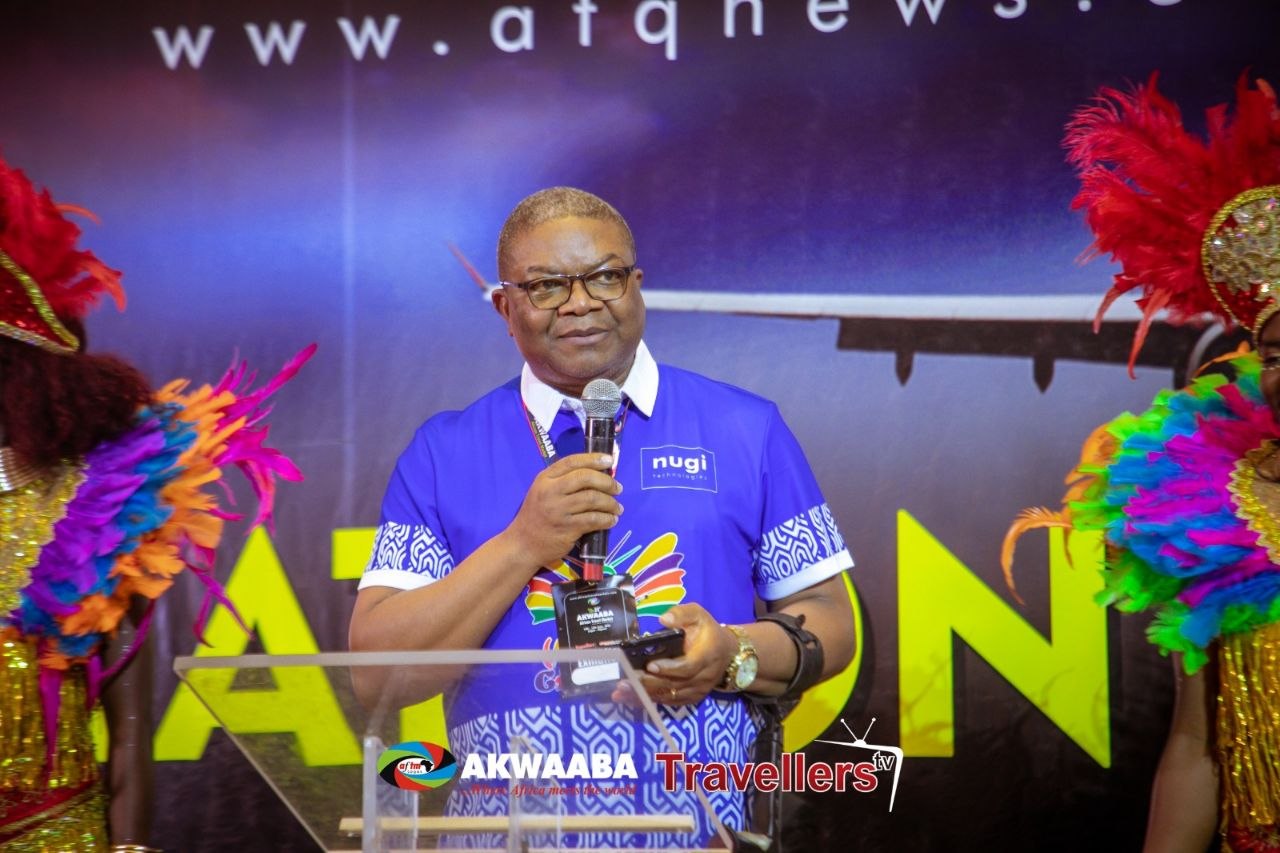
At a time when destinations across Africa are searching for new ways to make culture, festivals and tourism more commercially sustainable, the Carnival Calabar is looking beyond the traditional parade spectacle.
At the 22nd Akwaaba African Travel Market, Sir Gabe Onan, PhD, Chairman of the Carnival Commission, Cross River State, revealed plans to deepen public participation in the carnival through digital streaming, online voting and a membership model designed to bring Nigerians and Africans closer to the carnival bands and activities.
His remarks offered a glimpse into how Cross River State is seeking to transform one of Nigeria’s most recognisable cultural events from a government-supported annual celebration into a more participatory and potentially self-sustaining tourism ecosystem.
But for Onan, the conversation at Akwaaba was also deeply personal.
Remembering Prince Ojoi Ekpenyong
Before speaking about the future of Carnival Calabar, Onan used the occasion to pay tribute to the late Prince Ojoi Ekpenyong, a prominent figure in Cross River’s tourism and cultural sector whose death has been felt across the industry.
“I would like to first of all also commiserate with you guys and the entire Cross River State over the loss of that great soul,” Onan said, describing Ekpenyong as a brother, friend, colleague and son in the sector.
He recalled Ekpenyong as a quick learner who understood the importance of studying existing frameworks and continually improving.
According to Onan, Ekpenyong had worked closely with him and eventually became an important figure in the evolution of the carnival’s cultural presentation.
That connection became particularly emotional for Onan when Cross River’s cultural troupe took to the stage at Akwaaba.
He recalled that Ekpenyong had reintroduced the Ekpe cultural exposition at the carnival the previous year, an initiative that attracted the admiration of international guests and helped generate an invitation connected to the Notting Hill Carnival.
For Onan, the moment was therefore more than a cultural performance.
It was a reminder of the contribution of a colleague who had helped strengthen the international dimension of Carnival Calabar.
He also remembered Ekpenyong’s contribution to media engagement, noting that the carnival had maintained a relationship with tourism writers since 2008.
22 Years of Akwaaba and a Tourism Industry Still Learning
Turning to Akwaaba, Onan described the long-running travel market as a valuable meeting point for the industry.
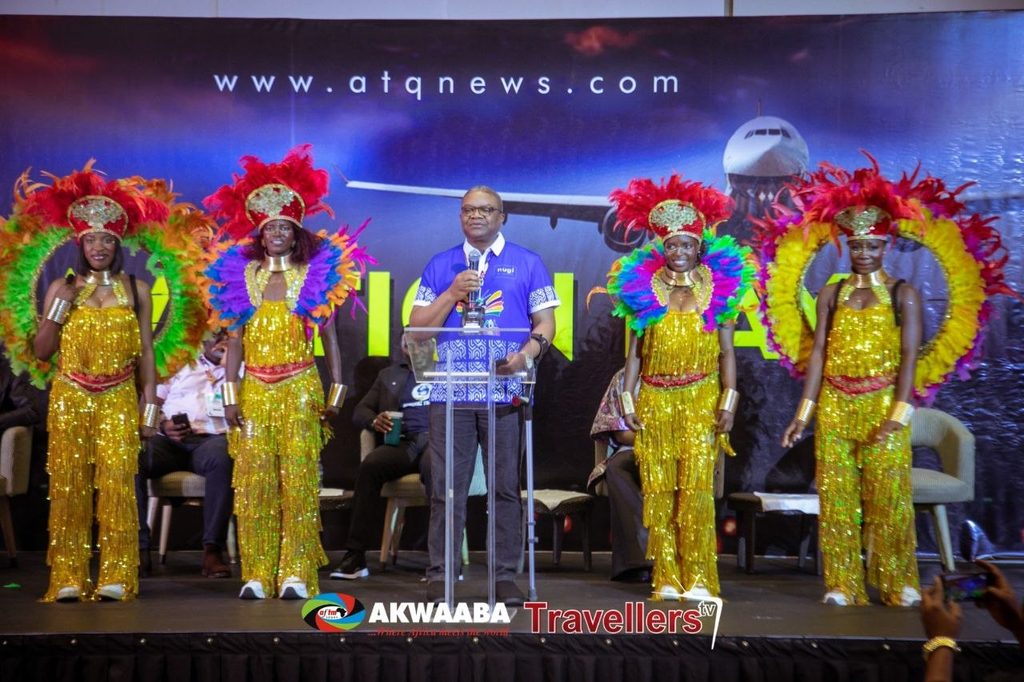
He celebrated what he called the “marriage” between the carnival and Akwaaba, now extending across 22 years.
For him, the significance of the event goes beyond exhibition stands, meetings and networking.
Akwaaba provides an opportunity for industry players to conduct what he described as a form of peer review; observing developments, exchanging ideas, studying emerging trends and learning from the progress of others.
Even the disruption caused by COVID-19, he noted, did not completely stop that relationship, as activities moved online.
His message was straightforward: tourism businesses and destinations cannot afford to stop learning.
“Only the unwise [person] doesn’t want to learn from a wise brother or a neighbour,” he said, stressing the importance of learning, relearning and adapting to changes in the travel trade.
That philosophy is particularly relevant as African destinations compete for visitors in a rapidly changing global tourism marketplace.
From Competition to Collaboration
One of Onan’s strongest messages at Akwaaba was a call for greater collaboration across Nigeria’s tourism ecosystem.
He argued that the sector should move away from excessive competition and focus more deliberately on partnerships between destinations, businesses, government agencies, communities and tourism professionals.
“We should improve on our collaboration and not competition,” he said.
Using a striking analogy, Onan pointed out that economic hardship does not respect geographical boundaries.
“The hunger in Aba is not different from the hunger in Calabar,” he said.
The implication is that tourism development should be viewed as a shared economic opportunity rather than a contest between cities or destinations.
For Onan, tourism’s economic significance is reinforced by its growing association with the orange economy, a term increasingly used to describe the economic value of creativity, culture and intellectual property.
He connected that concept with the familiar description of tourism as a “low-hanging fruit”—an economic opportunity that can potentially be harvested with the right structures, investment and collaboration.
And in Cross River’s case, he identified Carnival Calabar as one of the state’s most tangible tourism products.
Carnival Calabar Goes Digital
One of the major announcements from the Cross River delegation at Akwaaba was the decision to introduce a stronger digital dimension to Carnival Calabar.
“What we bring to Akwaaba this year is deliberate digital streaming and online voting,” Onan announced.
The initiative is designed to expand the carnival’s audience beyond those physically present in Calabar.
Digital streaming can potentially allow audiences across Nigeria, Africa and the wider global community to experience the carnival remotely, while online voting introduces another layer of public engagement.
The commission is also encouraging Nigerians and Africans to register as members of carnival bands.
Onan compared the proposed model to the way people voluntarily associate themselves with football clubs.
The objective is to create a deeper connection between audiences and the competing carnival bands rather than treating spectators merely as passive viewers.
Giving the Public a Voice
The proposed online voting system also represents an attempt to broaden how carnival performances are evaluated.
Onan explained that Carnival Calabar already uses professional adjudicators drawn from artistic and technical fields.
The floats and performances involve substantial creative and mechanical production, with architects, engineers and other professionals contributing to the assessment.
The spectacle is therefore judged through established artistic and theatrical criteria.
However, the commission now wants members of the public to have a voice as well.
Onan likened the concept to the participatory voting framework used by television reality shows.
A viewer may have a personal favourite even when professional judges select another winner.
Under the proposed system, audiences would be able to express those preferences through digital voting.
The wider objective, however, goes beyond popularity.
Onan stressed the importance of developing a revenue model around participation, particularly through internally generated revenue.
“The bottom line is the IGR receipt,” he said.
Building a Carnival That Can Sustain Itself
Perhaps the most significant part of Onan’s message was his emphasis on financial sustainability.
He acknowledged the support that Carnival Calabar has received from successive Cross River State administrations, noting that four governors have adopted the sector.
But he also raised a strategic question: what happens when political leadership changes?
“What if the fifth one comes and says I want to do something different?” he asked.
That question goes to the heart of the challenge facing many publicly supported cultural festivals across Africa.
For Onan, the answer is to develop systems that enable the carnival sector to increasingly manage and finance itself.
He called for a broader funding ecosystem involving public-sector funding, private-sector investment and people’s participation through mechanisms such as crowdfunding.
The digital membership and voting initiative could become part of that ecosystem by converting audience interest into measurable participation and, potentially, additional revenue streams.
Gamifying the Carnival Experience
The digital transformation will not be limited to the main carnival parade.
Onan revealed that activities across the festival are being designed around a more participatory and “gamified” approach.
Competitions such as the choir contest and bikers’ activities could also benefit from audience participation.
He gave the example of spectators having the opportunity to express their preferences for particular biker groups.
The idea is to make the carnival a continuous interactive experience rather than an event that begins and ends with the main parade.
Such a model could also provide new opportunities for sponsors, digital platforms, media organisations and tourism businesses to engage audiences before, during and after the festival.
Reconnecting Carnival Calabar With Its International Ambition
Onan also addressed the international aspirations that accompanied Carnival Calabar from its earliest days.
He disclosed that efforts are underway to reintroduce the intellectual segment of the carnival.
The move is part of a broader attempt to reconnect the festival with its international character and create space for deeper conversations around culture, tourism and the creative economy.
According to Onan, Cross River has received a number of international offerings and engagements following previous editions, and work is ongoing to develop this dimension.
He indicated that further details, including a headline for the intellectual component, would be unveiled in due course.
A Festival Growing Beyond the Parade
Sir Gabe Onan’s appearance at the 22nd Akwaaba African Travel Market ultimately presented Carnival Calabar as more than a colourful annual parade.
His message pointed towards a festival increasingly positioned at the intersection of culture, tourism, technology, entertainment, community participation and economic development.
The introduction of digital streaming and online voting could expand the carnival’s reach, while membership and crowdfunding models could help deepen public ownership.
The push for greater private-sector participation could also reduce dependence on government funding over time.
But perhaps the most important theme from Onan’s intervention was collaboration.
His appeal for the African tourism industry to learn from one another, collaborate rather than compete, and build sustainable platforms speaks to a broader reality facing destinations across the continent.
As Carnival Calabar prepares for another edition, Cross River appears intent on ensuring that the festival is not simply preserved as a cultural tradition, but continually reinvented for a new generation of audiences.
And in remembering Prince Ojoi Ekpenyong, Onan’s message also carried a sense of continuity: the work of building African tourism does not belong to one individual or one administration.
It is a relay.
Those who learn from the past must strengthen the foundations for those coming next.
For Carnival Calabar, the next chapter may increasingly be streamed, voted on, shared and experienced digitally—but its core proposition remains the same: turning Cross River’s culture into an experience capable of attracting people, creating economic opportunities and keeping the destination firmly on Africa’s tourism map.
_By Sam Opoku_
