
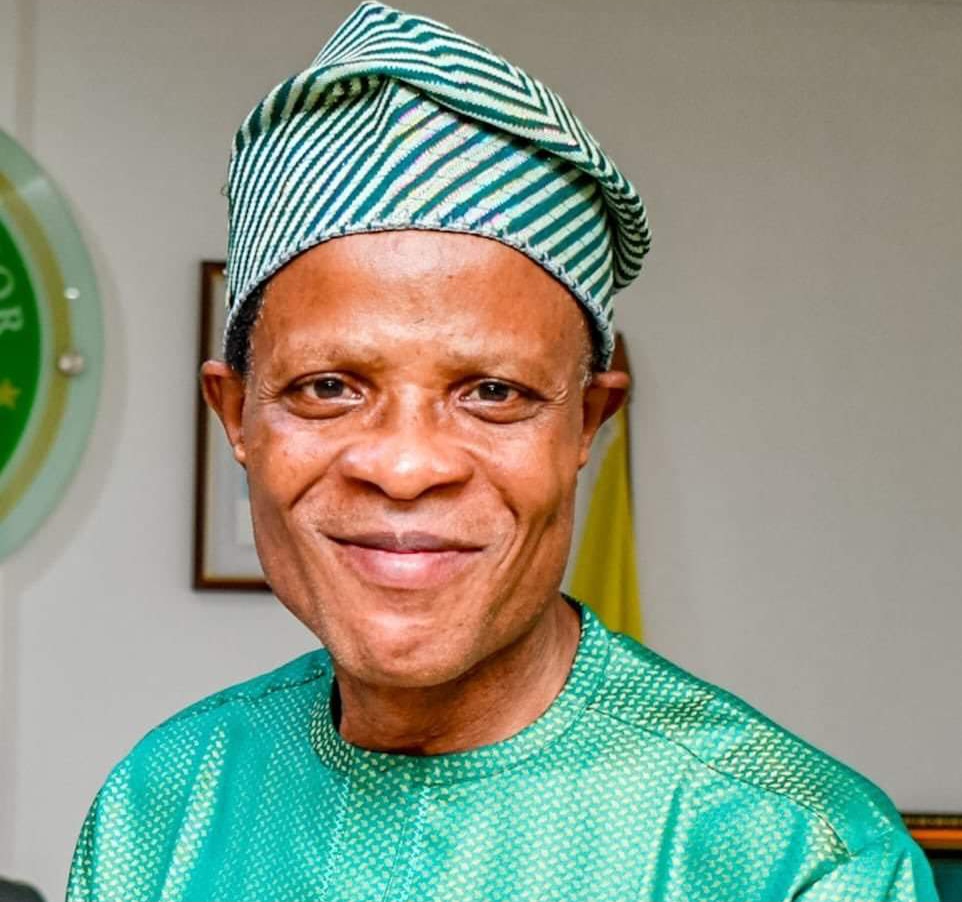
A long-held assumption about one of Nigeria’s most iconic cultural traditions came under fresh scrutiny during the Naija7Wonders Zoom Conference 3.0, where Chief Fagbayi Olusesan Abolaji, Ogun State Commissioner for Culture and Tourism, made a thought-provoking case that could reshape conversations around heritage tourism in Nigeria.
Speaking during the conference themed “Festival & Tourism in Nigeria: A New Pathway,” the commissioner argued that while the Eyo Festival has become globally synonymous with Lagos Island, its historical roots trace back to Iperu-Remo in Ogun State, a narrative he believes deserves wider recognition within Nigeria’s tourism ecosystem.
Rather than presenting the discussion as a contest between two neighbouring states, Chief Fagbayi framed it as an opportunity to deepen historical understanding, preserve cultural identity and broaden Nigeria’s tourism offerings through authentic storytelling.
His presentation highlighted a wider issue confronting Nigerian tourism: the need to ensure that the true origins of cultural traditions are properly documented, preserved and incorporated into destination marketing.
Reclaiming a Forgotten Heritage
One of the presentation’s most striking moments came when the commissioner declared:
“Iperu owns the Eyo Festival. Iperu is the origin, the home of Eyo. We celebrated it in April this year with a very large gathering.”
The statement challenges a widely held public perception that associates the Eyo masquerade almost exclusively with Lagos.
Historically, cultural scholars have documented longstanding links between the Remo people of Ogun State and Lagos through centuries of migration, trade, royal alliances and settlement patterns. Various historical accounts suggest that aspects of the Eyo tradition share ancestral connections with communities in present-day Ogun State, although the festival itself has evolved uniquely in Lagos over several centuries.
Chief Fagbayi’s intervention therefore adds momentum to an ongoing conversation among historians, traditional institutions and cultural practitioners about preserving the full historical journey of indigenous traditions rather than limiting them to their most famous contemporary locations.
For tourism stakeholders, the implication is significant. Recognising multiple heritage locations connected to a cultural tradition could enrich visitor experiences rather than diminish existing destinations.
Festivals Beyond Celebration
The commissioner used the discussion on Eyo to illustrate a broader transformation taking place in Ogun State’s cultural policy.
According to him, when he assumed office in November 2023, the state’s official festival calendar contained only 15 recognised festivals. Today, he said, government support has expanded that number to between 48 and 50 festivals, with another 15 to 18 festivals undergoing approval for inclusion.
He explained that government involvement goes beyond sponsorship.
By working directly with traditional rulers and indigenous communities, Ogun State is documenting festivals, preserving oral traditions and strengthening cultural institutions that might otherwise fade over time.
Among the major festivals receiving official backing are:
- Ojude Oba
- Remo Day
- Lisabi Festival
- Olowu Day
- Atesan Festival
- The revived Iperu Eyo Festival
The commissioner noted that increased government participation has also encouraged stronger media coverage, cultural exhibitions and community engagement around these celebrations.
Heritage Recognition as a Tourism Opportunity
The debate surrounding Eyo reflects a wider challenge facing Nigerian tourism.
Many destinations have built strong brands around festivals without always communicating the deeper historical narratives that gave birth to those traditions.
Chief Fagbayi suggested that authentic storytelling can become a competitive advantage for tourism.
Instead of promoting festivals merely as annual spectacles, destinations should help visitors understand their origins, symbolism and cultural significance.
Such an approach, he argued, strengthens cultural identity while creating richer visitor experiences for domestic and international tourists seeking authentic encounters with Nigerian heritage.
In practical terms, recognising Iperu’s historical relationship with Eyo could encourage visitors to explore both Ogun and Lagos as complementary heritage destinations rather than competing ones.
Building a Modern Tourism Ecosystem
Beyond heritage discussions, the commissioner outlined several initiatives designed to position Ogun State as one of Nigeria’s leading cultural tourism destinations.
A major priority is the development of a comprehensive state festival calendar, making it easier for tourists, tour operators and investors to plan around cultural events throughout the year.
He also revealed that the Ministry is investing in digital promotion through websites, social media platforms and new communication channels aimed at making Ogun’s cultural offerings more accessible globally.
One of those initiatives is Orewa Magazine, launched by the Ministry to document festivals, cultural events and tourist attractions across Ogun State.
The publication seeks to bridge the information gap for audiences unable to attend the festivals physically while also creating a lasting archive of the state’s cultural assets.
According to the commissioner, the second edition is expected within months, with distribution planned across the state’s three senatorial districts.
Beyond Olumo Rock
Although Olumo Rock remains Ogun State’s most internationally recognised attraction, Chief Fagbayi believes the state’s tourism future lies in diversifying its destination portfolio.
He disclosed that Ogun currently has nearly 40 government-owned tourist sites, with plans to attract greater private-sector investment to develop many of them.
He pointed to the recent commercialisation and renovation of Olumo Rock as evidence that strategic investment can significantly improve visitor experiences while increasing government revenue.
The commissioner advocated stronger public-private partnerships that would allow investors to participate in developing tourism assets while enabling government to focus on creating an enabling environment.
Hospitality and Visitor Confidence
Recognising that festivals alone cannot sustain tourism growth, Chief Fagbayi highlighted the importance of hospitality infrastructure.
He explained that the Ministry maintains close collaboration with registered hotels across Ogun State through quarterly engagements with hotel owners and industry associations.
These meetings, he said, allow the government to address industry concerns while improving standards and visitor experiences.
On security, the commissioner expressed confidence that Ogun remains one of Nigeria’s safer destinations for tourists, commending security agencies and the administration of Governor Prince Dapo Abiodun for maintaining stability across the state.
Visitor confidence, he argued, remains essential if cultural tourism is to flourish.
A Broader Conversation About Cultural Identity
Perhaps the most enduring takeaway from Chief Fagbayi’s presentation was not simply the assertion that Iperu is the ancestral home of the Eyo tradition, but the larger question it raises about how Nigeria tells its own cultural stories.
Across the country, many traditions have evolved through migration, interaction and centuries of cultural exchange. Recognising these layered histories does not diminish any community’s contemporary identity; instead, it enriches the national narrative and provides visitors with a fuller understanding of Nigeria’s cultural complexity.
As tourism increasingly shifts towards authentic, experience-driven travel, destinations that preserve and communicate these historical connections may be better positioned to attract culturally curious visitors seeking more than colourful festivals.
The discussion at the Naija7Wonders Zoom Conference 3.0 therefore served as more than a debate over the origins of one famous masquerade. It became a broader call for Nigeria to invest in research, documentation and heritage preservation while ensuring that communities connected to important cultural traditions receive the recognition they deserve.
If that conversation continues beyond conference halls into policy, scholarship and tourism development, it may ultimately strengthen, not divide, the shared cultural heritage that makes Nigeria one of Africa’s richest destinations for cultural tourism.
By Sam Opoku
