
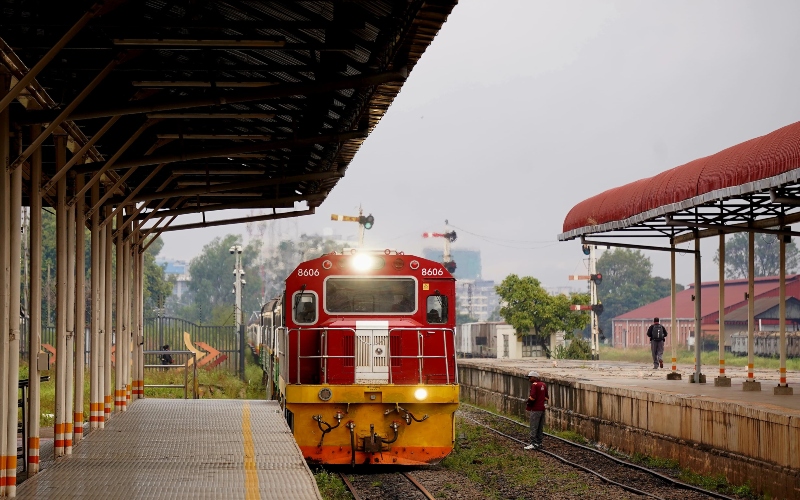
The 57-kilometre rail corridor will see improvements to 15 stations, track repairs and the construction of three new stations in a project expected to ease traffic congestion and improve public transport connectivity.
NAIROBI, Kenya: Commuters travelling between Nairobi and Thika could soon benefit from faster journeys and improved public transport services as Kenya Railways prepares to upgrade the 57-kilometre Nairobi–Thika commuter railway corridor through a KSh65 billion (approximately US$500 million) World Bank-funded project.
The planned upgrade aims to modernise railway infrastructure, improve passenger safety and strengthen connections between Nairobi and surrounding communities experiencing growing transport demand.
The project will focus on 15 stations along the corridor, serving key locations including Dandora, Githurai, Ruiru, Juja and Thika. Proposed improvements include station modernisation, track repairs and enhanced safety features to improve the overall commuting experience.
Four Stations to Be Revitalised, Three New Ones Planned
As part of the railway improvement programme, four existing stations, including Kaloleni and Mutindwa, are earmarked for revitalisation.
The project will also introduce three new stations at KPCU, Maili Saba and Kalimoni in Juja, expanding access to commuter rail services for residents along the route.
The planned station improvements are expected to make the railway more accessible to passengers while strengthening links between residential communities and major employment and commercial centres.
By improving infrastructure at existing stations and introducing new stops, the project seeks to increase the usefulness of commuter rail as an alternative to road transport.
Railway Upgrade Targets Traffic Congestion
One of the anticipated benefits of the project is reduced pressure on the Thika Superhighway, a major transport route connecting Nairobi with densely populated communities to the northeast.
The corridor serves commuters travelling between the capital and towns along the Nairobi–Thika route, where road congestion can affect daily journeys.
With improved railway infrastructure and more convenient station access, the upgraded service is expected to encourage more residents to consider rail transport for their daily commutes.
The project is also expected to reduce travel times, although the actual improvements will depend on service frequency, operating arrangements and the completion of the planned infrastructure works.
Boost for Urban Mobility and Regional Connectivity
The Nairobi–Thika railway upgrade forms part of broader efforts to improve urban mobility and respond to the transport needs of Kenya’s expanding metropolitan population.
Reliable commuter rail services can help reduce dependence on private vehicles and road-based public transport while improving access to jobs, education, markets and other essential services.
For communities along the corridor, the proposed improvements could provide a more convenient connection to Nairobi and neighbouring commercial centres.
The investment is also expected to support more efficient movement of people across the metropolitan area, particularly as residential and business activities continue to expand beyond the capital’s central districts.
Once implemented, the project could mark a significant step towards modernising Nairobi’s commuter rail network. However, commuters will be watching for further details on construction timelines, service arrangements and the expected completion date.
The success of the upgrade will ultimately depend on delivering the planned infrastructure improvements and ensuring that the railway provides a dependable, safe and efficient alternative for everyday travel.
Source: METROS.CO.KE
