
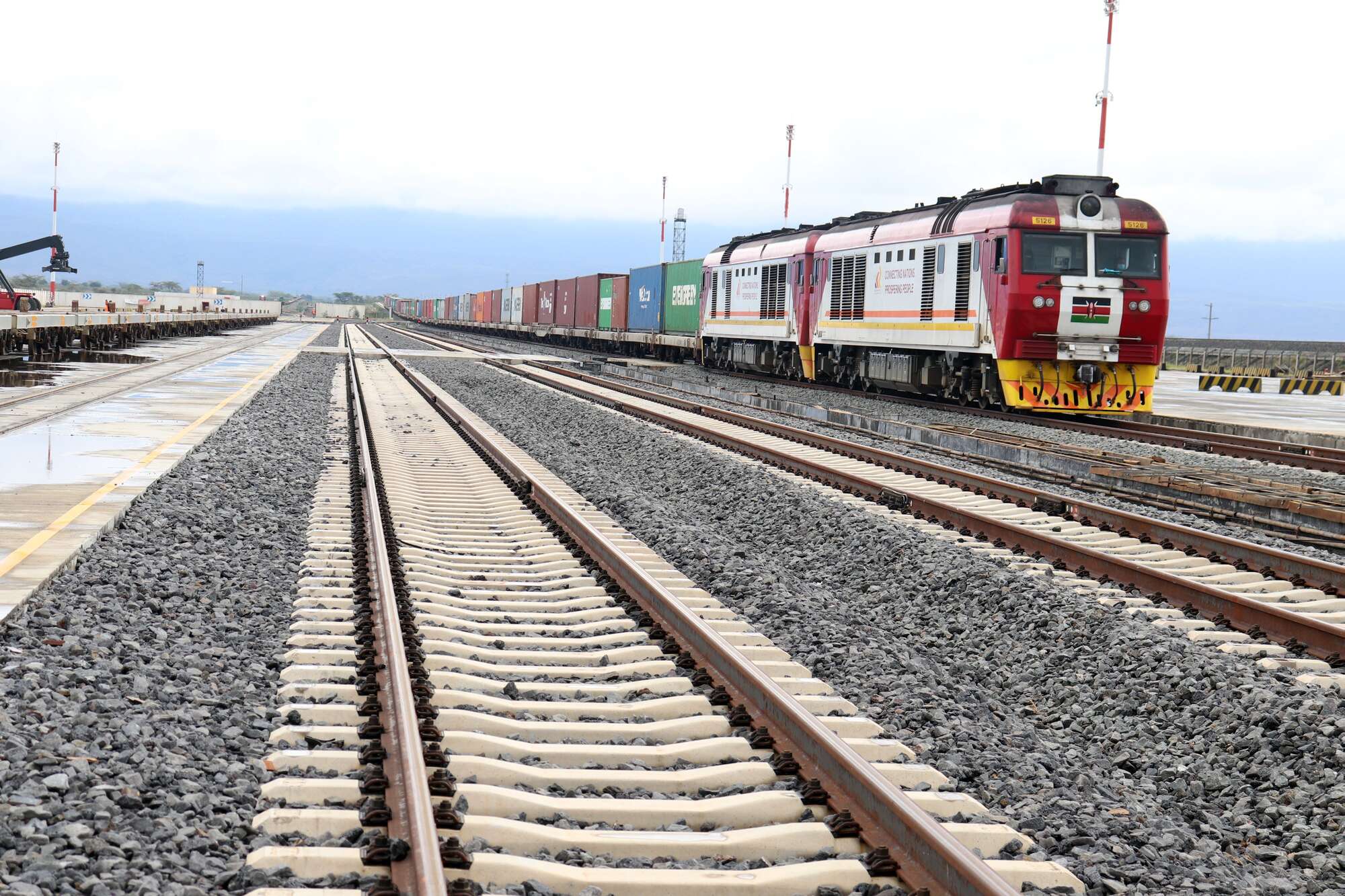
The construction of the Naivasha–Kisumu–Malaba Standard Gauge Railway (SGR) that will connect Kenya and Uganda is officially scheduled to be launched on Friday, March 20, 2026, with President William Ruto and his Ugandan counterpart, Yoweri Museveni, are expected to preside over the launch in Kisumu City.
According to The Monitor, Dr Ruto said the launch on Friday next week in Kisumu City, Kenya, will be the actual start of the construction of the SGR that would link to a similar project on the Uganda border.
“The Kenya-Uganda Standard Gauge Railway agreement signed in March 2025 commits both nations to completing the Nairobi-Kampala link by 2028, cutting the travel time from 14 hours to four hours, and the freight costs by 35 per cent. In fact, on 20th of this month, we will be launching the actual construction of the railway in Kisumu, with President Museveni,” Dr Ruto said on Friday. In December last year, Dr Ruto had promised the construction of the extension of the SGR to start in January this year.
Currently, the SGR that starts from the Port of Mombasa ends at Naivasha Township. The gap between Naivasha, Kenya, to Malaba, the Ugandan border, made it difficult for Uganda to build the SGR on its side, which left it with huge costs of transporting goods to and from the sea. Such infrastructure limitations have irritated Mr Museveni, saying it is another form of denying Uganda’s rights to access to the sea, and making their goods more expensive in the region and on the international market. On November 11, 2025, during a talk show in Mbale City, Mr Museveni said it was madness for landlocked countries to be obstructed from accessing the sea to export their goods.
READ: Africa: $13 Million Chinese Built Ngorongoro Geopark Museum Sparks Tourism Growth in Tanzania
“That is why we have had endless discussions with Kenya. This one stops, another comes. The railway, the pipeline, the what, we discuss. But that ocean belongs to me. Because it is my ocean. I am entitled to that ocean. In the future, we are going to have wars. In future, we are going to have wars,” Mr Museveni said. The Kenya SGR section is estimated to cost over US$5.5b while the Ugandan side would cost US$3b. Uganda has also started on the construction of its side of the 272km SGR, but Ugandan authorities are still looking for funds for the project.
In January this year, officials from the Islamic Development Bank held discussions with the Ugandan authorities to contribute a fund of Euro405m (Shs1.7t) on the SGR project. Uganda has also kicked off the project for the construction of the SGR from Malaba to Kampala City after securing funding. The Turkish firm, Yapi Merkezi, has already started geotechnical surveys and infrastructure mapping on the proposed 273-kilometre corridor. Most of the land on which the SGR will be constructed has been acquired.
Uganda is also rehabilitating the meter gauge railway between Malaba and Kampala City. The meter gauge and SGR can effectively work alongside each other, but the lines of two railways will not use the same path. The meter gauge railway would carry very heavy cargo, like steel. Goods that require to be delivered very fast will use the SGR. In 2022, President Museveni said they have plans to build a SGR line from Kampala to Kasese in western Uganda to connect Democratic Republic of Congo and later to South Sudan.
President Museveni said it would greatly reduce the cost of transporting goods in the region. Uganda is also working on another SGR project to connect Uganda to the Dar-es-Salaam Port in Tanzania, but they haven’t yet secured funding for it. Dr Ruto said the two countries are also at the tail-end of documentation for the road infrastructure linking the two nations. “Significant milestones have been achieved on key arteries, including the feasibility study on the Nairobi-Nakuru-Mau Summit highway in Kenya; Kampala-Jinja; and Jinja-Malaba-Busia-Kisumu road corridors in Uganda,” he said. “The market sounding conference for the Jinja-Malaba-Busia-Kisumu sector was held in November 2025.”
