
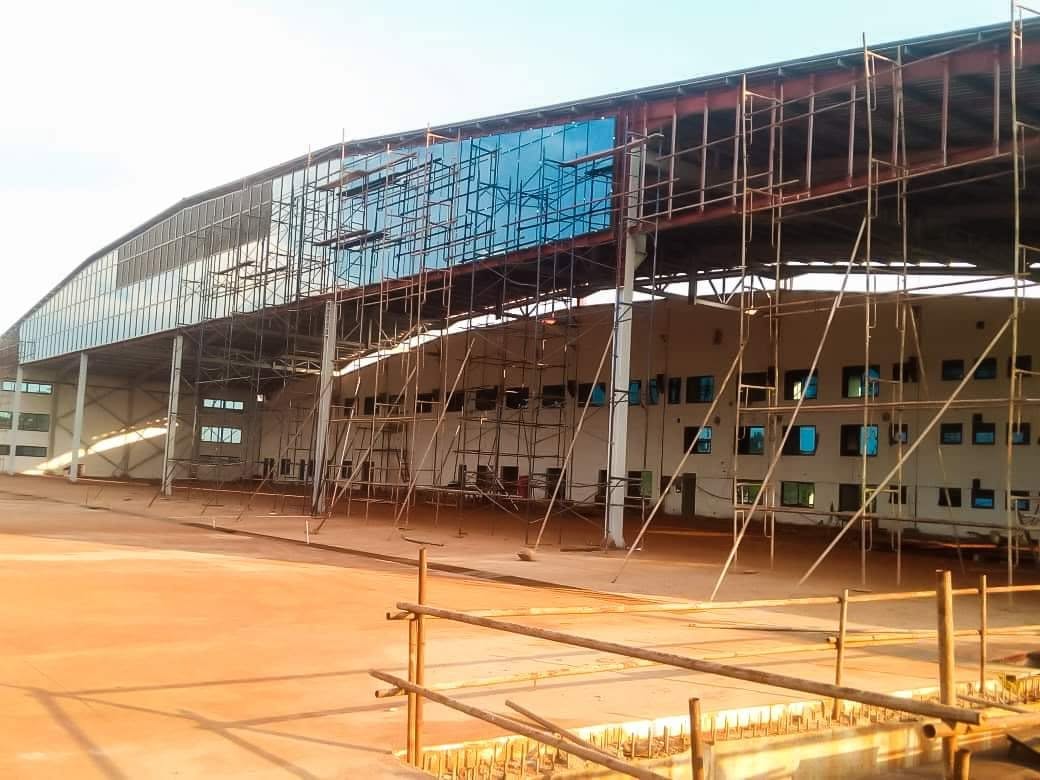
Uganda is seeking parliamentary approval for Shs150 billion ($36.735 million) to complete outstanding construction works and procure essential equipment for Kabalega International Airport and Jinja Aerodrome, as the Uganda Civil Aviation Authority (UCAA) moves to bring the two aviation facilities into operation.
According to newsaero.info, the funding appeal was made on Tuesday, November 10, 2026, during a parliamentary monitoring tour of airport construction sites in Kabalega, Jinja, Gulu, and Arua.
During a site inspection by Parliament’s Committee on Physical Infrastructure, UCAA Director of Airports and Aviation Security Sam Wonekha asked the government to release Shs30 billion (USD7.27 million) to finalize Kabalega International Airport in western Uganda.
Wonekha told lawmakers that the authority drafted a Shs76 billion equipment procurement plan four years ago, but only Shs32 billion was disbursed in the previous financial year. This shortfall has delayed the acquisition of essential operational tools, including security scanners and three fire trucks.
Separate Shs232 Billion Project
Constructed by SBC Uganda Limited since 2018, the first phase of Kabalega International Airport reached 98 percent completion in August 2026, with the installation of the air traffic control system among the final remaining works. The facility features a 3.5-kilometer-long and 45-meter-wide paved runway classified as Code 4F, capable of handling wide-body aircraft and heavy cargo planes such as Antonovs.
Supporting infrastructure includes an apron for multiple large aircraft, a cargo terminal, and a passenger terminal whose peak-hour capacity will expand from 100 to 1,000 travelers under a separate Shs232 billion project executed by Egypt’s Samco National Construction Company, according to Airport Manager David Bitabangoma.
From One to Four International Airports
Designed primarily to transport heavy equipment and personnel for oil and gas operations in the Albertine region while supporting agriculture and tourism, Kabalega passed its first operational test on September 27, 2026, by handling charter flights carrying the national football teams of Libya and Uganda. President Yoweri Museveni will officially commission the airport in January 2027, ahead of the expanded passenger terminal’s completion in March.
Kabalega forms part of a broader national aviation push—alongside the Kidepo project launched in June, the €155.99 million African Development Bank-backed upgrade of Arua Airport, and Phase II of Entebbe International Airport—that will increase Uganda’s international airports from one to four.
Jinja: Shs120 Billion Deficit
In eastern Uganda, UCAA officials separately appealed to the Physical Infrastructure and Works Committee for an additional Shs120 billion (USD29.11 million) to complete the rehabilitation and upgrade of Jinja Aerodrome. While lawmakers led by Committee Vice Chairperson William Taylor Tiyo commended ongoing works—including runway tarmacking, apron expansion, and perimeter fencing—the authority noted that major technical components remain unfunded.
These outstanding works include constructing a fully equipped air traffic control tower, installing firefighting systems, and extending the runway to 2.4 kilometers to meet required aviation standards. However, the Jinja expansion remains stalled by prolonged delays in securing adjacent
land despite presidential directives.
Land Delays
Wonekha informed legislators that UCAA is still awaiting the release of 10 hectares pledged by President Museveni from land occupied by the Uganda People’s Defence Forces (UPDF) at Gaddafi Barracks, alongside the relocation of Ambercourt Market, which occupies approximately three acres needed for the project. Wonekha warned that the market’s proximity attracts large flocks of birds, posing a severe bird-strike hazard to aircraft safety.
In response, Tiyo pledged to convene a stakeholder meeting next week involving UCAA, Jinja City Council, and the Ministry of Defence and Veteran Affairs to resolve the land impasse and accelerate the development of the Busoga sub-region’s key transport hub.
