
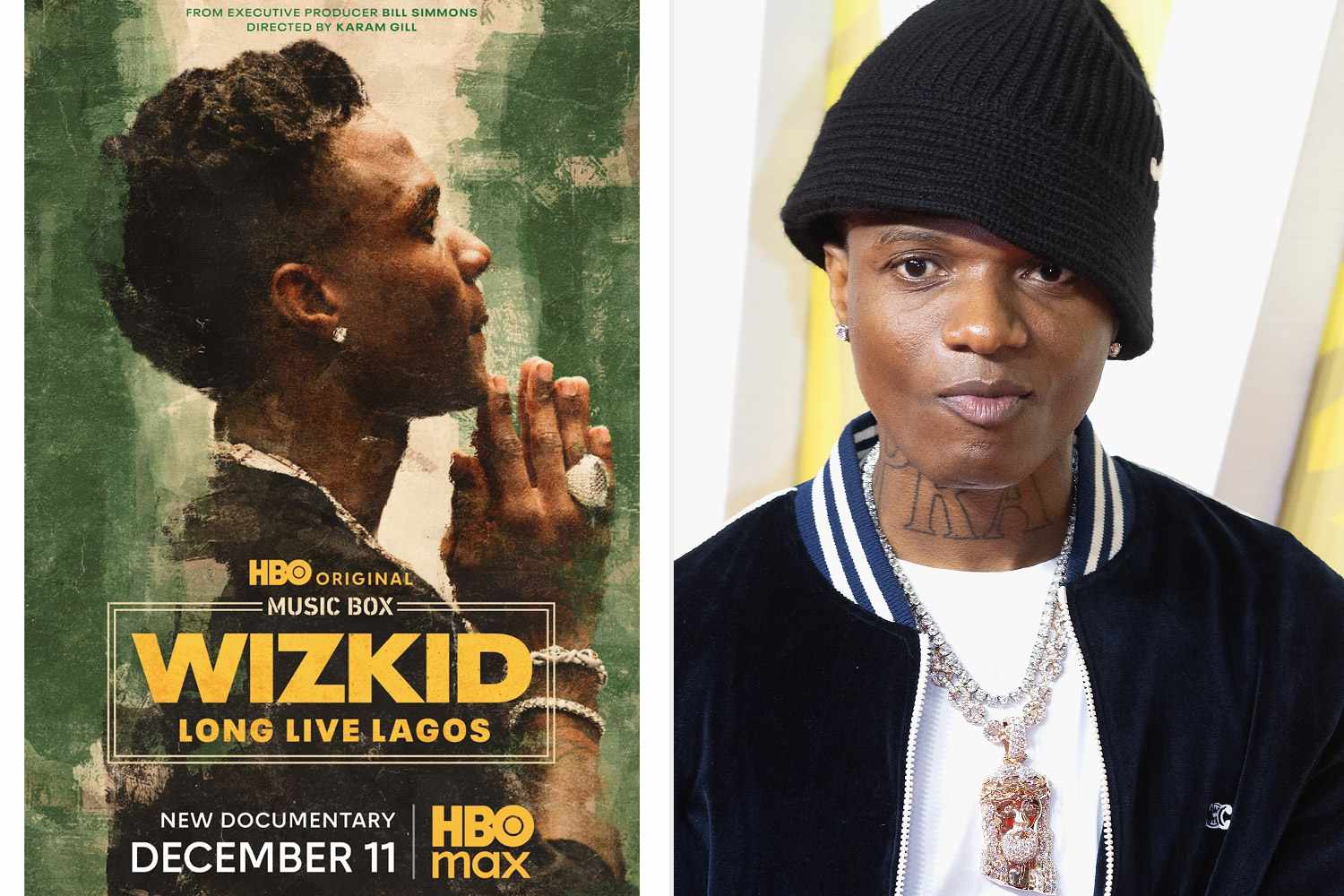
A forthcoming documentary is set to spotlight Wizkid’s far-reaching impact on music and African self-expression. Titled Music Box: Wizkid — Long Live Lagos, the film delves into how the 35-year-old Nigerian superstar’s sound, story and artistry have helped shape contemporary African identity across the world.
According to people.com, the documentary, part of Music Box‘s new installment, is set to debut Thursday, Dec. 11 on HBO.
Born Ayodeji Ibrahim Balogun, Wizkid grew up in Lagos, Nigeria, where he first discovered his love for music. But the country had no music industry infrastructure to help him build his career; instead, Wizkid climbed to international stardom by “raw talent, determination, and his belief that success would not only change his and his family’s lives, but also the global perception of Nigeria and the continent of Africa,” the press release reads.
The documentary’s trailer, which launched Nov. 4, dubs Wizkid as “national hero” for Nigeria as the nation seeks to redefine its identity in the face of longstanding colonial influences. The documentary follows the Grammy winner from his native Nigeria to meet fans and perform in the United Kingdom — reshaping the relationship between the two countries long tethered by colonialism.
“The colonists took away our soul, but things are beginning to change,” the documentary’s trailer states. “Wizkid is a symbol of hope.”
Considered “one of the most commercially successful African musicians of all time,” per the release, Wizkid’s music features a blend of Afrobeats, hip-hop and R&B elements, and has collaborated with acclaimed artists like Drake, Chris Brown and Skepta.
“As the internet and streaming platforms enable world music to smash through borders, Wizkid uses his voice to challenge colonial legacies, and shift the narrative to offer a fuller picture of present-day Africa and its cultural influence,” the press release reads, noting that Wizkid embraces international fame as “a form of rebellion” and “a way to amplify and honor both African culture and African pride.”
