
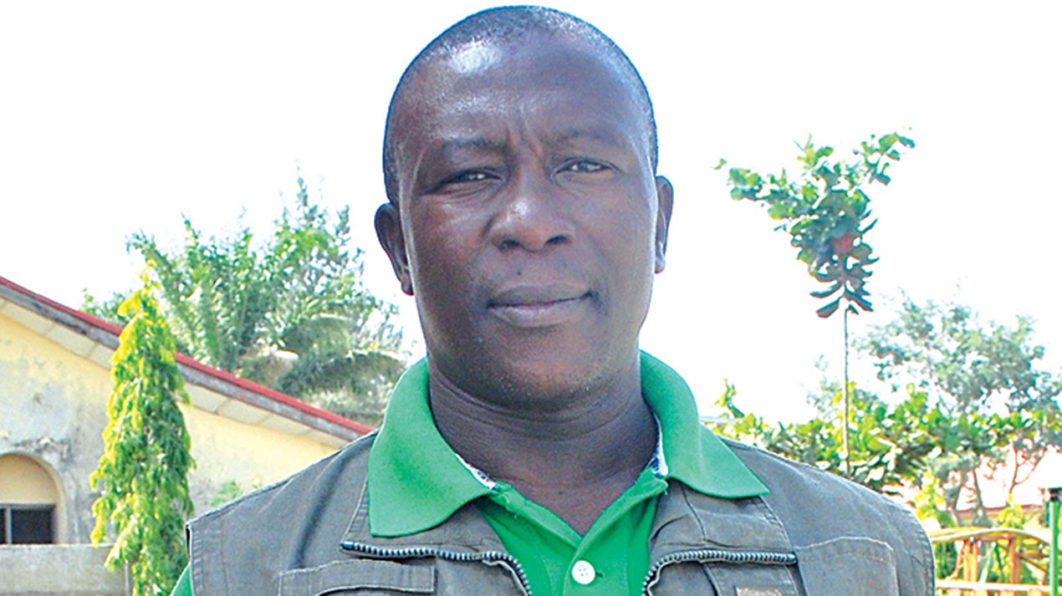
Nigeria’s festivals are widely recognised for their colourful displays, vibrant music and deep-rooted cultural traditions. Yet, according to Dr. Raphael James**, Director General of the Centre for Research, Information and Media Development (CRIMMD), their greatest value extends far beyond celebration.
Speaking at the Naija7Wonders Zoom Conference 3.0 on the theme “Festivals & Tourism in Nigeria: A New Pathway,” Dr. James argued that festivals should be seen as living repositories of history, identity and heritage that can strengthen Nigeria’s tourism industry if they are properly documented, preserved and interpreted.
His presentation complemented earlier discussions on the economic opportunities within festival tourism while shifting attention to what he described as an equally urgent responsibility—protecting the stories and cultural significance behind Nigeria’s traditional festivals before they are gradually lost to modernisation and poor documentation.
Commending tourism strategist Sewedo Balogun for his extensive research and presentation on festival tourism, Dr. James noted that his contribution would focus on another important dimension of the conversation. He revealed that CRIMMD has spent the past several months researching and compiling a publication titled “1,000 Festivals of Nigeria.” Although he initially questioned whether Nigeria truly had as many as one thousand festivals, the ongoing research has revealed the extraordinary depth of the country’s cultural heritage.
According to him, Nigeria’s more than 250 ethnic groups naturally produce an immense variety of cultural celebrations. During the research, the team discovered that the ancient kingdom of Ile-Ife alone hosts hundreds of traditional festivals, each reflecting different aspects of the community’s spiritual, cultural and historical identity. Beyond Yorubaland, he pointed to numerous festivals across the country, including celebrations among the Ijaw people, the Olushu Kuto Festival in Ikere-Ekiti, the Sea Festival in Kwara State, the Argungu Fishing Festival, the Durbar festivals, Osun-Osogbo, Ojude Oba and the rare Ohwuhu-Arosu Festival among the Kalabari people, which is celebrated only once every 26 years.
For Dr. James, this diversity demonstrates that Nigeria possesses one of Africa’s richest collections of cultural festivals, yet much of it remains undocumented and under-promoted.
Drawing from his own experiences, he recalled attending the historic FESTAC ’77 as a young boy, describing it as one of the defining moments that showcased Africa’s cultural diversity on a global stage. He also shared memories of the annual Ekpe Festival in his Abia State community, where his family hosted the celebration in 1984. He explained that beyond the colourful masquerades and performances lies a disciplined tradition that demands years of preparation. One of the festival’s highlights requires the masquerade to slaughter a goat with a single stroke—a test of precision and mastery that carries lasting honour or embarrassment depending on the outcome.
The story, he explained, illustrates that Nigerian festivals are not merely public entertainment but expressions of values, history and communal identity that have been preserved across generations.
While recognising the growing commercial interest surrounding cultural festivals, Dr. James cautioned against allowing tourism development to diminish their authenticity. He observed that tensions often arise when governments, investors and tourism promoters become involved without fully respecting the spiritual and historical foundations of community festivals. According to him, once the original meaning of these celebrations is removed, much of their uniqueness is lost.
Rather than focusing solely on revenue generation, he insisted that Nigeria must first preserve the origins, meanings and evolution of its festivals.
“It’s beyond making money. We need to document our stories. We need to tell our stories properly to the younger ones who will be coming after us.”
That commitment to historical preservation extends beyond festivals. Drawing on his visits to more than 600 tourist sites across Nigeria, Dr. James highlighted the neglected remains of the ancient Oyo Empire walls in Okuta, Kwara State. He revealed that he had written to the state government urging authorities to protect the surviving structures from further deterioration, arguing that such heritage assets deserve proper conservation so future generations can experience tangible evidence of Nigeria’s history rather than relying solely on oral accounts.
Throughout his presentation, Dr. James repeatedly stressed the importance of historical accuracy in tourism promotion. He expressed concern over the growing spread of distorted historical narratives through social media, tour guides, and even official institutions. Using the well-known Badagry “first storey building” as an example, he argued that describing it simply as Nigeria’s first storey building ignores the existence of much older multi-storey structures in places such as Benin and Katsina before colonial rule. In his view, referring to it as Nigeria’s first colonial storey building would provide a more historically accurate account.
He believes that credible storytelling is fundamental to building confidence in Nigeria’s heritage tourism sector and ensuring visitors leave with an authentic understanding of the country’s history.
Dr. James also reflected on his experience managing a museum of Nigerian history in Lagos, where he has dedicated considerable effort to researching every artefact in his collection. He contrasted this with what he described as inadequate historical interpretation in some public museums, recounting occasions when he found himself explaining exhibits to museum curators instead of learning from them. For him, museums should function as centres of research and education rather than simply places where artefacts are displayed.
Looking ahead, he strongly supported the idea of creating a comprehensive national festival calendar and documentation system. Such a resource, he explained, would allow domestic and international tourists to plan their visits well in advance instead of depending on last-minute announcements through social media. A properly documented festival atlas would also strengthen destination marketing, improve research and provide policymakers with reliable information for long-term tourism planning.
Although discussions throughout the conference highlighted the economic opportunities within Nigeria’s festival tourism sector, Dr. James consistently reminded participants that financial returns should never become the industry’s only measure of success. Cultural preservation, historical accuracy and community identity, he argued, are equally important if Nigeria hopes to build a tourism industry that is both sustainable and globally respected.
His presentation ultimately reinforced a simple but powerful message: Nigeria already possesses an extraordinary wealth of cultural heritage. The country’s challenge is not discovering new attractions but documenting, preserving, and truthfully telling the stories behind the festivals and historical sites that have shaped its identity for generations. In doing so, Nigeria can build a tourism industry that celebrates not only its diversity but also the authenticity that makes its cultural heritage unique.
