
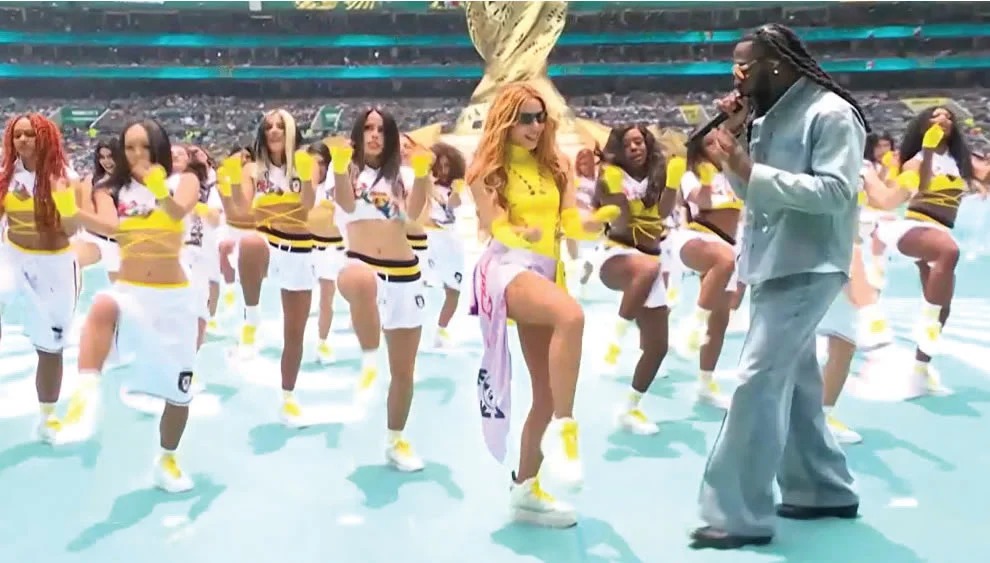
MEXICO CITY Before Mexico and South Africa delivered the first football drama of the 2026 FIFA World Cup, before the goals, the red cards and the debates that would dominate post-match conversations, another story was unfolding under the lights of the historic Estadio Azteca.
It was a story told through rhythm, language and cultural identity.
As fireworks illuminated the Mexico City skyline and tens of thousands of supporters filled the stadium, Nigerian Afrobeats superstar Burna Boy and Colombian global icon Shakira transformed the opening ceremony into a celebration that felt larger than football itself.
For many fans watching across continents, the performance was more than entertainment. It became an early reminder of what makes the FIFA World Cup unique: its ability to bring together cultures that might never otherwise share the same stage.
A Global Stage Meets Global Sound
The World Cup has always been football’s grandest gathering, but increasingly, its opening ceremonies have become cultural statements that reflect the changing face of the global game.
This year’s ceremony embraced that reality.
Performing “Dai Dai,” the tournament’s official anthem, Burna Boy and Shakira represented two musical movements that have reshaped popular culture over the past decade. Afrobeats has evolved from a regional phenomenon into a global force, while Latin music continues to influence charts, streaming platforms and international audiences at unprecedented levels.
The symbolism was difficult to miss.
One artist arrived from Africa’s largest music market. The other came from Latin America’s rich musical tradition. Together, they stood in a North American host nation before a worldwide audience numbering in the hundreds of millions.
The message was subtle but powerful: the World Cup belongs to everyone.
The Moment That Captured Attention
Shakira emerged first, commanding the stadium with the confidence that has made her one of the most recognizable performers in the world. Dressed in a vibrant yellow ensemble, she immediately energized a crowd already anticipating a historic evening.
When Burna Boy joined her midway through the performance, the atmosphere shifted again.
The pair performed atop a massive turquoise-and-yellow flag spread across the pitch carrying the words “We Are Ready” a phrase that resonated far beyond the stadium walls.
As Latin pop melodies blended seamlessly with Afrobeats rhythms, supporters waved flags from dozens of nations, creating a visual representation of the tournament’s global reach.
The performance reached its climax with fireworks in the colors of the Mexican flag — green, white and red — drawing cheers from spectators and instantly generating viral moments across social media platforms.
Within minutes, clips of the performance were circulating worldwide, with fans sharing reactions, videos and commentary online.
A Different Kind of National Pride
The timing of the ceremony was particularly significant.
Leading into the tournament, conversations around the World Cup had revealed varying levels of enthusiasm across host nations, particularly in parts of the United States where basketball, American football and baseball continue to dominate public attention.
Recent reporting by the BBC highlighted how some Americans remained largely unaware the tournament was beginning, while others admitted their focus remained on domestic sporting competitions such as the NBA Finals. Yet organizers and tourism officials have consistently argued that excitement would build once the event actually started.
The opening ceremony may have provided early evidence of that shift.
Music often succeeds where marketing campaigns struggle. It creates emotional connections that transcend statistics, ticket sales and tournament logistics.
For younger audiences especially, Burna Boy and Shakira were not merely performers attached to a football event. They were cultural ambassadors connecting global music fandoms with the World Cup experience.
In that sense, the ceremony became a gateway into the tournament for millions who might not ordinarily follow football.
Social Media Turns the Ceremony Into a Global Conversation
The digital age has fundamentally changed how fans experience major sporting events.
Previous generations watched opening ceremonies and discussed them the next day. Today’s supporters participate in a real-time global conversation.
Almost immediately after the performance, social media platforms were flooded with clips, reaction videos and fan commentary celebrating the fusion of Latin and African sounds.
Many Nigerian supporters expressed pride at seeing Burna Boy representing African music on one of the world’s largest stages. Colombian fans celebrated Shakira’s return to a World Cup spotlight, having become closely associated with football’s biggest tournament over the years.
Others focused on what the collaboration represented culturally.
Rather than centering one region or one musical tradition, the performance highlighted how modern football audiences consume culture across borders.
The enthusiastic online response suggested that many viewers saw themselves reflected somewhere within the show’s diverse artistic influences.
More Than Entertainment
What made the performance particularly compelling was the tension it navigated between global celebration and national identity.
Every World Cup asks countries to showcase themselves while simultaneously welcoming the world.
Mexico embraced that challenge throughout the evening.
The ceremony featured performances from artists including Maná, J Balvin, Danny Ocean, Los Ángeles Azules and Belinda, creating a showcase of Latin American creativity alongside international influences.
Meanwhile, renowned tenor Andrea Bocelli and singer EJAE delivered “DNA,” another official song from the tournament soundtrack.
The result was a ceremony that reflected the World Cup’s evolution from a purely sporting event into one of the world’s most significant cultural gatherings.
What It Means for the Tournament Ahead
The opening ceremony offered a glimpse into the broader identity of the 2026 World Cup.
Hosted jointly by Mexico, United States and Canada, the tournament is already being defined by cross-border collaboration, cultural exchange and unprecedented diversity.
The Burna Boy-Shakira partnership mirrored those themes perfectly.
It demonstrated how football’s biggest event continues to expand beyond the boundaries of sport, attracting audiences through music, culture, fashion and digital engagement.
For supporters inside Estadio Azteca, the performance was a memorable opening-night spectacle.
For millions watching around the world, it was something more enduring: a reminder that before football divides fans into rival camps for 90 minutes, it often brings them together through shared experiences.
As the tournament moves forward, there will be dramatic victories, heartbreaking defeats and unforgettable moments on the pitch.
Yet long after the opening match is forgotten, many may still remember the image of Burna Boy and Shakira standing together beneath the lights of Mexico City, turning a football tournament into a global celebration of culture.
And if the opening ceremony is any indication, the 2026 World Cup is poised to be remembered not only for who lifts the trophy, but for how the world came together along the way.
By: Sam Opoku
