
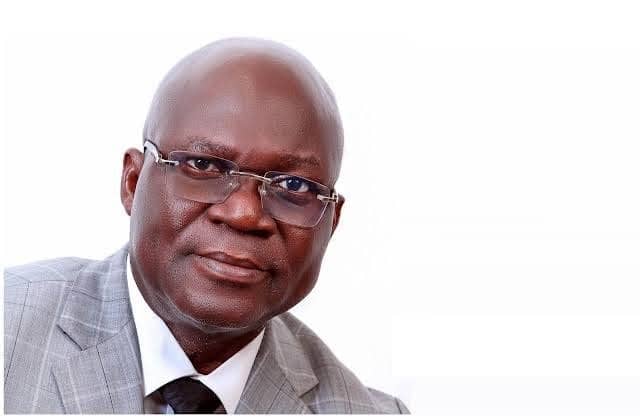
By REUBEN ABATI
Amid the constant tension and uncertainty of Nigerian politics, there are still moments and stories that remind people of humanity, hope, and the values that continue to inspire society beyond the political space.
According to thisdaylive, over the weekend for example, the 12th edition of the Africa Magic Viewers’ Choice Awards (AMCVA) was held at the Eko Hotels and Suites in Victoria Island, Lagos. It was a phenomenal event: a tribute to the African spirit of innovation and creativity. The Met Gala had been held earlier in the United States, May 4, at the Metropolitan Museum of Art in New York city, with the theme “Costume Art” and a dress code – “Fashion is Art” and there were impressive, energetic spectacles in terms of how the celebrities turned up. But coming just about a week later, the AMVCA 2026 properly established itself as the MetGala equivalent in Nigeria and even surpassed the show in New York where celebrities like Heidi Klum, Kylie Jenner, Beyonce, SZA, Cardi B, Tyla, Rihanna, Katy Perry, Anna Wintour, Teyana Taylor, Venus Williams, Naomi Osaka Lena Dunham gave us a bold-eyed look at fashion as art.
The equivalent in Eko Hotel and Suites in Lagos, Nigeria took the game of fashion and art a notch higher. The organizers of the Met Gala can learn one or two things from the creatives that the AMVCA brought together on Saturday, May 9: sculptural gowns, shimmering fabrics, heavily theatrical designs, a show of spectacle. Viewers and spectators would be struck for much longer by the dress worn by reality TV star, Queen Mercy Atang, made by Toyin Lawani of Tiannah’s Empire out of over 100 loaves of bread, a simple case of Atang, also a baker, wearing her business for the world to see. Nana Akua Addo, Ghanaian fashion star, arrived dressed like a Cathedral, a design looking like the Cologne Cathedral in Germany. Osas Ighodaro, actress, wore a dress designed by Veekee James, a silver corset, flowing dress, bedecked with stones and crystals, looking glowingly beautiful as if she just stepped out of God’s forge. Nigerians have a talent for making everything seem achievable and extraordinary and in a much better manner than elsewhere. I wondered however what could happen if any of the well-decked celebrities needed to answer the call of nature. How, for example, do you access a bathroom with 100 loaves of bread tied to your dress?
Spectacles make events and the venue defines them both. In the just passed AMVCA awards, the venue was part of the achievement, the glow and the grandeur, and it is notable that Eko Hotel and Suites which now marks and celebrates its 50thanniversary this week is the venue in question. This is a hospitality centre that has grown in 50 years into a leading cultural unit in Lagos, an essential tribute to Lagos as a tourist destination, and a place of comfort. Its profile as a sustainable cultural centre is a further tribute to the discipline, resourcefulness and tenacity of those who have managed it over the years. It is not surprising that in 50 years Eko Hotel has evolved over time into an epicentre of culture and hospitality and a primal event centre, especially in Victoria Island, the other part of the city where the gilded society lives. This piece is a tribute to the institution that the hotel has evolved to become and the culture of hospitality that it promotes. To put this in context, what is now known as Eko Hotel and Suites traces its beginnings to the heavy construction fever of the 1970s, ahead of the Second World Black and African Festival of Arts and Culture (FESTAC 77) which brought the world to Nigeria in celebration of the arts and cultures of black people. There was. a need then to provide facilities of international standards to host the guests.
Commissioned by the Nigerian government in collaboration with international partners and designed by a Nigerian architect, Oluwole Olumuyiwa and others, the hotel opened to the public in 1977, and was known as Eko Holiday Inn. The name changed over the years, at a time the hotel was known as Eko Le Meridien, and it has since transformed over the years into the present-day Eko Hotels and Suites, from a modest single brand, it is now a sprawling hospitality complex that is arguably the biggest hospitality facility in the whole of West Africa. Located at 1415 Adetokunbo Ademola Street, Victoria Island, it is now a multi-layered, multi-purpose establishment that stretches from Ademola street Eastwards towards almost the end of the street and Westwards and Northwards to as far as the Atlantic Ocean encompassing real estate, luxury apartments, and other satellite hospitality centres, indeed an emerging city within a city called Eko Atlantic City, designed with the vision of an international ecosystem. Behind it runs the Kuramo Lagoon, the much talked about Lagos-Calabar Highway and further down is the Atlantic Ocean. With over 820 rooms, and four major hotels – Eko Hotel, Eko Suites, Eko Gardens and Eko Signature – the hotel is considered one of the biggest five-star hotels in Africa and the most preferred in West Africa. It is not just a landmark in the city of Lagos, the contemporary history of Lagos would be incomplete without the story of the hotel. It has seen many seasons and touched many lives and institutions as a venue for birthdays, weddings, conferences, meetings, lectures, and a whole range of diverse offerings that make the hotel a cultural hub.
When I turned 60, it was my wife, Kiki’s choice as venue for the celebrations. It is a luxury hotel no doubt, but its current managers have packaged it as a place for all categories of patrons. In his book, The Theory of the Leisure Class (1899), Thorstein Veblen, the father of evolutionary and institutional economics, had written a harsh criticism of the conspicuous consumption and conspicuous leisure of the gilded age of his time, as environmental sociology, resulting in a culture of waste and stratification. Veblen’s criticism of the affluent society does not apply here considering the number of jobs that the Eko Hotel enterprise continues to provide, and the manner it offers services that appeal to all segments of society including playing grounds for children and families known as Hakuna Matata Theme Park, theatre performances, a nightclub, swimming pool side entertainment, a casino, a gym, and an arts and crafts centre which also doubles as a bureau de change. Staying in the hotel at various times, attending events and meetings therein has given me the opportunity of close observation, and how the hospitality business of today is better packaged as a supermarket proposition. When you go to a supermarket, you go to the section that interests you most. Eko Hotels and Suites is a case study in providing the right mix at scale. Under the leadership of Mr. Danny Kiopouroglou, a fully immersed Greek-Nigerian, as General Manager, Eko Hotels has continued to evolve into not just a hospitality destination but a symbol of excellence, resilience and world-class service in Nigeria. Danny’s ability to connect genuinely with Nigerians across all levels from corporate stakeholders to everyday staff members has helped foster a warm, people-driven culture within the hotel. His style, work ethic, and commitment to building meaningful relationships have added tremendous value to the Eko Hotels brand, strengthening its reputation both locally and internationally.
READ: Africa: Eko Hotel goes green as it launches Eco Friendly initiatives
This weekend, the hotel celebrates 50 years of service, May 15 – May 16, two days of reflections titled the Africa Legacy Summit, with specific focus on such themes as “Brand Africa: Culture as the Engine of Global Perception”, “Culture as infrastructure: Foundations for Sustainable Hospitality and Tourism”, “Culture as the Foundation of Africa’s Integration”, “Reimagining the Future of Travel, Tourism and Hospitality in Africa”, “Culture vs. Technology in African Hospitality, Tourism and Travel”, “Building Connected Experiences Across Africa’s Hospitality and Tourism.” Invited participants include some of the leading experts, writers and managers of travel and tourism across the African continent. It is interesting to see a hospitality business organizing intellectual sessions on what it does. Culture indeed matters, and it is no joke that hospitality, tourism and travels are interlinked in the definition of the cultural landscape. In 1988, the Nigerian government adopted a cultural policy which seeks to promote “national pride, solidarity and consciousness,” emphasize unity and creativity and place culture at the centre of national development, and as we have seen in the work of Ade Adefuye – Culture and Foreign Policy: The Nigerian Example (1992) – how culture can be used as a vehicle for foreign policy, but while Nigeria has enormous potentials, mere lip service is often paid at the national and sub national levels to the integration of culture in the national development framework. This is why for the most part, most of the major strides in culture have been recorded through private sector enterprise. Most of the great ideas in the cultural policy document have also suffered on account of the politics of implementation. With technology driving new models of engagement, there is an urgent need for a rethinking of Nigeria’s cultural policy written in 1988. The Africa Legacy Summit by Eko Hotels and Suites should provide an opportunity not only for the sharing of experiences with experts in the hospitality industry from other parts of the world, but also the new emerging areas of possibility in culture and hospitality management. The participation of government officials and the managers in the industry should facilitate the much-needed dialogue between both parties, beyond the exploitation of the hospitality industry for the purposes of taxation.
It is not easy to run any business in Nigeria. It is harder still to run a hospitality business in today’s Nigeria. Safety is one major source of concern, even if the crisis is not as widespread as presented in the foreign media. Electricity supply is epileptic and definitely, hospitality business and darkness are incompatible. Hotel owners have to keep their generating sets running, for almost 24 hours and when electricity is supplied, the pain of it is measured in the humongous, heart-breaking tariffs that the electricity company brings at the end of the month. Hotels have to provide their own water too as no Nigerian city can boast of potable water supply from government agencies. The cost of fuel is high. To worsen matters, the average Nigerian employee is more interested in how he or she can use the place of work as leverage, and often at the expense of the business owner. The increasing cost of living, with inflation at over 15%, and a shrinking middle class have further reduced occupancy rates in hotels, making the business far more competitive than has ever been the case, and more expensive to run. The lack of efficient regulation has also meant that in Nigeria, the hotel business has become a business in which just about anybody can invest, an all-comers’ affair as it were, without an understanding of standards and customer services. There is an impression of a boom, with the proliferation of different grades of service providers, but the quality is not necessarily guaranteed. Many of these mushroom hotels exist mainly for the purpose of self-aggrandizement. Technology is redefining service execution, with cost implications. The Nigerian government is not helping matters. Those in the hospitality business groan under the weight of taxes and bureaucratic pressures which affect profitability, a major reason for the high mortality rate in the industry.
To have survived such harassment for 50 years and to still hold the reputation of a preferred destination speaks to the organizational resilience and capacity of the managers of Eko Hotels and Suites. Many hotels that were established the same time 50 years ago in Nigeria, if they have not been shut down partially or completely or disappeared, are in varying states of disrepair. To remain alive beyond 50 all through the changing seasons of governance and politics in Nigeria, and most recently, the threat of COVID-19, which upended the hospitality enterprise worldwide, is in itself an achievement. The hospitality business is ultimately about people: meeting the expectations of guests, providing them with memorable experiences and better human service, with a good attitude, is what matters most to create authenticity and continuing relevance. To have done this successfully for 50 years is remarkable. To Eko Hotels and Suites, congratulations and happy 50th anniversary.
