
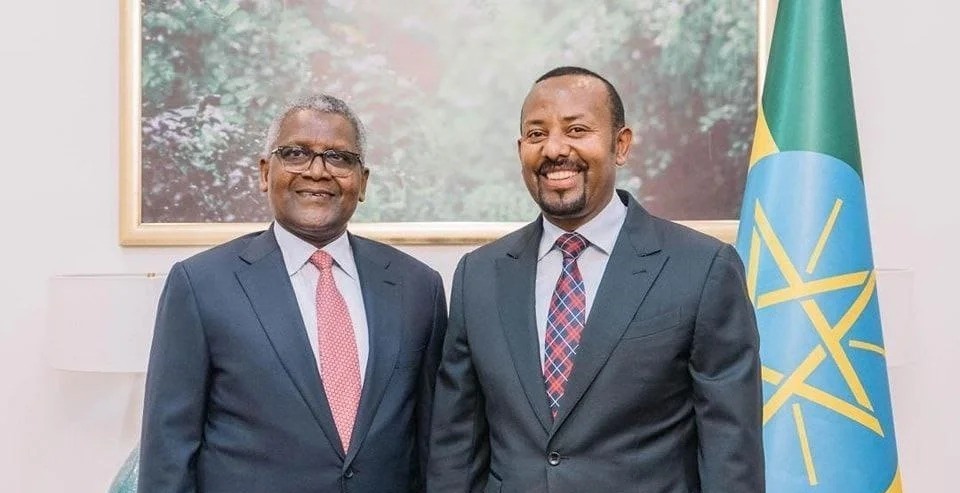
Ethiopia has finalized a $3 billion agreement with Nigerian industrialist Aliko Dangote to establish a major fertilizer manufacturing plant in the Somali Regional State.
The deal marks a significant step toward reducing the country’s dependence on fertilizer imports and strengthening domestic agricultural supply chains.
According to addisinsight.net, the project, expected to break ground later this year in Gode, marks one of Ethiopia’s largest industrial deals with a private foreign investor. Prime Minister Abiy Ahmed confirmed the agreement would be formalized in mid-July.
“This project will ensure that Ethiopia has sufficient fertilizer for the next three years,” Abiy said in a televised address. “More importantly, it will allow us to meet future demand with domestic production.”
Addressing a Structural Supply Gap
The deal comes amid mounting pressure on Ethiopia’s agricultural sector. Fertilizer shortages have disrupted planting seasons and exposed vulnerabilities in Ethiopia’s external supply chains, exacerbated by Red Sea shipping delays and broader geopolitical instability.
According to the Ministry of Agriculture, only 40% of the required fertilizer for the 2025 Meher planting season had arrived by April. Ethiopia currently sources most of its fertilizer from suppliers in Morocco and Russia, but foreign currency shortages and logistical constraints have repeatedly delayed distribution.
The proposed plant will manufacture urea and nitrogen-based fertilizers, targeting both domestic demand and export markets in East Africa, according to officials familiar with the plans.
Strategic Location and Industrial Decentralization
The choice of Gode—located near the Ethiopia–Djibouti logistics corridor—offers streamlined access to ports for both raw material imports and fertilizer exports. It also aligns with the federal government’s push to attract industrial investment into historically underserved regions.
The government is investing heavily in infrastructure, energy, and road connectivity across eastern Ethiopia to support new manufacturing clusters. Gode has been identified as a priority zone under this initiative.
Dangote Group Expands East African Footprint
The deal reinforces Dangote Group’s long-term strategic positioning in East Africa, where it has operated a cement plant in Ethiopia’s Oromia region since 2015. The group is also active in petrochemicals, energy, and agribusiness across the continent.
Dangote’s $2.5 billion fertilizer complex in Nigeria, launched in 2023, is the largest of its kind in Africa with an annual production capacity of 3 million metric tons. The Ethiopian facility is expected to mirror that capacity and may scale further depending on regional demand.
Reform Agenda and Investor Confidence
The announcement aligns with Ethiopia’s broader Homegrown Economic Reform II (HGER II) agenda, a government-led initiative aimed at liberalizing key sectors, modernizing agriculture, and attracting FDI.
Recent policy developments supporting the reform framework include:
- Fuel subsidy removal to reflect international price movements
- Digital land registration rollout for improved land governance
- Knowledge partnerships with Morocco and China on agri-tech
- Formation of a national food reserve agency
The agricultural sector accounts for roughly one-third of GDP and employs close to 70% of Ethiopia’s labor force. Ensuring fertilizer availability is central to improving productivity, reducing inflationary pressures on food prices, and enhancing rural incomes.
The deal is expected to be closely watched by development finance institutions, regional trade partners, and agribusiness investors. If executed effectively, the project could shift Ethiopia from a fertilizer importer to a regional production hub, while insulating its economy from future commodity price swings.
As Prime Minister Abiy positions the country for agro-industrial transformation, the Dangote plant may serve as both a symbol and a mechanism of Ethiopia’s ambition to rewrite its agricultural narrative—from dependency to domestic strength.
