
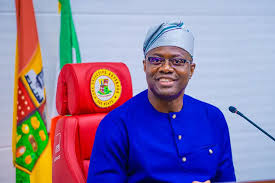
The decision by Seyi Makinde to introduce a 25-year tourism master plan for Oyo State is being viewed as a strategic effort to institutionalise tourism development beyond changing political administrations and election cycles.
According to tribuneonlineng.com, the long-term framework is designed to position tourism as a stable driver of economic growth, investment and cultural preservation, while ensuring continuity in policy implementation regardless of future governments.
This message is transformative, shaping how investors, communities, and future governments perceive the state.
For too long, tourism projects have required 5 to 15 years to mature, but investors hesitate when they fear a new administration will abandon agreements. By locking in frameworks like the Eleyele Lake development and the Bower’s Tower concession, a long-term plan reduces political risk and lowers the cost of capital. The result is a shift from grant-seeking to investment-attracting, bringing in private capital that creates jobs and expands the state’s tax base.
The plan also ensures that infrastructure is built with tourism demand in mind, not in isolation. Roads such as Moniya-Iseyin-Ogbomoso, the Ibadan Circular Road, and the Okaka-Igbojaye route are being designed to connect heritage sites, film villages, and natural assets. That connectivity cuts transport costs, opens rural economies to wider markets, and raises occupancy in hotels, resorts, and homestays. Towns like Oyo, Ogbomoso, and Igbojaye stop being places people pass through and become destinations in their own right.
Equally important is the preservation and monetisation of Oyo’s cultural and natural assets. From Alaafin’s Palace and Old Oyo National Park to the Sango Festival, KAP Film Village, and over 600 documented tourist sites, the state holds resources that degrade or go unused without a structured approach. A masterplan turns conservation into revenue through entry fees, cultural experiences, craft sales, and licensing, while keeping value within host communities and creating jobs for guides, artisans, and event managers.
A 25-year horizon also allows Oyo to build a skilled labour pipeline. Institutions like the University of Ibadan, LAUTECH, and the state’s polytechnics can align their curricula with the needs of a maturing industry. That alignment raises youth employment, slows rural-urban migration, and positions Oyo as a skills hub for the South-West. The success of KAP Film Academy’s training of 165 filmmakers shows what is possible when training meets long-term demand.
Regionally, the plan lets Oyo anchor a South-West Tourism Circuit. Positioned between Lagos, Osun, Kwara, and Ogun, the state can link attractions across borders into multi-state itineraries that increase visitor length of stay and spending. Branding Oyo as “The Cradle of Yoruba Civilisation” gives it a clear market position to capture more of the Lagos and diaspora traffic that currently bypasses it.
For government, the economic case is fiscal sustainability. A mature tourism sector generates internally generated revenue through taxes, concessions, and service fees, reducing dependence on federal allocation. That revenue can be reinvested into health, education, and further infrastructure, creating a cycle where growth funds more growth and diversifies the economy beyond agriculture and civil service.
The masterplan protects against the cycle of project abandonment that has defined much of Nigeria’s development story. The 110-kilometre Circular Road, stalled for 20 years, is a reminder of what happens when projects depend on personalities. Institutionalising the plan through committees, legal frameworks, and public-private partnerships makes projects survive political transitions and keeps them bankable.
In practical terms, the 25-year masterplan moves Oyo from short-term consumption of projects to long-term creation of assets. It lays the groundwork for more private investment, more jobs outside Ibadan, higher internally generated revenue, and a brand strong enough to compete in Africa’s $200 billion tourism market. Without continuity, the state gets projects. With continuity, it builds an industry.
These clearly articulated concepts formed the focus of the third edition of the Oyo State International Tourism Summit, themed _“From Groundwork to Governance: Building Tourism That Endures”.
In a well-structured session, committee members not only outlined the content of the 25-year tourism masterplan but also explained its role as a turning point for collaborative action.
The discussions centred on building and sustaining an economic and people-driven value chain that ensures continuity in Oyo State’s tourism sector.
Speaking at the summit, the Oyo State Governor, Engineer Seyi Makinde, explained that his administration has put in place major policies, actions and economic enablers that will make the Pacesetter State the hub of tourism in South-West Nigeria and a major tourism destination in the country.
The governor stated this on Wednesday, at the International Tourism Summit Oyo State 2026, noting that with key infrastructure development projects connecting towns and communities in the state, improved security as well as ongoing efforts to revitalise major tourist attractions, the number of tourism activities in Oyo State will increase in the next few years.
Speaking at the summit themed: “From Groundwork to Governance: Building Tourism That Endures”, held at the International Conference Centre, University of Ibadan, the governor said that another major factor that will make the state a tourism hub is in the area of continuity of policies and ideas, as according to him, policies underpinning tourism development have been institutionalised, with structures and systems well built and ideas aligned to sustain sector.
According to the governor, his administration has been showcasing tourism assets and building structures to institutionalise them beyond his term in office, with an approach that is deliberate and strategic, and goes beyond initiating projects, but is rather focused on building structures capable of sustaining long-term growth in the tourism sector.
He added that his administration has created a system where investment is not only possible but structured, protected and enduring for investors in the state.
He noted that investors should nurse no fear about leadership changes, as the teeming people of Oyo State will support members of his team in the next election cycle so that they can sustain policies and ideas that have worked out well in the interest of the state.
He said: “Some of you here were part of the tour of the Oke Ogun Zone, I hope you can now see why Oyo State is set to become the tourism capital of Southwest Nigeria in the coming years.
“I usually boast to people that from the train station in Moniya, you can drive at least 180 kilometres on state roads, with no single pothole. At least you can drive Moniya to Iseyin; it’s 65 kilometres. You can drive from Iseyin to Ogbomoso; it is 76 kilometres. And you can drive from Iseyin to Oyo. It’s about 42 kilometers and you won’t see one pothole on those roads.
“But now I want to speak about something more fundamental. Let me start by acknowledging our reality. When investors consider opportunities within our environment, there’s always an underlying question. It is not always asked openly. They may not come to you, but behind us, they are asking those questions.
“And the question is, what happens after this administration? Will policies continue? Will agreements be honoured? Will priorities remain consistent? And these are valid concerns, because investment, by its nature, is long-term.
“When you have long-term investments, you require more than vision. You require more than sweet talk. So, long-term investment requires continuity. And given the volatility of our political climate, we have had instances where one administration does its best to build systems, and the next comes in and scuttles it.
“Look at the 110 kilometres Circular Road we are building, it was conceived in early 2000 and nothing happened to it until two decades later. That’s not good. So, any private sector player who was hoping on working with that corridor would have been disappointed, and then investment would have been lost.
“But when we assumed office, we understood that progress driven solely by leadership is not enough, because leadership changes. I have told the people that I will recommend for the people of Oyo State, but the decision will rest with the people of the state. If we make a mistake, it’s a one-day event, but the impact will last four years. So, we must get it right.
“Leadership changes, but systems endure. So, our focus has been deliberate. For this tourism sector, we’re not just initiating projects. We’re building structures that can sustain them. Structures that define how decisions are made. We have aligned institutions around shared goals and ensure that progress does not depend on individuals. This is institutionalisation.
“But let me be clear about what this means in practice. It means we are creating and running coordinated systems. You have already seen this through the establishment of the 25-year tourism master plan committee and the structure development frameworks, such as what you have seen for Eleyele Lake.
“They are not temporary measures. They are building blocks of a system. So, indeed, we’re not speaking about continuity in theory. We are demonstrating it in practice.
“Last year, this summit opened the way for clarity under the Focus 5 investment site. And this year, like you already know, I am happy to again announce that a 15-year concession agreement has been signed with System Specs Limited for Bower’s Tower.
“Now to talk to investors. What does all of this mean for you? It means that when you engage with Oyo State, you are engaging with a system. A system where decisions are guided by frameworks, engagement is coordinated across government, and projects are anchored in long-term plans. It means that your investments are not dependent on personalities, but supported by structures. And what does that also mean? It means your risks are greatly reduced.
“So, as we approach the latter phase of this administration, our focus is clear. It is not just to complete projects but to ensure that what has been started can continue.”
Speaking on continuity, the governor maintained that as he had said on many occasions, he would recommend an individual to the people of the state, who would then decide who to vote for as the next governor, stating, however, that such recommendation will be influenced by loyalty to Oyo State and capacity to move the state forward rather than political party colouration.
He reiterated that his administration has been able to achieve success because it is blind to party affiliations and mainly focused on the development of the state, saying: “For us, if you’re from Oyo State, and you’re loyal to Oyo State, and you have faith in your state, and you have the capacity, we will tap you to support the development of Oyo State.”
He explained that what his government is trying to achieve with regards to continuity is to push for an Oyo State, “where the future administrations will not need to begin again. They will be able to build on what exists because the foundation has been properly laid. And this is what we mean when we say from groundwork to governance. We have moved beyond identifying opportunities. We are now building systems that will sustain them.”
He rallied the people of the state, especially the traditional rulers to continue to back the administration and to key into its vision and focus for the continued prosperity of the state.
Earlier in his speech at the summit, Dr. Kayode Fayemi, former Governor of Ekiti State, argued that tourism is no longer peripheral but a strategic tool for economic transformation and global positioning.
He stressed that destinations aren’t stumbled upon but they’re deliberately designed.
Yet across Africa, good tourism ideas often die because they aren’t institutionalised. Initiatives launch with fanfare but collapse when governments change, budgets shrink, or political attention shifts. The real gap, he said, is between aspiration and institutionalisation.
Drawing on Ekiti’s experience, Fayemi explained how his administration moved from building isolated projects to creating systems. When he took office in 2010, Ekiti had only two functioning hotels despite assets like Ikogosi’s warm and cold springs, Arinta Waterfalls, and religious sites in Okemesi and Efon. With limited IGR, the state shifted focus from “what can government fund?” to “what can the state become?” Ikogosi became the anchor. After it was abandoned and looted during his first term, he returned to rebuild it and concession it to a professional operator for 15–25 years.
The facility is now one of Nigeria’s best-run, and continuity held because the succeeding governor maintained the agreement.
His key lessons: tourism must be institutionalised, not personalised; government should catalyse, not control; tourism is an ecosystem, not single projects; and culture is not decoration.
He urged states like Oyo to embed tourism in enforceable systems, legal frameworks, concessions, civil service ownership, and community involvement, so growth survives political cycles.
For Fayemi, continuity isn’t optional. It’s the condition that makes development possible.
He urged the governor to embrace continuity as a development strategy, stressing that sustained policies and governance are essential for meaningful development.
Presenting the 25-Year Tourism Master Plan Framework, Dr Kola Lawal, said the initiative is to drive investment attraction and platform for cultural implementation tools for regional development, noting that Oyo State has a lot of heritage and iconic structures to promote tourism and attract investors to the state.
Also, in their separate addresses as investors in Oyo State, the founder, Kunle Afolayan Production (KAP) Film Village, Mr Kunle Afolayan and the Managing Director, Whatadeal Africa, Mr Obafela Bank-Olemoh, commended the governor for construction of roads to improve access and boost tourism in the state.
They both acknowledged the state as the custodian of history, tourism, traditions and customs, noting that heritage is the strongest tourism differentiator in the state.
Speaking on the tourism sector in the state, the Commissioner for Culture and Tourism, Dr Wasiu Olatubosun, explained that the tourism foundation being laid in the state is designed to ensure consistency, coordination, disciplined execution, and long-term growth.
He maintained that Oyo State has established institutional coordination, identified and prioritised key tourism assets with structuring development frameworks, and demonstrated early execution through strategic concessions with development partners.
Director-General, Oyo State Mobilisation Agency for Social Economic Development (OYMASED), Dr Morounkola Thomas, in his presentation entitled “From Execution to Governance”, said that when governance is in place, investors gain confidence and the government gains alignment, while projects gain continuity.
In his presentation on the Eleyele Lake Development Framework, Director-General of the Oyo State Investment and Public Private Partnerships Agency, Mr Tilewa Folami, also spoke about the tourism potential of the state.
In her opening address, the Secretary, Organising Committee, Ms. Abigail Anaba, noted that the government alone cannot build a tourism economy, but that its responsibility is to create clarity of direction, structure, and opportunity.
She emphasised that the event focuses on moving tourism development from alignment to execution in the state, thereby encouraging stakeholders to support the government, understand the systems and frameworks established and identify how to plug into the opportunities.
The event had in attendance the Deputy Governor of Oyo State, Barr Bayo Lawal; former deputy governor of Oyo State, Hamid Gbadamosi; Chief Judge of Oyo State, Hon. Justice Iyabo Yerima, represented by Hon Justice A.L Akintola; President, Customary Court of Appeal, Hon. Justice T.L. Abdulganiyu, represented by Hon. Justice M.A. Oyafajo; Secretary to the State Government, Prof. Musibau Babatunde; Chief of Staff, Otunba (Dr) Segun Ogunwuyi; Head of Service, Mrs Olubunmi Oni, mni and other government functionaries.
Also in attendance were traditional rulers, Service Commanders; captains of industry, and major stakeholders in the tourism sector, among other dignitaries.
