
Oyo State, in southwestern Nigeria, stands as a repository of Yoruba history, culture, and natural beauty. From the ancient ruins of the Oyo Empire to colonial landmarks in Ibadan and unique geological features, the state boasts over 160 documented tourist sites. Yet, despite this wealth, its tourism sector has historically underperformed relative to its potential. Recent policy shifts under Governor Seyi Makinde signal a determined push to transform tourism into a cornerstone of economic diversification.
Key attractions highlight Oyo’s diverse appeal. In Ibadan, Mapo Hall (1929), a colonial-era architectural gem on one of the city’s seven hills, symbolizes local governance. Nearby, Bower’s Tower (1936) offers panoramic views and historical significance as a colonial watchtower. The Agodi Parks and Gardens, spanning 54 hectares with a lake, zoo, and recreational facilities, serve as an urban oasis undergoing rehabilitation. Cultural sites like the National Museum of Unity, Irefin Palace, and the Cultural Centre at Mokola preserve Yoruba heritage through artifacts and architecture.
Natural wonders elevate Oyo’s profile. The Ado-Awaye Suspended Lake (Iyake Lake) atop Oke Ado Mountain is one of the world’s rare suspended lakes, drawing adventure seekers. Old Oyo National Park, Eleyele Lake, and sites like IITA grounds and the University of Ibadan Zoological Garden blend ecology, education, and leisure. Festivals such as the Sango Festival further enrich the cultural calendar.
Current visitor numbers hover around 6.7 million annually, but the state’s 25-Year Tourism Master Plan, unveiled at the International Tourism Summit Oyo STATE, ITSOYO 2026, aims for transformative growth. Phased implementation targets 8–12 million visitors in the first five years (generating ₦30–60 billion annually), scaling to 25–40 million by year 25, with projected revenues of ₦250–500 billion. Pillars include heritage preservation, product diversification (e.g., film villages like KAP), infrastructure connectivity (roads linking sites), marketing, investment promotion, and governance reforms. Pilot projects like the Eleyele corridor and public-private partnerships seek to de-risk investments and ensure continuity beyond political cycles.
Analytically, the plan addresses Nigeria’s broader tourism pitfalls; poor infrastructure, inadequate promotion, insecurity, and fragmented governance. Oyo benefits from proximity to Lagos (via improved rail and roads), a growing hospitality sector, and urban appeal that attracts day-trippers and longer stays. Tourism could generate direct and indirect jobs in hospitality, guiding, crafts, and transport, while boosting IGR and reducing oil dependency. Successful execution might position Oyo as a premier domestic and international destination, leveraging its “cradle of Yoruba civilization” identity.
However, significant challenges persist. Many sites suffer from poor maintenance, limited funding, and weak marketing, leading to underutilization. Insecurity, including occasional kidnappings and crime near attractions, deters visitors. Infrastructure gaps; roads, sanitation, and accommodations outside Ibadan, hinder accessibility, especially in rural areas. Skills gaps in professional tourism management and inconsistent policy implementation across administrations remain hurdles. Crises like COVID-19 previously exposed vulnerabilities in visitor flows.
Opportunities outweigh risks if addressed strategically. Developing one viable site per local government area promotes inclusive growth. Investment in eco-tourism, cultural festivals, and creative industries (film, music) can create year-round appeal. Enhanced branding, digital marketing, and partnerships with airlines or tour operators could elevate international arrivals. Sustainable practices—preserving biodiversity in parks and lakes—will be crucial for long-term viability.
In conclusion, Oyo State’s tourism sector embodies untapped promise. The 25-year blueprint reflects visionary governance, shifting from potential to performance. Realizing ₦500 billion in annual revenue will demand sustained investment, security enhancements, community involvement, and adaptive management. If successful, Oyo could not only enrich its economy but also showcase Nigeria’s cultural and natural assets globally, fostering pride and prosperity. With strategic execution, the state’s hills, lakes, and heritage may soon draw millions, writing a new chapter in its storied legacy.
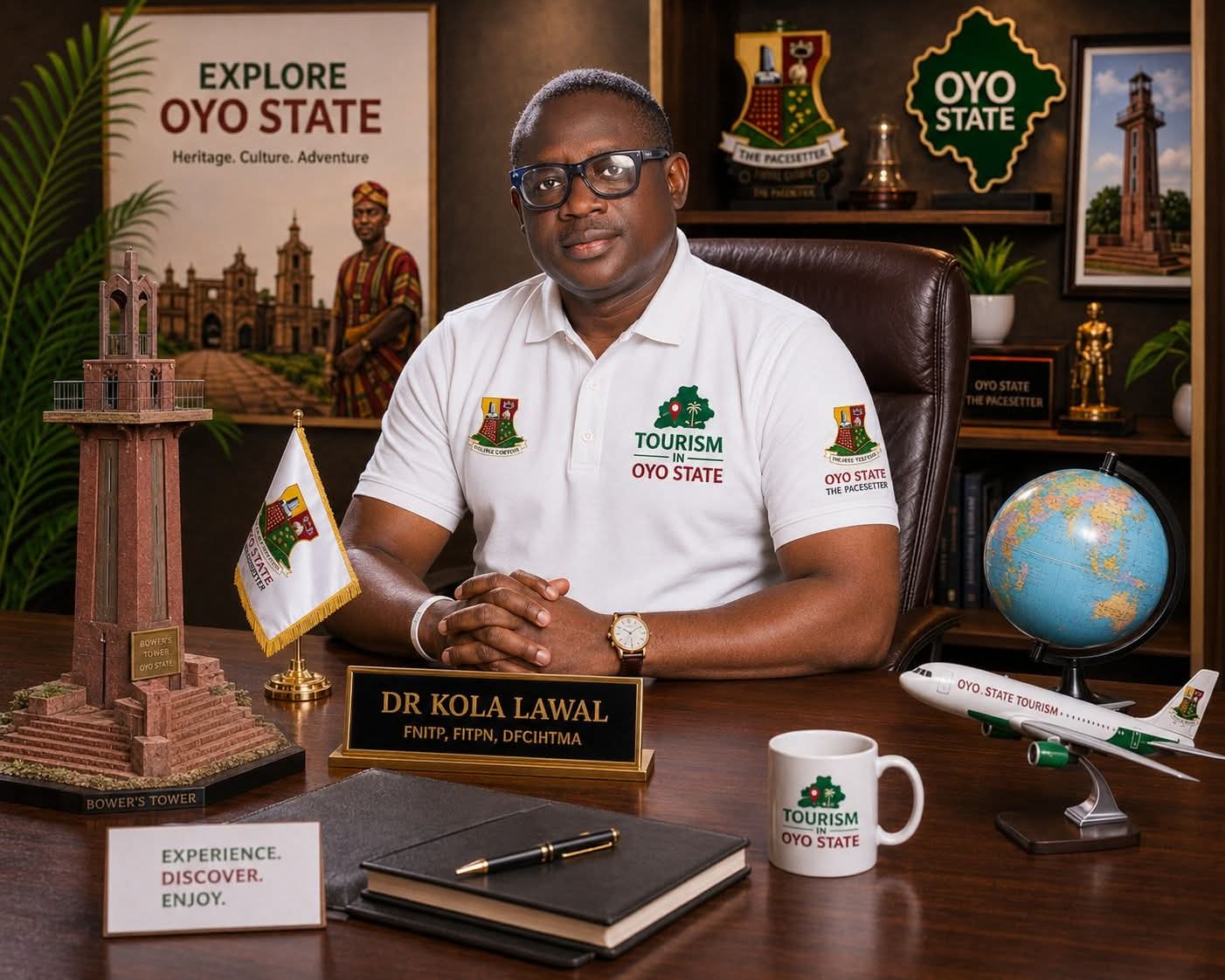
Dr Kola Lawal, FNITP, FITPN
Is an Urban Planner and Tourism/Heritage Planne. He is a Fellow of the Institute of Tourism Professionals of Nigeria.
He Writes from the Department of Tourism Management Technology, The Polytechnic, Ibadan
