
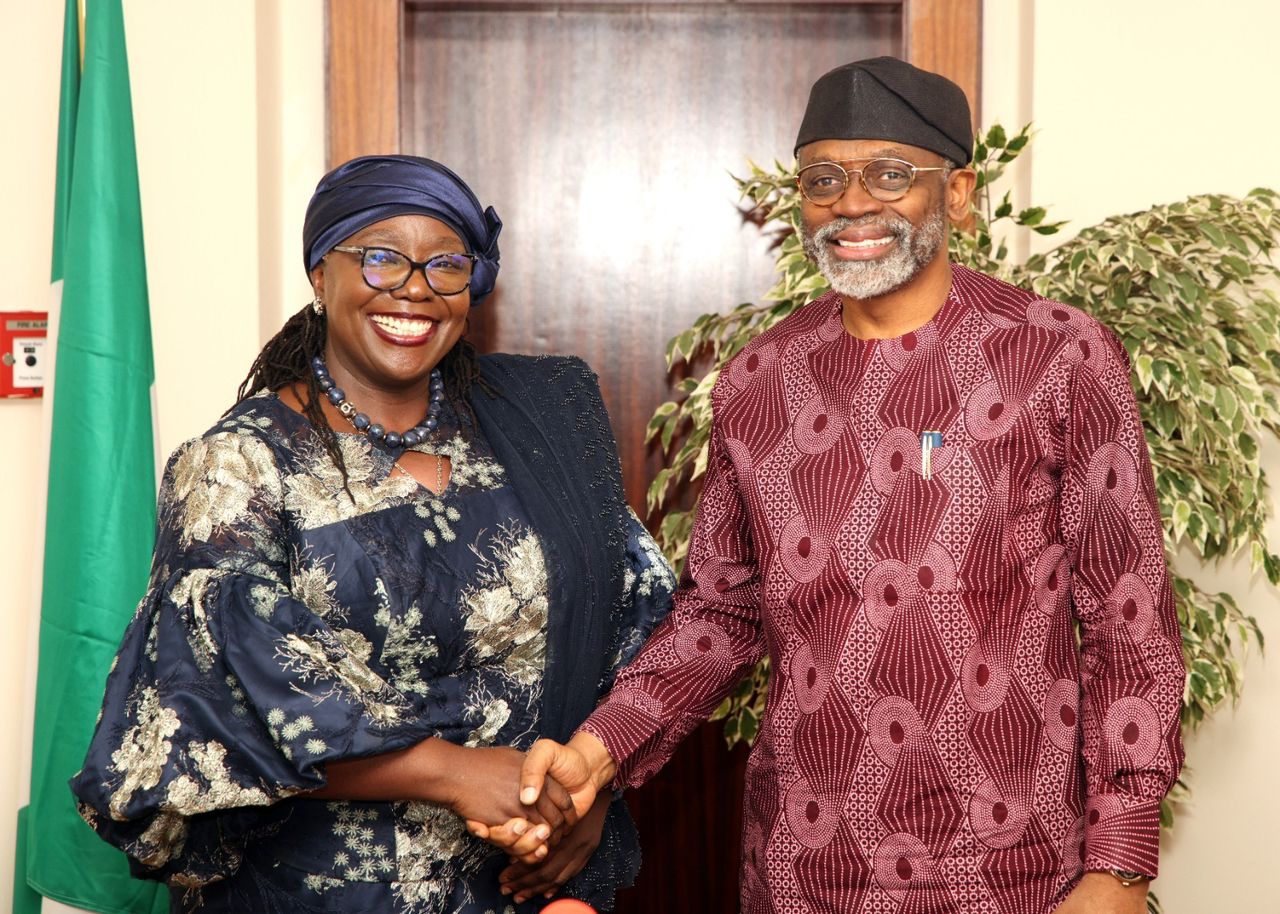
Nigeria’s Federal Government has signalled its intention to deepen collaboration with the United Nations Development Programme, commending the agency for its ongoing support of the country’s development initiatives.
According to thenationonlineng.net, the move aims to accelerate key reform programmes, strengthen institutional capacity, and ensure more effective implementation of national development priorities.
The Chief of Staff to the President, Hon. Femi Gbajabiamila, gave the commendation at the Presidential Villa, Abuja, while receiving the UNDP Resident Representative in Nigeria, Ms. Elsie Attafuah, who paid him a courtesy visit.
Gbajabiamila praised the UN agency for its long-standing presence and interventions across multiple sectors in Nigeria, noting that the government would continue to leverage the organisation’s expertise and support to strengthen the country’s reform agenda.
In a statement issued by the Director of Information and Public Relations at the State House, Abiodun Oladunjoye, the Chief of Staff said “UNDP has been around in this country for long and some of the things you have done, over a wide range of areas, are commendable. I want to thank you, once more, for your support for President Tinubu’s reform programmes”.
He highlighted the administration’s commitment to industrialisation through the Made-in-Nigeria policy, describing it as a key component of President Tinubu’s economic reform drive aimed at boosting domestic production and strengthening value chains.
“For instance, you talked about Made-in-Nigeria policy which is part of Mr. President’s reform agenda through which the President wants to bring into his administration a commitment to industrialisation. Some call it Nigeria First.
“The President is passionate about it. We had the local content in the oil industry, but this is a much wider concept. How can we practicalise this and make it work, with all of its value chain and all that comes with it; employment, growth in the economy, among others?”, Gbajabiamila said.
He also urged the UNDP to support Nigeria’s efforts to increase women’s participation in politics and governance, noting that the agency’s experience in other countries could help guide reforms in a manner that respects local cultural and religious sensitivities.
Gbajabiamila further identified other priority areas where Nigeria would welcome the agency’s support, including poverty reduction, education, agriculture, and the mining sector.
Earlier, the UNDP Resident Representative expressed appreciation for the cordial relationship between the organisation and Nigeria, describing the partnership as productive and mutually beneficial.
READ: News: UNDP Unveils 6 Strategies for Global Sustainable Energy Solutions Worldwide
Attafuah, who has spent two years in Nigeria, commended President Tinubu’s leadership, describing it as “exemplary and transformative.”
“We are here to seek how we can continue to position Nigeria as the leader and giant of Africa; to ensure that we support Nigeria’s development initiatives and aspirations.
“We are here also to reflect on what are some of the things that we can do as the largest development agency in the United Nations family”, she said.
She explained that the UNDP is currently shifting its development approach from short-term project-based interventions to a longer-term model that emphasises government financing and national ownership of development programmes.
According to her, the shift has become necessary in view of the gradual withdrawal of many traditional development donors, making it imperative for national governments to take greater responsibility for their development priorities through prudent use of resources.
Attafuah described the Made-in-Nigeria policy as a strategic initiative capable of driving economic competitiveness, innovation, and job creation.
She disclosed that the UNDP had also launched the University Graduate Hub initiative, designed to help young Nigerian graduates transform innovative ideas into commercially viable products.
Under the initiative, graduates can upload prototypes of their inventions and creative works onto a platform where potential investors and financiers can assess and support them.
She added that the agency was exploring additional areas of collaboration with Nigeria, particularly in the education and energy sectors.
