
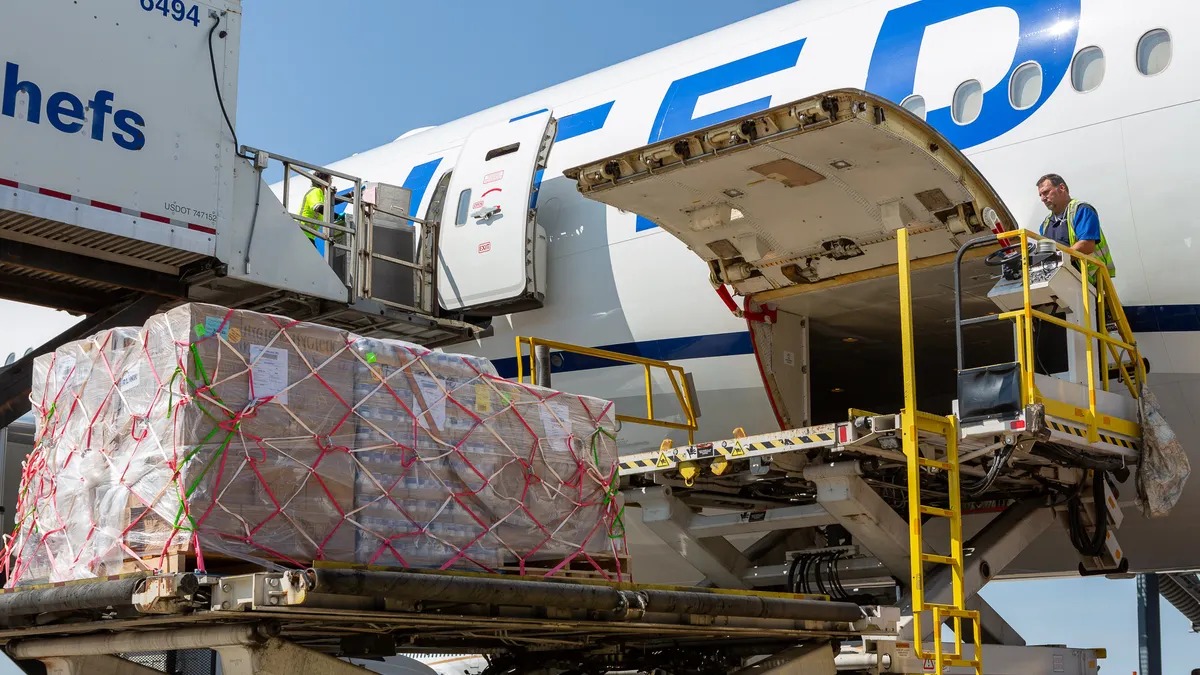
With airfreight volumes declining, airlines are shifting capacity to align with shippers’ efforts to avoid tariffs, according to experts cited by Supply Chain Dive.
According to supplychaindive,since the Trump administration announced its reciprocal tariffs in April, China-U.S. cargo volumes dropped by up to 60%, Seko Logistics VP of Global Airfreight Laurent Deneubourg told Supply Chain Dive. Tariffs have impacted e-commerce bookings in particular, which typically account for up to 60% of China-U.S. shipments and 20% of global air cargo. E-commerce bookings dropped by 50% in May.
Besides e-commerce, the tariff changes have had the broadest impact on automotive volumes, fast fashion, consumer electronics and toys, which are goods often shipped via air, experts said.
The May 2 end of the de minimis exemption for imports from China and Hong Kong also resulted in falling volumes and excess air freight capacity, Joe Kronenberger, Geodis SVP of airfreight product in the Americas region, told Supply Chain Dive.
With volumes down — especially as de minimis items alone accounted for 50% of air freight volumes — shippers are canceling block space agreements and charters, Deneubourg said. The air cargo sector is currently facing an estimated $22 billion revenue loss over the next three years as it battles trade uncertainty.
To accommodate the changes, carriers are redeploying capacity to alternative routes, including Southeast Asia to the U.S., Kronenberger said.
“While routes aren’t changing completely, capacity is shifting as demand fluctuates,” he said. Kronenberger added that cargo volumes saw an uptick since the 90-day pause on tariffs was announced. The increase has helped to stabilize previously low rates and fill some of that excess airfreight capacity out of China.
For the week of May 27, air freight rates from China to North America were down 7% week over week to $5.14 per kilogram, Freightos reported. Rates were at their lowest level since March.
Although shippers are still using Transpacific routes, the countries of origin for the flights are changing as more companies look to push production away from China as a buffer against U.S. tariff policies, Kronenberger said.
But moving procurement networks is no easy task.
“Moving production and redefining company ownership to align with a new country of origin takes time, but we’re seeing that clients are willing to reshape their strategies if it means creating a more resilient supply chain in the face of continued regulatory changes,” Kronenberger said.
Changing trade regulations have made it difficult to forecast the next few months. Kronenberger said many of Geodis’ clients are “tariff shopping,” or looking for alternative ways to mitigate tariff impacts. For some, this might look like moving production away from China or opting to use bonded warehouses to hold cargo upon arrival.
“In consumer technology especially, we’ve seen some of our clients shift production out of China into Southeast Asian countries or India,” he said. “In these cases, some have already notified us that up to half of what they’re currently shipping out of China is going to start shipping from other countries.”
Shippers continue to struggle to understand how the various tariff provisions are stacking up or canceling out, said Brian Bourke, Seko’s global chief commercial officer. The confusion has led to ongoing changes in scenario planning, which can freeze business decisions, he warned.
“Shippers are telling us they’re taking a ‘wait and see’ approach—continuing to cancel orders from China,” Bourke said. “But the real question is: what happens when the safety stock they’ve been relying on runs out?”
