
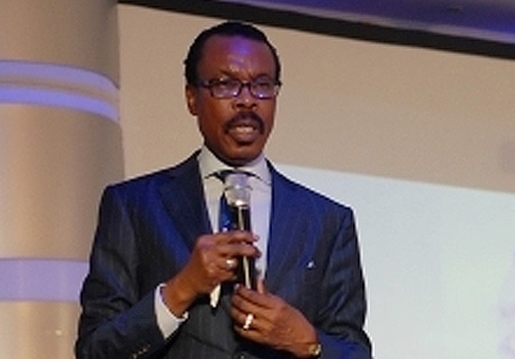
Bismarck Rewane, CEO of Financial Derivatives Company, revealed that just five out of Nigeria’s 23 active domestic airlines handle 75% of local air traffic.
According to businessday, Rewane who, however, did not mention the names of the airlines, noted that domestic passenger traffic declined for the 2nd straight year to 11.5million in 2024, and air transport sector contracted by 0.81 percent in first quarter of 2025, the 6th consecutive quarterly decline.
According to him, Nigeria has 32 airports, only 20 were considered viable in 2024, and 92-96 percent of traffic flows through just four airports.
Speaking during the annual conference of the League of Airports and Aviation Correspondents on Thursday at the Providence Hotel, GRA, Lagos, he mentioned that due to poor infrastructure, Nigeria’s aviation sector lost $3.5 billion in revenue between 2020 and 2022.
The CEO of Financial Derivatives Company expressed concerns that Nigeria continues to spend billions on airports operations but the air traffic continues to decline and this is not commensurate with the airport operations expenditures.
According to him, MMIA Lagos (Nigeria) processes 6.5 million passengers annually and spends 1.75bn dollars to run the airport; Los Angeles Intl (USA) processes 76.5 million passengers and spends 3.5 billion dollars; Heathrow (UK) processes 83.9 million passengers and spends 15.6 billion dollars; Chicago O’Hare Intl (USA) processes 58 million passengers and spends N4.5 billion dollars; Dubai Intl (UAE) processes 92 million passengers and spends 4.0 billion dollars.
READ: Africa: Aviation Minister Keyamo Reveals How Over 100 Nigerian Airlines Died in Four Decades
Rewane who spoke on ‘Aviation Financing in Nigeria: Risks, Opportunities and Prospects,’ said the Nigerian aviation sector is in need of consolidation and a need for a competitive hub system, preferably in Lagos, then Abuja.
“We need very strong and effective regulation for safety; concessions and PPPs should be prioritized for airport upgrades to aid national fiscal sustainability and avoid inefficient operations. There should be investment in local maintenance, repair & overhaul hubs.
“Government should focus on policy and regulation, not running airlines or building airports directly and policy consistency is crucial for rebuilding trust with global investors and attract global aviation capital,” he recommended.
Mary Olowo-Sokeye, chief financial officer-InterGuide group including Sabre Central and West Africa who also spoke at glevebt said the success rate of aircraft in Nigeria in terms of operational efficiency and one-time performance is lower than global averages.
“With Nigerian airlines averaging 48 percent success rate compared to 81 percent global standards while there are growth in aircraft numbers and passenger numbers, challenges persist in meeting global standards,” Olowo-Sokeye said.
She said there are a lot more airports than Nigeria had 10 years ago ad therefore aviation and airlines require funding to be compliant in a highly regulated and competitive environment.
