
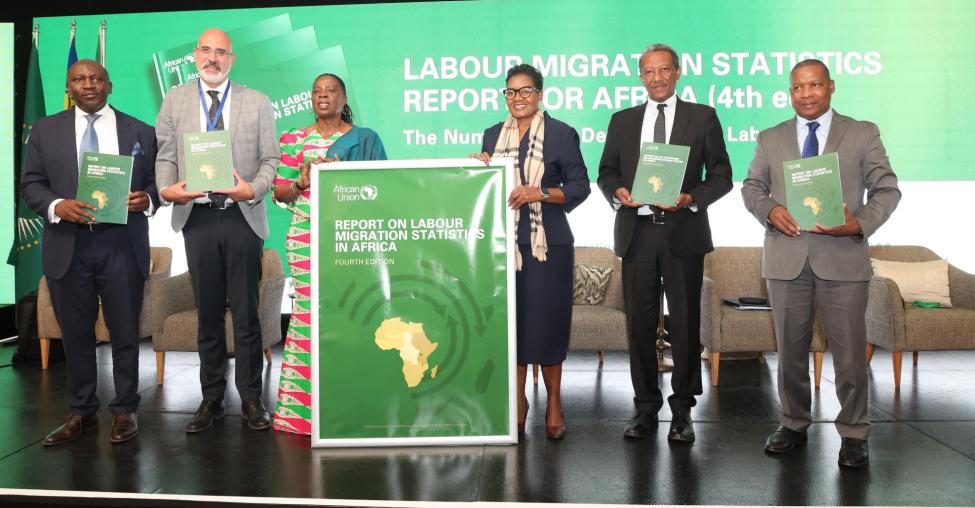
Africa’s migrant workforce has grown significantly over the past decade, reaching 13.1 million people in 2024, up from 9.3 million in 2010, according to the Fourth Edition of the Labour Migration Statistics Report in Africa, launched by the African Union (AU) and its partners.
According to a post on ‘X’, the report reveals that of the continent’s 26 million international migrants, 20.4 million are of working age, with 64% actively participating in the labour force, underscoring the growing role of labour migration in Africa’s economic development.
Despite the increase in migrant workers, gender disparities remain pronounced. Men account for 63% of Africa’s migrant workforce, while women represent just 37%, highlighting the need for more inclusive labour migration policies. Regionally, West and East Africa host nearly 48% of all international migrants on the continent. Meanwhile, West, East and Southern Africa collectively account for 78% of Africa’s migrant workers, making them the continent’s principal labour migration corridors. The report was officially unveiled on 31 July 2026 during the Ministerial Session of the Sixth Ordinary Session of the African Union Specialised Technical Committee on Social Development, Labour and Employment (STC-SDLE 6) in Windhoek, Namibia.
READ: Africa: Ethiopian Migrants Transform Johannesburg’s Inner City into a Thriving Trade Hub
Speaking at the launch, the African Union Commissioner for Health, Humanitarian Affairs and Social Development, Ambassador Amma Twum-Amoah, underscored the importance of quality migration data in shaping effective policies. “We cannot effectively govern what we do not adequately measure,” she said, stressing that timely, reliable, comparable and disaggregated migration data remains a priority for the African Union. The report also highlights the growing economic contribution of African migrants through remittances. Money sent home by migrants increased from US$64.8 billion in 2013 to US$97.5 billion, providing a vital source of income for millions of households across the continent.
According to the findings, Northern Africa received 45% of total remittance inflows, while West Africa accounted for 34%, reflecting the significant economic impact of migrant workers on regional development. Produced every two years under the Joint Labour Migration Programme (JLMP), the report serves as a key resource for governments and policymakers seeking to strengthen labour migration governance, improve employment opportunities and maximise the developmental benefits of migration across Africa.
