
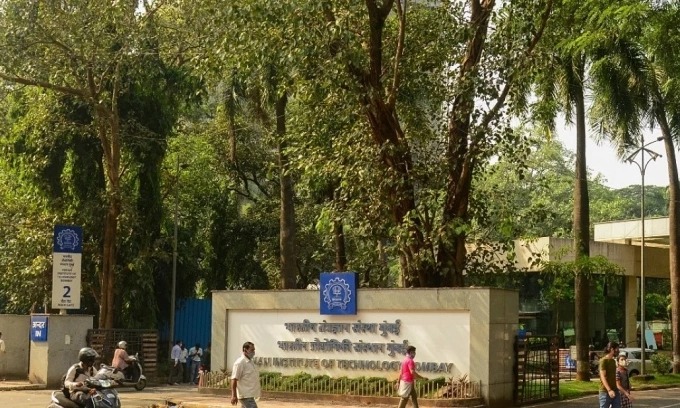
Despite being one of the world’s largest sources of international students, India continues to face significant obstacles in its quest to attract learners from around the globe, a new report reveals.
The findings highlight how deep-rooted structural challenges are limiting the country’s potential to position itself as a competitive destination for global education.
According to e.vnexpress.net, each year, millions of Indian students leave the country to pursue higher education overseas, drawn by globally ranked universities, international exposure, and stronger career prospects. In contrast, the number of foreign students choosing India remains relatively small, the National Institution for Transforming India (NITI Aayog) found.
Policy ambitions fall short
India’s ambition to position itself as an international education hub was formalized with the launch of the Study in India (SII) program in 2018 by the Ministry of Education. Designed to boost inbound student mobility, the initiative seeks to promote Indian higher education institutions as an alternative to traditional study-abroad destinations, particularly for students from the Global South.
“Despite its strong policy backing and strategic initiatives, SII has not achieved its enrollment goals. With just over 46,000 international students currently in India, it is far short of the identified target of 200,000 inbound students by 2023, the initiative presents an instructive case of how good intentions need to be supported by systemic readiness and strategic execution,” NITI Aayog said in its report “Internationalization of Higher Education”.
Over the past 25 years, international students have accounted for just 0.11% to 0.5% of India’s total higher education enrollment.
One-way student mobility
In 2021-22, India hosted only 46,878 inbound international students, while more than 1.159 million Indian students went abroad.
By 2023-24, the number of Indian students studying overseas rose to 1.336 million, even as India received 72,218 foreign students in the 2024-25 academic year.
This imbalance is particularly stark when viewed against global trends. International student mobility has expanded rapidly over the past two decades, driven by rising demand for globally competitive education. The report notes that the number of students studying abroad worldwide tripled from 2.2 million in 2001 to 6.9 million in 2022.
Safety, visa barriers
The NITI Aayog identified several structural barriers holding India back. Most higher education institutions fall short of global standards in campus infrastructure, housing, safety, and basic support services such as visa assistance and access to banking.
Visa and regulatory processes are often complex and slow, creating uncertainty for prospective students, while dedicated international student support systems remain limited.
Academic programs are frequently inflexible and misaligned with global trends, and scholarship schemes suffer from unclear eligibility criteria and delays in implementation.
These challenges are further compounded by weak global branding and outreach, limited use of alumni networks, insufficient public-private collaboration, and the lack of integration between international education initiatives and India’s broader diplomatic and strategic frameworks.
Global competition
Between 2004 and 2024, the United States consistently remained the world’s top host destination for international students, with enrollment increasing from 573,000 in 2004 to 975,000 in 2014, and reaching 1.127 million in 2024. The U.K., Canada, and Australia also continued to rank among the leading destinations.
In 2014, China, India, South Korea, Saudi Arabia, and Canada were the largest source countries of international students in the U.S., accounting for 54.1% of total enrollment. By 2024, India overtook China as the leading sender, alongside South Korea, Canada, and Taiwan, pushing the combined share of the top five source countries to 62.5%.
Canada surpassed the U.K. as the world’s second-largest host destination by 2024. India, China, Nigeria, the Philippines, and France accounted for 65.6% of Canada’s international students. China dropped out of the top five host countries globally, while the U.K. ranked third, hosting mainly students from India, China, Nigeria, Pakistan, and the U.S., who together made up 60.2% of its international enrollment.
Within India, Nepal has consistently been the largest source of international students, with numbers rising from 7,167 in 2012-13 to 13,126 in 2021-22. Afghanistan also featured prominently, increasing from 2,330 in 2012-13 to 4,378 in 2017-18, before declining to 3,151 in 2021-22 due to domestic instability and shifting migration patterns.
Economic and academic consequences
The report underscores that the imbalance in student mobility has consequences.
It said international students are a major economic asset, contributing to host countries through tuition fees, housing, consumer spending, and, in many cases, long-term workforce participation. Last year, experts warned that the United States could lose as much as US$7 billion in revenue from international students following stricter student and work visa policies.
Against this backdrop, India’s limited ability to attract foreign students at scale results in lost foreign exchange earnings, weaker campus diversity and global exposure, poorer performance in international university rankings, and a reduced capacity to attract and retain global research and teaching talent. At the same time, the continued outflow of Indian students leads to a substantial transfer of financial resources overseas, reinforcing the one-way nature of India’s student mobility pipeline, the report said.
