
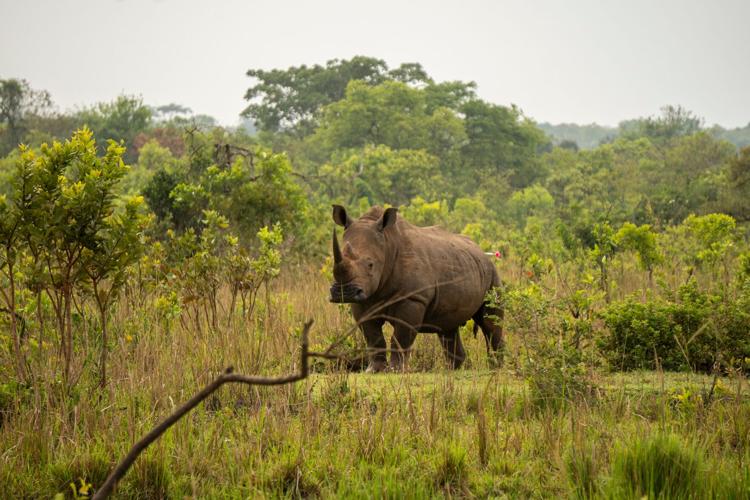
As part of efforts to support the recovery of a species threatened by poaching, the Uganda Wildlife Authority (UWA) officially reintroduced southern white rhinos into the Kidepo Valley National Park.
This move marks the return of the species to the remote, rugged landscape of northeast Uganda for the first time in over 40 years. The reintroduction follows decades of recovery efforts after the country’s original rhino population was wiped out by poaching in 1983. But a private ranch in central Uganda — the Ziwa Rhino Sanctuary — has been breeding the large mammals since 2005. That program has succeeded over the years.
According to New York Post, on Tuesday, two southern white rhinos from a private ranch in the East African country were reintroduced into Kidepo Valley National Park in the country’s northeast. Two more rhinos in metallic crates arrived there on Thursday. “This moment marks the beginning of a new rhino story for Kidepo Valley National Park,” said James Musinguzi, executive director of the Uganda Wildlife Authority. “We are deeply grateful to our conservation partners whose technical expertise, financial support, and logistical contributions have made this milestone possible.”
Local wildlife authorities collaborated with multiple conservation groups, including Global Conservation, to relocate some rhinos from Ziwa Rhino Sanctuary to another sanctuary inside Kidepo Valley National Park, more than 400 kilometers (250 miles) away. The rhinos’ new habitat has fence lines, access roads, and fire management infrastructure. More rhinos are expected to be relocated there later this year, including some from Kenya. The rhino translocation “shows that Uganda is stable again for tourism, national parks are being protected, and Ugandans and international visitors can watch rhinos in their natural setting, which will be an incredible feat,” said Jeff Morgan, executive director of Global Conservation.
Poaching remains a problem in Uganda’s protected areas, although enhanced security measures have curbed incidents over the years. Rhinos are targeted by poachers who kill them because of the high demand for rhino horn products for medicinal and other uses in parts of Asia. Studies indicate that rhino horn products sold through illegal markets sometimes fetch higher prices than gold.
