
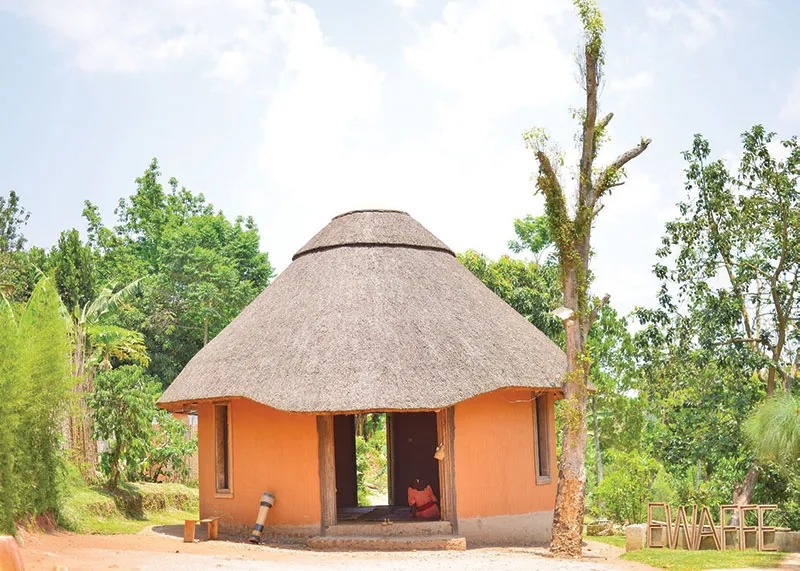
Nestled in the heart of Uganda, Ewaffe Village has emerged as a leading example of community-driven and cultural tourism, offering visitors an authentic experience of Kiganda traditions, heritage and rural life. Located in Naggalama, Mukono district, 38km from Kampala,
The Observer recently traveled to the center to see what all the hype was about. We had seen people on social media gush about the traditional food spread, dances, ssenga talks, nature walks, games like omweso, preparation of the food like the matooke, luwombo and banana juice (omubisi) from scratch, and we had to see for ourselves.
On arrival, the huge beautiful hut transforms one’s mindset to the village setting; young girls dancing the bakisimba entertain guests as they sip a mubisi out of a gourd with a bamboo straw.
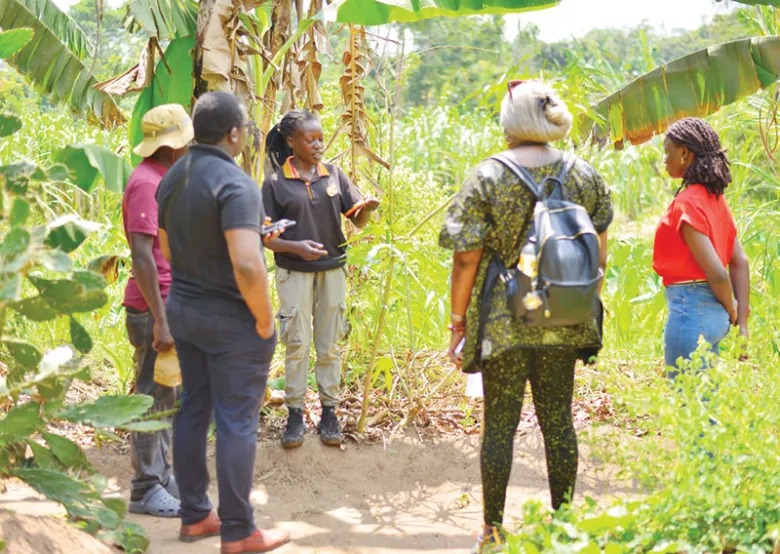
A longside the Dutch and Malaysian tourists we found there, we were taken to the first tourism stop of the day, which was the herbal medicine. Our guide, Jackie Nanyonga, showed us different medicinal plants such as aloe vera (kigagi), stevia, ironweed, sour sop (Kitafeeri), turmeric, underseed plant, castor plant, ginger, pomegranate, rosemary, lemongrass, eucalyptus and tobacco, among others.
Nanyonga, who impressed tourists with her vast knowledge about the herbs, emphasized the limited side effects that herbal medicines have, compared to Western medicine. With that done, Nanyonga taught us how to make a head cushion (enkata) out of banana leaves, used to carry water pots as we prepared to go to the well. Being city-born-and-bred ourselves, we were as invested in this tour as the foreign tourists.
“This well we are going to fetch water from is called Nalongo, which means a mother of twins, and in Buganda, it’s believed that Nalongo has everything; that’s why this well, which is 200 years old, is called Nalongo. The well, unlike other wells in this community, never dries up. Our ancestors used to fetch water from this well. The spring water has outlets, which makes it good for domestic use,” Nanyonga said. The tourists were deeply fascinated and awed by the whole experience, and they took their time kneeling on the tree logs (enkoma) to fill their pots and carry them on their heads. In fact, Ewaffe is perfect for that Kampala ‘jayden’ who needs introduction to our traditional way of life.

“Girls used to be courted by boys as they went to the well and the boys would make chivalrous acts such as carrying the water and giving the girls mangoes. It was based on these acts that most girls found life partners,” Moses Mayanja, another tour guide, said. We took the water to a kraal for the cows to drink, which was interesting, then moved on to making banana juice. Timely, because by then, most of us were famished and thirsty due to the hot day. We were given a treat of sugarcane, jackfruit, cocoa seeds, apple bananas, pot water, and the tourists were fascinated by the unique tastes and aromas.
Yudaya Nakagiri, the facilitator for this activity, noted that the juice is fermented to use as bride price during traditional marriages and is packed in a gourd and covered with banana leaves out of respect for the parents. “To make this juice, we use kayinja bananas and spear grass, which gives it a pleasant aroma,” Nakagiri said. “The spear grass is used to smash the bananas with energy. This was originally a man’s job because it required strength. And once you started, you weren’t supposed to talk— concentration was key.” Once the mixture lathers, water is added and the mixture is mashed some more before the pulp is removed.
“Nothing goes to waste; the remains are used as animal feed or as mulch in gardens. With the juice ready, for health purposes, we boil it first, especially for visitors, to kill any germs,” she added. “We then take fried sorghum, grind it, and add the powder to the juice. Covering it with banana leaves, we let it ferment for three to four days and that is how we get our local beer.” To filter the juice, a funnel is made from a banana leaf, into which spear grass is placed to act as a sieve when one pours through it.

With most of the tourists interested in the local Ganda cuisine, Ssenga Caroline, the facilitator, gave a crash course in preparing matooke and the famed luwombo. Her composure and dexterous skill amazed the tourists who wondered how much matooke Caroline had peeled in her lifetime. She explained the process right from peeling to preparation of a holding banana leaf and steaming platform made of banana leaf stalks. Once the food was prepped, we were taught how to make the luwombo that varies from smoked fish, to beef, chicken, ground nut paste and more. “A young banana leaf (shoot) is gently roasted on an open fire so as to give the banana leaf a nice fragrant aroma,” she said as she prepared to make the chicken luwombo.
She ended her session by showing us how to carefully fix the luwombo in a saucepan to steam on top of the matooke. When it was time to taste some ready dishes, the tourists were excited but some were cautious and picky as we sat on mats to eat together – the equivalent of the modern-day dining table. That was a tasty meal! With the sumptuous lunch out of the- way, we moved to the last activities of the day which was learning about bark cloth, made from the fig tree (omutuba), as well as understanding the metrics behind how the Baganda carried out fishing; to our dismay, we did not catch any fish despite the effort and concentration we all rendered.
ORIGINS OF EWAFFE CULTURAL VILLAGE
According to Aisha Nabawanika, the founder of the Ewaffe Cultural Village, Ewaffe started in 2023 and employs at least 25 people from the community it operates in. Having studied Bachelor of Commerce at the university and working with Uganda Tourism Association, she was able to understand what tourists’ interests were and realized that cultural tourism was not focused on. “I realized that most of the tourism that was being promoted in Uganda was nature and wildlife and we forgot to showcase the rich culture that Uganda has to offer. When you go to countries like Italy, they show you more of their culture because they don’t have wildlife,” she said. Nabawanika said the cultural centre receives domestic, regional, European and American tourists, who come to immerse themselves in the wholesome experience.
WHAT THE TOURISTS SAID
Dutch tourists Anthony and Astrid brought students to the cultural center on the day we were there. They said they got to know about Ewaffe Cultural Village through their tour company. They praised the cultural centre for the welcoming entrance, dances and experience of trying out the local cuisine. “The experience was beneficial for the students. We also enjoyed the banana juice and expressed interest in returning with more students in the future.” Sharon Joy Fraser, a Jamaican-Malaysian tourist, told The Observer she got to know about the cultural centre through her tour guide.

“I thought it sounded wonderful; so, he brought me here. As a Caribbean descendant, there’s always something that feels missing, because I know my history doesn’t start only with slavery. I know we have a pre-slavery history, and that history is Africa. So, I’m always looking into that pre- slavery past because I don’t want to define myself only by slavery. I’ve travelled quite extensively across Africa, exploring the culture, food, fashion, people and music,” she said. She spoke fondly of the center’s setting; “When you arrive, you’re in this beautiful garden that feels like an oasis of peace. There’s a lovely welcome by young girls dancing a traditional Kiganda dance, accompanied by percussions. I play the djembe and the kora; so, I loved the music, the welcome, the dancing. The older women were dressed in traditional attire, which was all quite beautiful.”
“It would be nice to live out here, just to chill. Sometimes it’s just nice to nap outdoors with the sounds of nature, away from the busy city and its dust,” she added. Dr Jimmy Spire Ssentongo, who visited the cultural center, defined the cultural center as a wonderful innovation for cultural education, but also for cultural entrepreneurship where the community is involved and benefits from the initiative. “It is particularly inspiring that the proprietor is a young lady who set out with a B-Com degree, scanty resources and a dream only a year and a half ago. It is a place I would encourage parents who would want their children to learn about Baganda culture to visit,” he said. Miriam Nakiryowa, the chief operating officer at the center, noted that Ewaffe aims to extend the range of its services from giving tourists a one-day experience to offering them more days by providing accommodation.
