
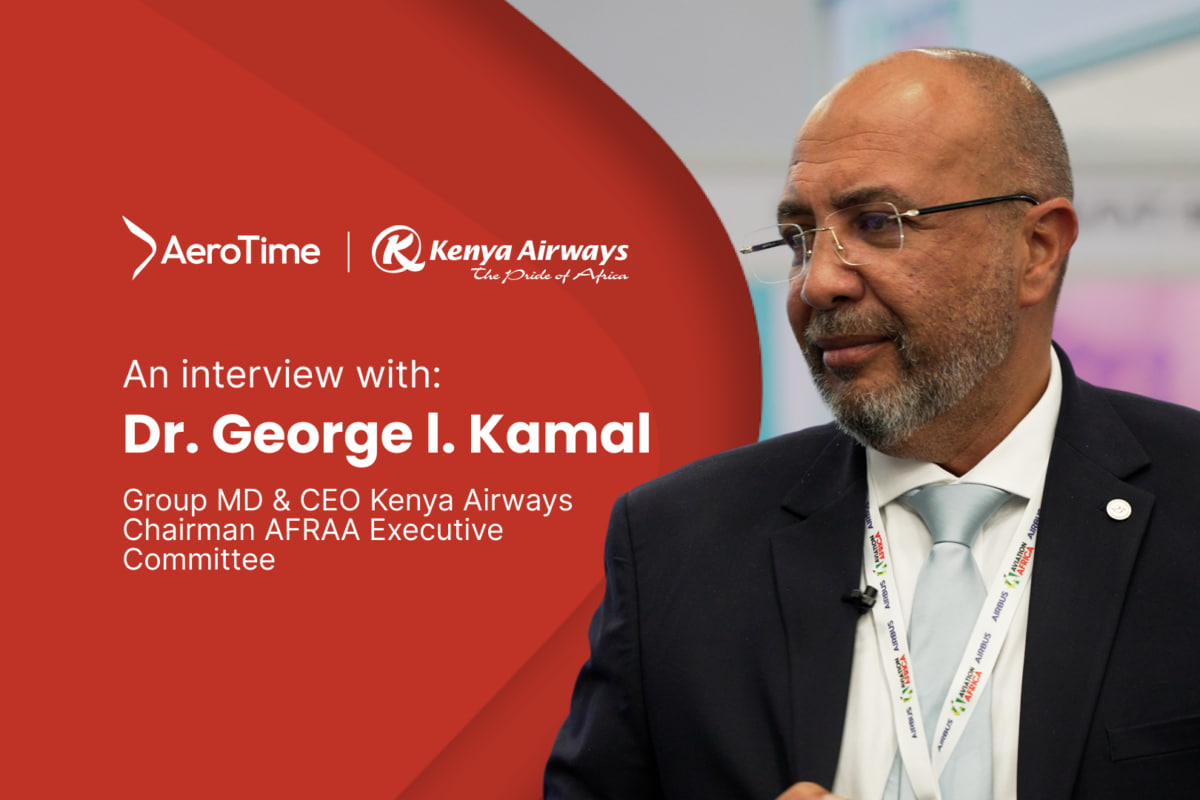
Kenya Airways CEO Captain George Kamal is set to leave the airline on September 30, 2026, but says the carrier’s ongoing turnaround programme has been structured to continue beyond his tenure and remain independent of whoever takes over the top leadership position.
According to aerotime.aero, he said: “It doesn’t depend on me, or doesn’t depend on anyone,” Kamal, who also chairs the African Airlines Association (AFRAA), told AeroTime during the Aviation Africa Summit in Nairobi on September 9 and 10, 2026. “It depends on the process we have in place.”
Kenya Airways announced Kamal’s resignation on September 1, 2026, citing personal reasons, less than nine months after he moved from Chief Operating Officer to Acting Group Managing Director and CEO.
Kamal said he made the decision in July 2026 so that he could support his mother through an illness. He intends to continue working and stressed that any announcement of a new position should not be interpreted as the reason for his departure.
“I cannot afford to sit home,” he said.
The airline’s board appointed Company Secretary Habil Waswani as acting CEO effective September 15, while it searches for a permanent successor.
Kenya Airways targets 60 aircraft by 2032
At the center of Kamal’s confidence in the transition is Project Kifaru, Kenya Airways’ turnaround program, now in its second iteration. The airline is approaching the end of a two-and-a-half-year stabilization phase, with approximately six months remaining. Its immediate priority is to return grounded aircraft to service before pursuing fleet expansion.
“We cannot stay in this phase forever,” Kamal said.
READ: Africa: Kenya Airways to Roll Out Wi-Fi on Long-Haul Flights from 2027
The next phase envisages expanding the fleet to 60 aircraft by 2032, followed by further additions through 2035.
Returning aircraft to service remains a pressing challenge. Engine maintenance delays kept three of Kenya Airways’ nine Boeing 787-8 Dreamliners out of operation for extended periods in 2025, contributing to the airline’s return to losses.
The financial pressure continued into 2026. On August 25, Kenya Airways reported a pre-tax loss of KSh15.92 billion (approximately $123 million) for the first half of the year, compared with KSh12.17 billion in the corresponding period of 2025. The airline cited higher fuel costs and spare parts shortages.
Kamal also confirmed that onboard Wi-Fi remains part of the carrier’s plans. Kenya Airways is targeting a launch in the second quarter, although he did not specify the year.
The service would be free for passengers, with advertising intended to cover the cost. Kamal cautioned that implementation dates could shift depending on external developments, including the geopolitical situation in the Gulf.
“It’s still part of the strategy we have,” he said.
Why Kamal wants African airlines to cooperate, not compete
Beyond Kenya Airways’ own recovery, Kamal identified fragmentation as one of the biggest obstacles facing African aviation.
Connections between parts of the continent remain so inefficient that traveling from North Africa to Kenya can take longer than flying from Nairobi to the United States, he said. In some cases, neighboring countries separated by an 11- or 12-hour drive require an air journey of 21 hours.
For Kamal, the solution is closer commercial cooperation between African airlines. “We are not here to compete with each other. We are here to collaborate,” he said.
“I don’t have an aircraft to cover all the 54 countries of Africa.” He argued that airlines can extend their networks through codeshare agreements and block-space arrangements, purchasing capacity on one another’s flights without having to deploy additional aircraft.
As an example, he cited an agreement with RwandAir reached during the Aviation Africa Summit. According to Kamal, the two airlines agreed to extend their respective codes to destinations beyond their hubs, opening up additional connections across their networks.
