
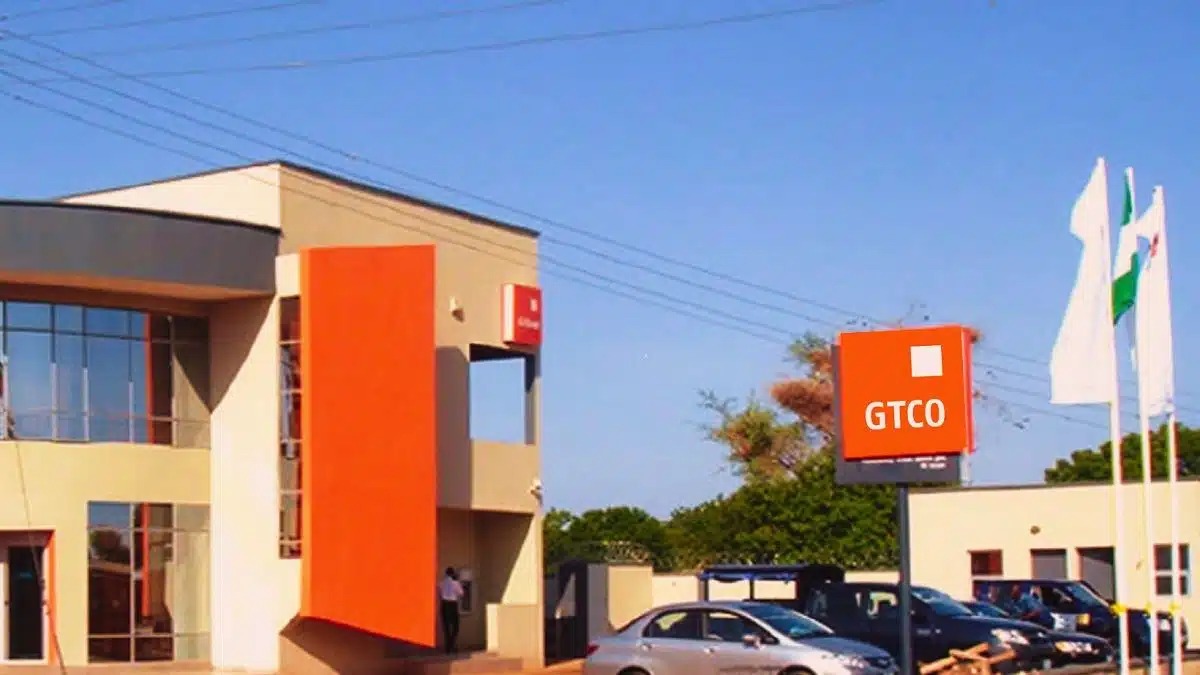
The Competition Authority of Kenya has fined Guaranty Trust Bank Kenya Limited following findings that the lender engaged in misleading representation and unfair business conduct in a credit dispute involving long-standing client ASL Limited.
According to africa.businessinsider.com, in its determination, the regulator concluded that the bank’s actions violated consumer protection and fair competition standards, leading to the imposition of a substantial financial penalty.
The case underscores heightened regulatory scrutiny in Kenya’s banking sector and signals tougher enforcement against deceptive financial practices.
The Competition Authority of Kenya has fined GT Bank and ordered a refund to ASL after ruling that the bank engaged in misleading and unfair practices during a credit facility dispute. @CAK_Kenya
In a decisive ruling, the regulator ordered the bank to pay about $257,000 (KES 33,180,000). In addition, the bank must refund ASL roughly $102,000 (KES 13,211,285) in charges deemed to have been improperly levied.
ASL, a diversified company supplying construction, electrical, and industrial sectors in Kenya, lodged a formal complaint in October 2024, accusing GT Bank of unfairly handling the renewal of its credit facilities.
The company had held a banking relationship with the lender since 2001 and had multiple credit lines, including overdrafts, letters of credit, and guarantees, secured by company assets and directors’ personal guarantees.
According to the Authority’s findings, the trouble began as ASL sought renewal of its facilities in early 2022. Despite initiating the process within the agreed timeline, ASL said GT Bank delayed issuing a clear response while continuously adjusting conditions, from demanding additional security to significantly reducing credit limits.
Regulator: Bank misled and pressured its client
The Authority found that the bank misrepresented the status of ASL’s facilities by charging fees on services that had not been approved and applying default interest retroactively, without prior notice.
It also faulted the lender for characterizing materially altered offers as routine renewals, potentially confusing the customer regarding the continuity of the services provided.
These actions, the Authority said, violated provisions of the Competition Act dealing with false or misleading representations.
Additionally, the regulator ruled that the bank acted unconscionably, taking advantage of its stronger bargaining position, imposing unnecessary conditions, and exerting undue pressure on ASL, particularly after the company indicated it intended to move its facilities to another lender, I&M Bank.
Backdated interest sparks outcry
The most contentious issue involved $102,000 in default interest that ASL said was unfairly backdated to August 2023, months before any alleged default was communicated. Although the lender later offered to refund $21,705 as a “goodwill gesture,” ASL rejected the offer, insisting on a full refund.
The Authority determined the fine based on both mitigating and aggravating factors. While the Competition Act allows penalties of up to 10% of a business’s annual turnover, GT Bank’s fine,equivalent to 2% of its 2023 gross turnover, was deemed proportionate to the severity and impact of its conduct.
Aside from paying the penalties and refund, the Authority directed the lender to comply with all provisions of the Competition Act and to train its staff, especially those handling credit facilities, on fair business practices and regulatory requirements.
The ruling underscores Kenya’s growing scrutiny of financial sector conduct and signals a firmer stance against lenders who exploit information imbalances or apply punitive terms without transparency.
For ASL, the decision marks a vindication after years of what it described as opaque and shifting conditions that hindered its ability to operate.
