
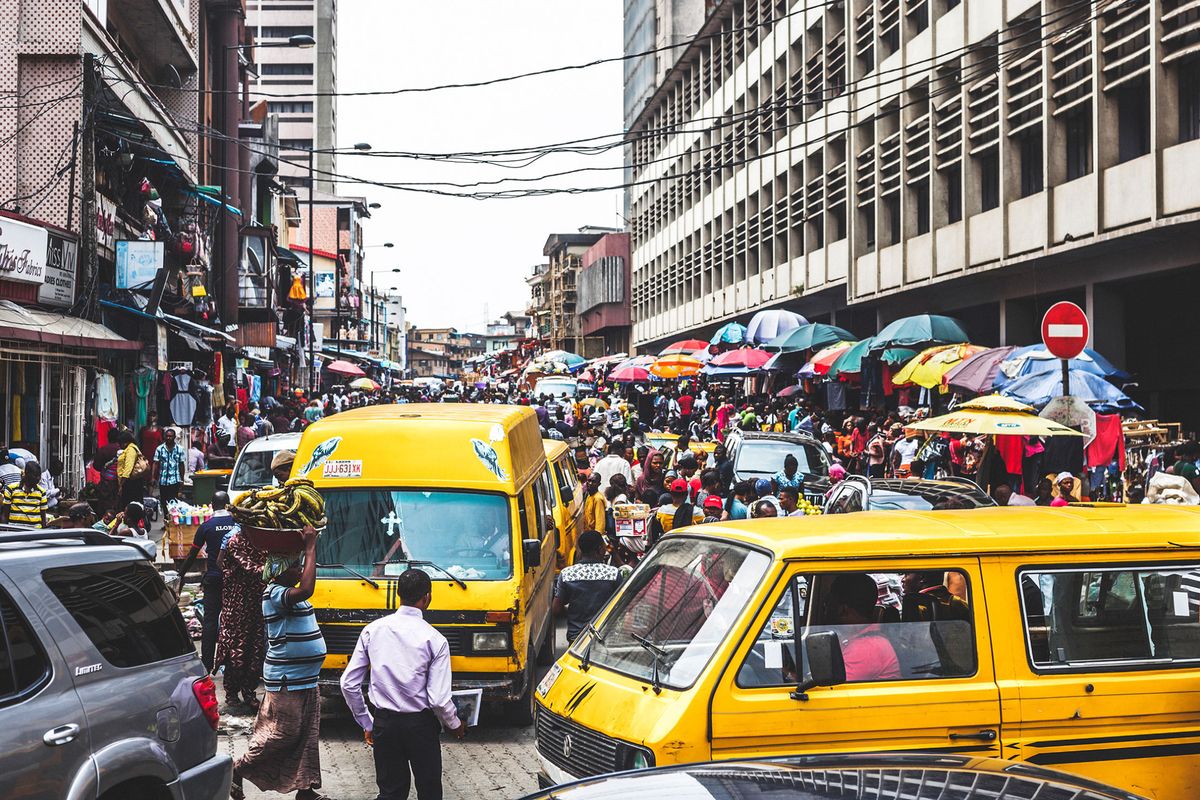
Lagos State leads Nigeria’s informal business sector, making up 16% of all informal businesses nationwide — the same as the combined total of the Northeast and Southeast regions. This is according to Moniepoint Microfinance Bank’s 2025 Informal Economy Report.
According to nairametrics, the report revealed that Lagos’s 16% share of the informal businesses is far ahead of Ogun, the Federal Capital Territory, and Delta, which each accounted for 6%.
Meanwhile, states such as Taraba, Yobe, Kebbi, and Zamfara recorded just 1% apiece
Retail and services dominate
The report shows that most informal businesses in Nigeria are found in retail and services. Retail and trade make up 44% of the informal economy, meaning many people earn a living by buying and selling goods in open markets and small shops.
This shows that most informal businesses are small and easy to start. Many people choose these kinds of jobs because they require little capital and can be started quickly to meet daily needs.
Services such as hairdressing, tailoring, and repairs come next, making up 33% of informal businesses. Other industries like construction and manufacturing account for about 7%, while agriculture contributes 6%.
Sectors like arts and entertainment make up 4%, while education, accommodation, and food services each represent about 3%.
Businesses operate without employees
According to the report, most informal businesses are run by individuals without hired labour. “Only 40% of businesses in the informal economy employ labour,” the report stated.
38% have 1 employee
37% have 2–3 employees
16% have 4–5 employees
7% have 6–10 employees
2% have 11–20 employees
Less than 1% have 21–30 employees
It added that businesses that have been around for longer are more likely to hire employees, with the likelihood increasing twice when they reach a year of operation.
The study notes that supporting informal businesses to survive longer can help them expand employment and eventually transition into the formal economy.
The report revealed that women-owned businesses reduced by 2%. This year, they recorded 35% of businesses in the informal economy, compared to 37% recorded in the previous report in 2024. Men account for 65% of ownership.
Low profits in business
The report shows that 44% of businesses in Nigeria’s informal economy make less than N20,000 in daily revenue, while 38% earn profits below N10,000 each day.
“44% of businesses in Nigeria’s informal economy make less than N20,000 ($12) daily. The median daily revenue range is between N20,000 and N50,000. By comparison, the median profit range is between N10,000 and N20,000, with 70% of them earning less than N50,000 per day.
“This is a trend that has continued from last year, where high revenue values do not necessarily translate to significant profit, the report stated.
More insights
The report also revealed that while the majority of informal businesses are making more money in sales, their profits have not increased at the same rate. About 65% of operators said their revenue rose in the past year, but only 47% reported a similar increase in profit.
This means that even though more cash is flowing through these businesses, much of it is being spent on higher operating costs rather than resulting in actual profit growth.
Moniepoint noted that it has become more expensive to run an informal business in Nigeria. Around 79% of respondents said their cost of doing business has gone up within the last year.
The main causes include higher prices from suppliers, increased transportation costs, and the continued depreciation of the naira.
These factors have made it harder for small business owners to maintain stable profit margins, with many struggling to balance rising expenses against relatively fixed customer demand.
