
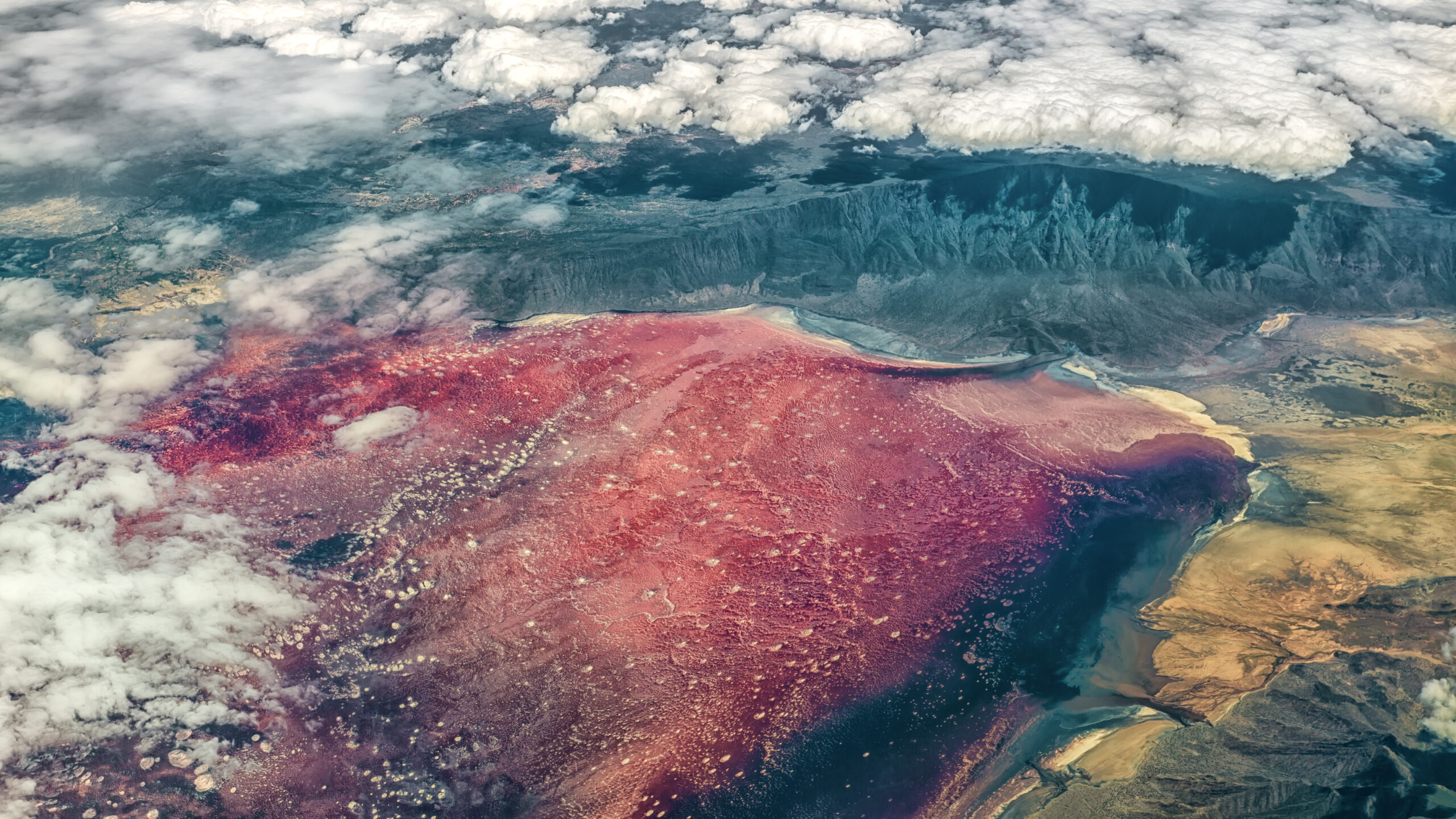
Hidden in the arid landscapes between Kenya and Tanzania, Lake Natron is one of the world’s most unusual and inhospitable natural wonders.
Accordign to en.as.com, with its blood-red hue and extreme alkalinity, this shallow, 58-square-mile lake turns most life to stone—yet, against all odds, a few resilient species have found a way to thrive in its hostile embrace.
If you’re looking to turn to stone.
Fed by the Southern Ewaso Ng’iro River and mineral-rich hot springs, Lake Natron is a natural marvel named after the sodium carbonate—natron—it contains in massive quantities. But in the region, it’s more infamous than admired. Locals often avoid it, thanks to its eerie reputation for killing almost anything that comes too close.
Gaze upon Lake Natron and the first thing that you will notice is the striking red coloration of the water. The reason for this comes from the extreme alkalinity and high levels of haloarchaea; pH levels also often exceeding 10 upon measurement – to put that into context, ammonia sits at around 11 on the scale.
Taking a dip would cause your skin and eyes to burn, not to mention the fact that water temperatures regularly exceed 100ºF.
The alkaline levels means that the lake is the perfect habitat for certain types of thrill-seeking microorganisms, that have evolved to thrive. The reason behind this curious combinations of chemicals is due to the nearby volcano, Ol Doinyo Lengai, the only active volcano in the world that produces carbonatite lava.
We, assuming you are human, could not swim in this lake, but the lesser flamingo has adapted to live there, with the water becoming a predator-free breeding ground for the birds. Glands in their heads remove salt from the water, draining it out from their nasal cavity and keeping them from suffering the effects we would.
While reports may suggest that animals turn to stone in the lake, that’s not strictly true. The creatures undergo a process of calcification due to the levels of sodium bicarbonate in the water – but they will have already died prior to that and just had an unfortunate resting place.
