
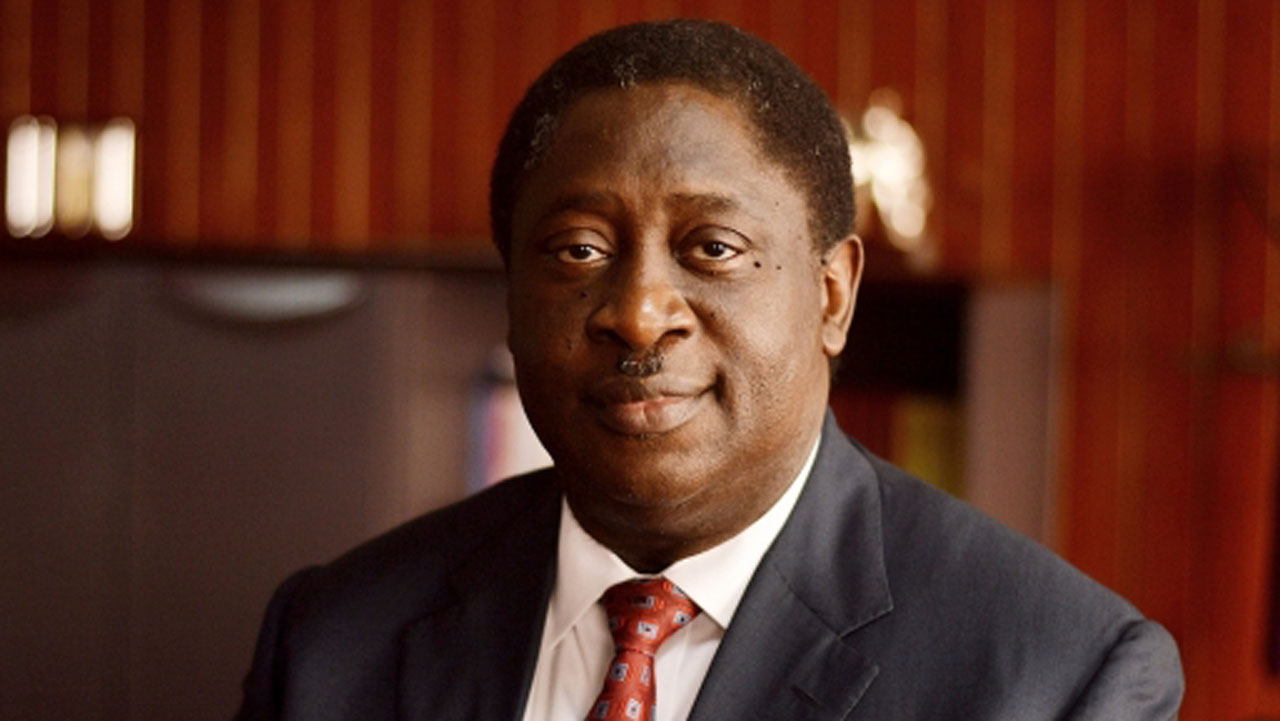
Chairman of Bi-Courtney Aviation Services Limited, Wale Babalakin (SAN), has called for greater policy consistency, contractual certainty and trust between government and private-sector operators as essential conditions for attracting long-term investment and unlocking Nigeria’s aviation potential.
Babalakin made the call in a speech delivered on his behalf by Remi Jibodu, Acting Chief Operating Officer (AG. COO) and Head of Aeronautical and Cargo Services at Bi-Courtney Aviation Services Limited, at the 30th Annual Conference of the League of Airport and Aviation Correspondents (LAAC) held in Lagos.
The Bi-Courtney chairman said the aviation sector must find an appropriate balance between government revenue generation and the need to promote growth, competitiveness and long-term sustainability.
He commended the Minister of Aviation and Aerospace Development, Olorogun Festus Keyamo, and his team for the attention being given to reforms aimed at moving the sector forward, describing the direction of the ongoing efforts as encouraging.
According to Babalakin, his close to two decades of participation in Nigeria’s private aviation sector has provided practical experience from which to assess the challenges and opportunities facing the industry.
He pointed to the Murtala Muhammed Airport Terminal Two (MMA2) as a demonstration of what private capital can achieve in public infrastructure when government and industry operate within a structured, sustainable and predictable framework.
“Bi-Courtney financed, built and has operated MMA2 for over 19 years, demonstrating what private capital can achieve in public infrastructure when government and industry work within a structured, sustainable and predictable framework,” he said.
READ: News: Nigeria’s Government, Bi-Courtney Settle 20-Year MM2 Concession Dispute
Babalakin argued that the experience of MMA2 offered a broader lesson for Nigeria’s concession programme, stressing that concessions should not merely involve the transfer of responsibility for infrastructure to private operators.
Rather, he said, concession agreements should create sustainable economic models that deliver benefits to government, investors and the travelling public.
“The broader lesson is that a concession must go beyond the transfer of responsibility. It should create a sustainable economic model that delivers value to government through revenue and infrastructure, to the investor through commercial viability, and to the travelling public through improved service, safety, efficiency and convenience,” he said.
The Bi-Courtney chairman further rejected the perception that government revenue and industry growth are competing objectives.
He maintained that a thriving aviation industry would ultimately create a stronger and more sustainable revenue base for government.
“Government revenue and industry growth should not be viewed as competing objectives. A thriving aviation industry ultimately creates a stronger and more sustainable revenue base for government,” Babalakin said.
He therefore urged stakeholders to work towards creating an environment that encourages investment, supports infrastructure development and enables airports and airlines to remain commercially viable.
Babalakin also highlighted the expanding economic role of airports, noting that they should no longer be regarded merely as points of departure and arrival.
According to him, airports have significant opportunities to generate economic activity through cargo, retail, hospitality, parking, advertising, property and other commercial ventures.
“Airports today are not merely points of departure and arrival; they are economic centers with significant opportunities in cargo, retail, hospitality, parking, advertising, property and other commercial activities,” he said.
He stressed, however, that the realisation of these opportunities would depend on confidence in the operating environment.
“None of this can be achieved without policy consistency, contractual certainty and trust between the public and private sectors,” Babalakin said, describing these as essential foundations for attracting and sustaining the long-term investment required for aviation infrastructure.
He urged participants at the LAAC conference to look beyond the immediate revenue contributions expected from aviation and focus on measures capable of making the industry bigger, stronger, more competitive and more attractive to investors.
“As today’s deliberations unfold, I hope we look beyond what the sector can contribute in revenue today and focus equally on what we can do to make the industry bigger, stronger, more competitive and more investable for the future,” he said.
Babalakin said Nigeria already possesses the market, human resources and potential needed to develop a strong aviation industry, but requires an appropriate framework to unlock these advantages.
“Nigeria has the market, the talent and the potential. What we need is the right framework to unlock that potential,” he said.
He also congratulated LAAC on attaining its 30th anniversary, commending the association for its continued role in keeping critical aviation issues in public discourse.
He expressed the hope that the conference would produce meaningful discussions and practical outcomes capable of contributing to the sustainable development of Nigeria’s aviation sector.
