
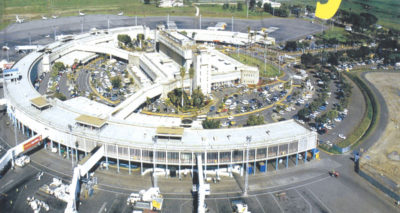
The Governmentof Kenya remains firmly committed to transforming Jomo Kenyatta International Airport into a world-class aviation hub that will support our country’s economic growth, tourism, trade and regional connectivity for decades to come.
According to a report released by the Cabinet Secretary Davis Chirchir, JKIA has served the nation well for many years. However, much of its core infrastructure was developed decades ago and has since undergone only incremental improvements despite sustained growth in passenger numbers, aircraft movements and cargo volumes. The airport is increasingly operating under capacity constraints, and forecasts indicate that significant expansion is required to accommodate future demand while maintaining international standards of safety, operational efficiency, and passenger service.
Countries across the region are making significant investments in modern airport infrastructure. To maintain Kenya’s position as the leading aviation hub in East Africa, we must similarly invest in facilities that are capable of accommodating forecast passenger growth, improving operational efficiency, enhancing passenger experience, strengthening safety and security, and supporting increased cargo and commercial activities. This development is therefore not merely an infrastructure project; it is a strategic national investment that will secure Kenya’s competitiveness for generations to come.
Recognizing this need, the Government commissioned the preparation of the Jomo Kenyatta International Airport Master Plan and Feasibility Study, undertaken by a renowned global engineering, planning and project management consultancy, consistently ranked among the world’s leading engineering firms and recognized internationally for its expertise in airport planning, aviation infrastructure and the delivery of major international airport developments.
The Master Plan and Feasibility Study was developed over a period of one year through a comprehensive technical planning process and consultations with stakeholders. The study established the long-term vision and phased development strategy for Jomo Kenyatta International Airport and identified the optimal expansion programme required to meet Kenya’s aviation needs for decades to come.
Following completion of the Master Plan and Feasibility Study, the Government proceeded to develop a comprehensive concept design for the proposed airport expansion and prepared the complete tender documentation required for the procurement of the Design and Build Contractor including the employer requirements. The employer requirements covered various volumes for each part of the airport specifically:
(1) Improvement of Existing Airfield,
(2) Improvement and Renovation of Existing Terminals and
(3) Development of New Terminal Building And Associated Support Facilities. These deliverables
transformed the project from a long-term vision into an implementable programme and provided the Government with a clear, technically robust basis for undertaking the current procurement.
Throughout the planning and procurement process, the Government has remained committed to transparency and continuous public engagement. To keep stakeholders informed of the project’s progress, the Government organized several engagement forums, including, but not limited to:
1.Engagement with KAAstaff on 25th November 2025 for Masterplan. development
- Masterplan presentation to Kenya Aviation Workers Union (KAWU) on 23rd February 2026 at KAA HQ
- Stakeholders Masterplan Presentation on 26th of February 2026 at Radisson Blu
- Departmental committee of Social Protection and Kenya Disability Parliamentary Association to present Disability inclusion in the JKIA masterplan held on 18th March 2026 at Crown Plaza JKIA.
- Media Briefingat Fairview Hotel on 10th March 2026
- National Assembly Committee of Transport and Infrastructure on 26th to 28th of March 2026 at Pride Inn in Mombasa
- Prospective bidders site visit and engagement on 8th and 9th April 2026.
The State Department for Aviation and Aerospace Development subsequently issued the Request for Proposals for the Design and Build Contractor on the 03rd of March 2026. The bidding process closed on the 14th May 2026, and the bids were opened in accordance with the provisions of the Public Procurement and Asset Disposal Act and the applicable procurement procedures.
The procurement was undertaken through an Open International Competitive Bidding process, providing equal opportunity to all qualified local and international firms. The Government wishes to assure the public that every stage of this procurement has been undertaken fairly, transparently and in strict compliance with the Public Procurement and Asset Disposal Act and all applicable
procurement regulations.
The evaluation process entailed a comprehensive review and compliance with all statutory evaluation procedures, approvals and due dilligence processes as per the requirement of public procurement laws. The Government does not anticipate the contract award to exceed KShs 154.2 Billion. It is important to appreciate that this procurement is not solely for a construction of a new passenger terminal, rather it encompasses a rehabilitation of the existing JKIA terminals and airfield This will include an upgrade and expansion of the existing terminal buildings, rehabilitation of the existing airfield, and a construction of new green field terminal facilities, airfield infrastructure, aircraft aprons, taxiways, utility networks, access roads, aviation systems, operational support facilities and all associated infrastructure required for a modern international airport. We wish to inform Kenyans that the current terminal will be expanded from the 7.5M passenger capacity to 12 Million and the new terminal will handle 10 million passengers per year. This will increase the capacity of JKIA from the current 7.5 million passengers per year to 22 million.
Furthermore, benchmarking against comparable airport developments within the region indicates that the anticipated construction cost represents a competitive and reasonable investment for a project of this scale, complexity and strategic importance Comparing the terminal buildings costs with regional infrastructure of similar magnitude shows that our anticipated costs are lower.
As regards financing of the project, the Government is working on structuring a financing model and has onboarded Trade Development Bank and the African Finance Corporation as lead arrangers to structure the financing. The onboarded arrangers are multilateral development finance institutions in which Kenya is a partial owner jointly with other African countries. The project is intended to be funded through leveraging of airport-based revenue streams.
The arrangers will crowd in Development FinancialInstitutions (DFls) and Commercial banks. The Government has taken note with serious concern reports appearing in sections of the media, particularly in the Standard newspaper. Media houses owe Kenyans a higher dutyof care not to intentionally or by carelessness misinform Kenyans. We wish to clarify that the company referred to in those reports did not participate in this procurement process as a bidder and has no role, involvement or association whatsoever with this project. They also are not part and parcel of the contractors who submitted bids to this tender.
Furthermore all contractors were required to submit a legally binding disclosure of all parties in joint ventures and in none of them is the said entity part of. We therefore urgethe public to rely on official Government communication and verified information. In the same spirit we further caution the media against publishing such unverified information and invite them to retract their false
reporting. The Government remains fully committed todelivering thislandmark project in a transparent, competitive and accountable manner, ensuring value for public investment while positioning Kenya to remain the premier aviation hub of East Africa for generations to come.
Project Components:
Component 1: Improvement of Existing Airfield
Rehabilitation and resurfacing of the existing airfield. The Improvement Works for the Airfield component expected to be implemented over a period of 15 months for construction and 24 months of defects notification period.
Component 2: Improvement And Renovation of Existing Terminals
The Improvement and Renovation of the Existing Terminals is intended to enhance the airport’s operational capacity from the current 7.5 million passengers per annum to 12 million passengers per annum, thereby meeting forecast demand up to the year 2029. The Improvement Works for the Existing Terminal component is expected to be implemented over a period of 18 months for construction and 24 months of defects notification period.
Component 3: Development Of New Terminal Building (10 MAP) And Associated Support Facilities
A new passenger terminal building is planned as the cornerstone of the terminal expansion strategy. The terminal is designed to accommodate both domestic and international passengers. The terminal building will have capacity to accommodate a 10 million passengers per annum, while safeguarding sufficient land for future expansion to meet further passenger growth. Its location has been strategically selected to ensure seamless integration with existing and future taxiways, aprons, and ground access systems, thereby optimizing passenger and aircraft flow.
The expansion works are expected to be implemented over a period of approximately 36 months construction and 24 months Defects Notification Period.
