
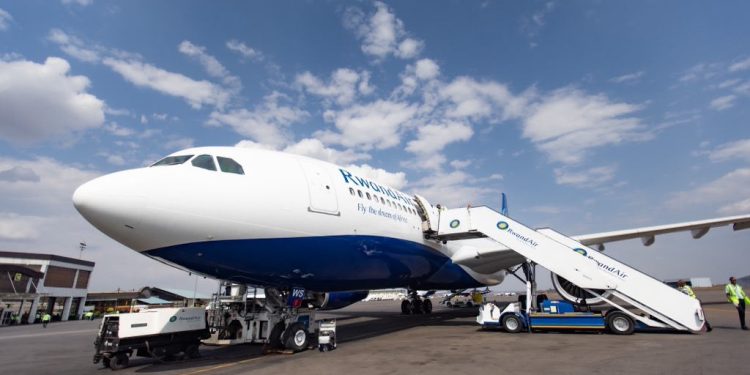
East African carrier, RwandAir has acquired its first Airbus A330-200 as the airline moves to strengthen its wide-body fleet and support the expansion of its long-haul international network. According to EcofinAgency, the A330-200 can accommodate between 210 and 250 passengers, depending on its configuration. The acquisition allows the airline to increase capacity on routes requiring wide-body aircraft and further expand its international network from Kigali.
The aircraft is not new, however, according to PlaneSpotters data. It was delivered to Oman Air in 2009 under the registration A4O-DC and operated by the carrier before being placed in storage in 2025-2026. For RwandAir, the move is aimed at adding several hundred seats as part of its goal of carrying more than 2.1 million passengers annually by 2028/2029, up from just over 1 million in the 2023/2024 financial year. To reach that goal, the carrier plans to double its fleet by 2029. It currently operates 12 aircraft, including two A330-200s.
The airline already connects the Rwandan capital with several major African and international markets, including London, Paris, Brussels, Guangzhou, Mumbai and Lagos. The additional capacity should allow it to strengthen those routes while creating opportunities to serve new destinations. The expansion also relies on the gradual widening of Rwanda’s air traffic rights. Between 2022 and 2024, Kigali concluded agreements with several countries, including Eswatini, Guinea, Georgia, Canada, Liberia, Malawi, Mali, Oman, Poland, Suriname, France and Zimbabwe.
READ: Aviation: Nigeria Launches New Air Cargo Route with RwandAir to Boost Intra-African Trade
RwandAir’s strategy is part of a broader ambition by Rwandan authorities to position the country as a regional hub for trade, investment and tourism. Volcanoes National Park, safaris and gorilla trekking are among the attractions used to draw more international visitors. The country also plans to capitalize on its positioning as a destination for conferences and major international events. That strategy requires sufficient air capacity to transport visitors directly or through connecting flights from major source markets.
In line with those objectives, Kigali is developing the new Bugesera International Airport, designed to eventually handle 14 million passengers a year. The infrastructure is expected to give Rwanda significantly more airport capacity than it has today, although its potential will also depend on the ability of RwandAir and other airlines to generate sufficient traffic. RwandAir will, however, need to fill the additional capacity created by the arrival of new aircraft while keeping operating costs associated with long-haul routes under control. Growing competition among African hubs, the ability to attract connecting passengers and the profitability of new routes will also be critical to turning the fleet expansion into sustainable growth.
