
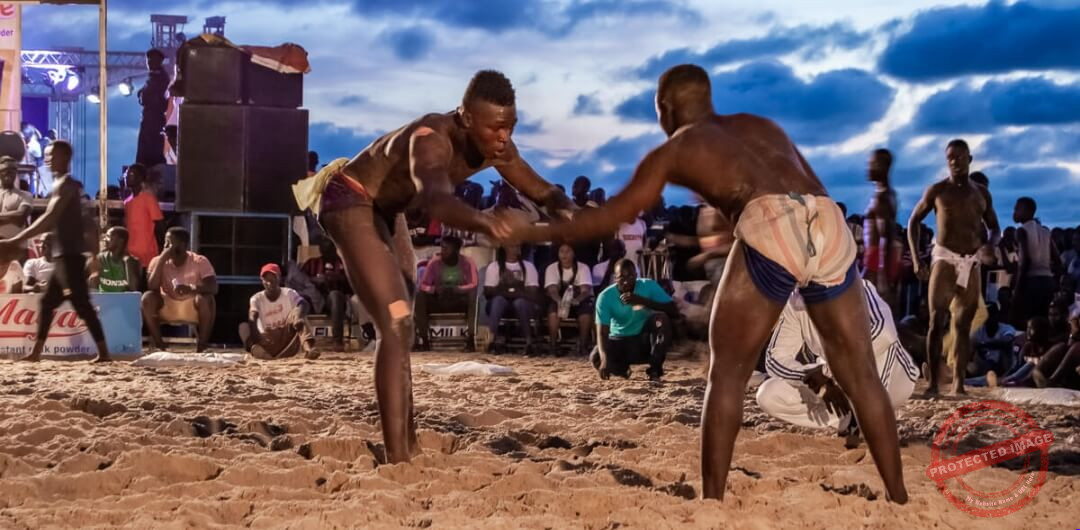
Traditional wrestling, commonly known in Wolof as Lamb, is one of The Gambia’s most cherished indigenous sports and an important expression of the country’s cultural identity. Combining wrestling techniques with rituals, music, dance and traditional attire, Lamb holds deep social and cultural significance in villages and communities across the country.
Contests are typically held barefoot on designated wrestling grounds, often cleared and covered with sand. Traditionally involving young men and boys, the bouts test strength, agility, balance and technique, with wrestlers seeking to outmanoeuvre and defeat their opponents.
The wrestlers usually wear shorts or traditional wraps and may adorn themselves with amulets and other traditional items associated with protection, strength and preparation for competition. Before the wrestling begins, participants may take part in rituals carrying spiritual and cultural significance. These can include prayers, blessings and traditional practices intended to seek protection, strength and victory. The nature of these rituals varies among wrestlers, families and communities, but they remain an important part of the spectacle.
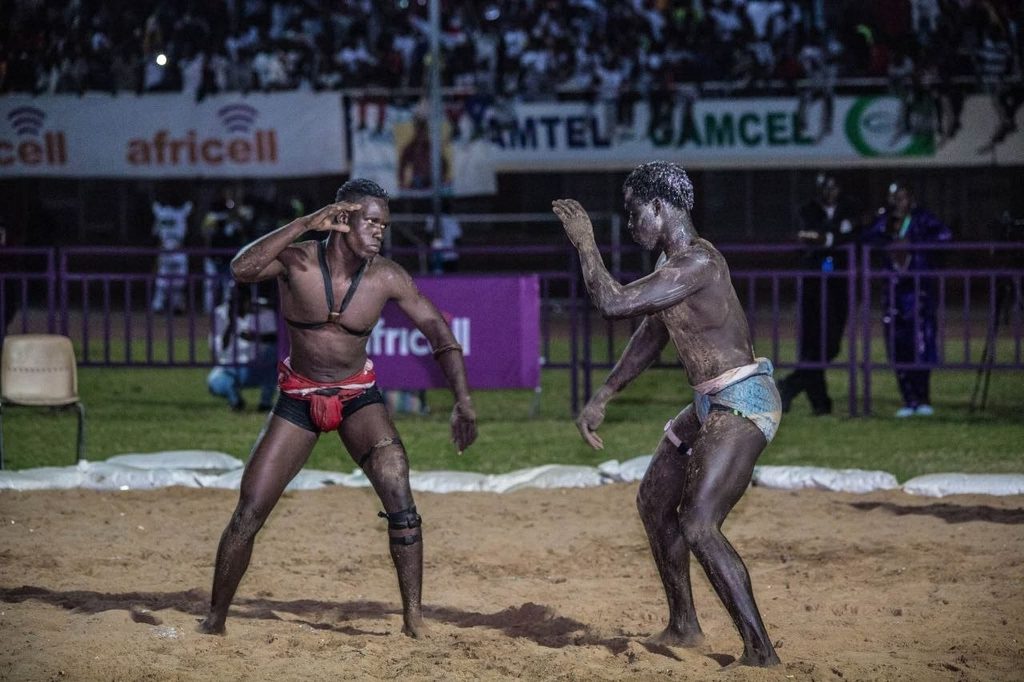
Lamb is much more than a sporting contest. It is a community gathering that brings together families, supporters, elders, traditional leaders and visitors. Drumming, singing and dancing create an energetic atmosphere, while the wrestlers’ entrances can become performances in their own right. The sport is particularly prominent after the harvest season, when villages and towns host matches that draw large and enthusiastic crowds. The powerful rhythms of Sabar drums accompany wrestlers as they dance into the arena, displaying confidence and physical prowess before the contest begins.
With drums pounding, dust rising and crowds roaring, the spectacle captures the communal energy of Gambian culture. The pre-match ceremonies, dancing and interaction between wrestlers and spectators can be as captivating as the wrestling itself. For visitors, experiencing Lamb offers a unique opportunity to connect with The Gambia’s living cultural heritage; where sport, music, spirituality, tradition and community come together in one vibrant celebration
