
Christian missionary activity is increasingly becoming a two-way movement, with a growing number of African Christian leaders and missionaries taking their faith and distinctive approaches to Christianity to Europe, North America and other parts of the world.
The development is challenging the traditional pattern in which Christian missions largely flowed from Europe and North America to Africa. While Western missionaries continue to operate across the continent, a new generation of African Christians is increasingly travelling in the opposite direction, with some describing their mission as an effort to revive Christianity in Western societies.
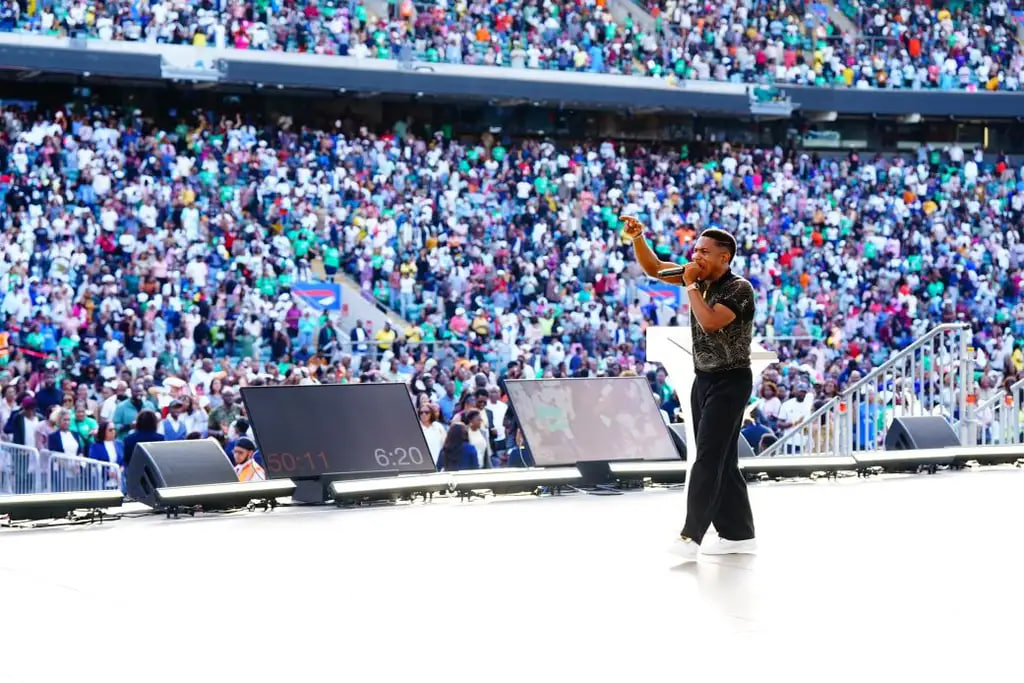
The changing pattern was illustrated by Nigerian pastor Jerry Eze, who two years ago led a prayer conference at London’s 82,000-seat Twickenham Stadium. The event eventually filled the vast venue with thousands of worshippers who had gathered to pray with the African preacher. Eze, who reaches an international audience through daily prayer broadcasts on YouTube, describes himself as a “missionary to the West.” He believes African Christianity has a particular fervency and emphasis on prayer, healing and the supernatural that can offer something to Western societies where religious participation has declined.
“For us here in Africa, it is the fervency and the zeal with which we do it,” Eze told CNN, arguing that “the fire is leaving the West.” The movement, sometimes referred to as “reverse mission,” reflects the changing geography of global Christianity. Tshepang Basupi, Southern Africa director of the Africa Inland Mission, said Africans are increasingly serving as missionaries not only elsewhere in Africa but also in Asia, Europe and North America. Basupi, who is from Botswana, leads more than 100 missionaries and helps recruit Africans for cross-cultural mission work. However, he rejects the term “reverse mission,” arguing that Christian mission should not be regarded as something that belongs exclusively to the West. “Mission is not for the West only; it is for every believer,” he said.
The shift is occurring alongside significant demographic changes in global Christianity. According to figures cited by CNN, the number of Christians in sub-Saharan Africa increased by 31% between 2010 and 2020, reaching approximately 697 million, making the region home to the world’s largest Christian population. By contrast, Christianity has declined as a share of the population in Europe and North America. A 2025 Pew Research study found that Christians accounted for 67% of Europe’s population in 2020, down from 75% in 2010. In North America, the proportion fell from 77% in 2010 to 63% in 2020.
In the United States, Pew’s latest Religious Landscape Study found that 62% of adults identified as Christian in 2023–24, while 29% had no religious affiliation. These trends have encouraged some African Christian leaders to see Western societies as new mission fields. Dondo Iorlamen, international director of Nigerian mission organisation CAPRO, said Africa and Asia are now among the leading mission-sending regions globally. CAPRO reports having more than 800 missionaries from over 27 countries serving in 46 nations, including Canada. Nigeria alone was estimated to have sent around 20,000 missionaries abroad in 2020, according to a 2024 report by the Lausanne Movement using World Christian Database data.
African missionaries are also finding receptive audiences among African diaspora communities in Europe and North America. Harvey Kwiyani, a Malawian theologian based in England who studies African Christianity, said African churches are often growing among migrants, particularly Africans, rather than the wider white population. African Pentecostal churches have therefore become increasingly visible in Western cities, providing migrants with familiar forms of worship while also creating opportunities to engage wider communities.
Eze said many of those attending his conferences are Black, although some White worshippers also participate.
Nigerian pastor William Kumuyi, whose Global Crusades have taken his ministry to several continents, said African Christianity is characterised by strong faith, fervent prayer and belief in supernatural intervention. He believes African churches can offer Western societies renewed emphasis on Scripture, holiness and faith in miracles. However, African Christian leaders acknowledge that reaching Western populations presents challenges. Kwiyani noted that many Western societies have become increasingly secular, meaning that traditional missionary approaches may not necessarily attract people who no longer identify with Christianity.
Some African missionaries are deliberately seeking to move beyond diaspora communities. Kumuyi said diaspora communities may provide an initial entry point, but the objective is to engage wider host populations rather than establish ethnic enclaves. This approach is also changing perceptions of what it means to be a missionary. For some Africans, the term remains associated with the colonial era, when European missionaries sometimes operated alongside colonial authorities. Iorlamen noted that the word can evoke memories of colonialism and the negative experiences associated with some historical missionary activities.
Basupi, however, argues that African and Western missionaries can work together as equal partners and fellow servants, with each learning from the other and contributing according to the needs of different communities. The movement reflects a broader transformation in global Christianity, with Africa increasingly emerging not only as a major centre of Christian growth but also as an important source of missionaries, religious leaders and new forms of Christian expression. For Eze, the growing African presence in Western Christian spaces represents a new chapter in the relationship between the two regions. After his Twickenham experience, he is preparing to return to Britain for another major conference at Manchester’s Old Trafford, where he says nearly 100,000 people have registered.
The changing missionary map, therefore, is no longer simply about Western Christians travelling to Africa. Increasingly, African Christians are travelling to the West with a message they believe can help reignite faith, prayer and religious engagement in societies where Christianity has been declining.
