
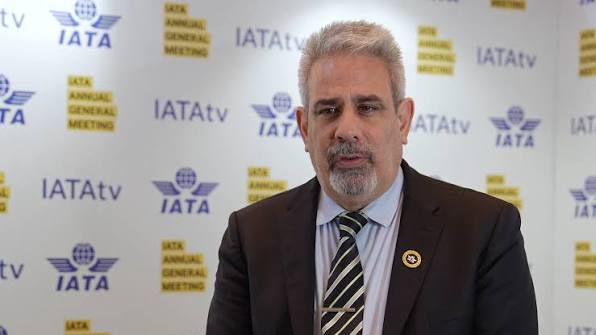
African airlines are facing growing financial pressure from high taxes, airport charges and other operating costs, with the International Air Transport Association (IATA) warning that the burden is undermining the competitiveness and expansion of carriers across the continent.
According to Aviation Week, speaking at Aviation Africa in Kenya, IATA Regional Vice President for Africa and the Middle East, Kamil Alawadhi, said African governments should view aviation as an engine of economic development rather than primarily as a source of revenue. “Aviation should not be treated primarily as a source of revenue but as an engine of economic development,” he said.
According to Alawadhi, African airline unit costs are roughly twice the global average, while taxes and charges are at least 15% higher than the global average. Fuel is also about 17% more expensive, accounting for around 40% of airline operating costs in Africa, compared with 25% globally. He particularly raised concerns over passenger levies linked to Advance Passenger Information and Passenger Name Record systems, citing charges of $45 per sector in Tanzania, $30 in Gabon and $50 in Equatorial Guinea.
IATA is also calling for improved access to foreign exchange, faster repatriation of airline revenues and greater consultation between governments, airports and airlines on infrastructure investments. Despite the challenges, Alawadhi noted progress under IATA’s Focus Africa initiative, including 47 African carriers now enrolled in its Operational Safety Audit programme and a reduction in blocked airline funds from a peak of $1.5 billion in July 2023 to $624 million in July 2026.
IATA has urged African governments to reduce aviation costs and remove barriers to connectivity, arguing that stronger air transport can support tourism, trade, investment and regional economic integration.
