
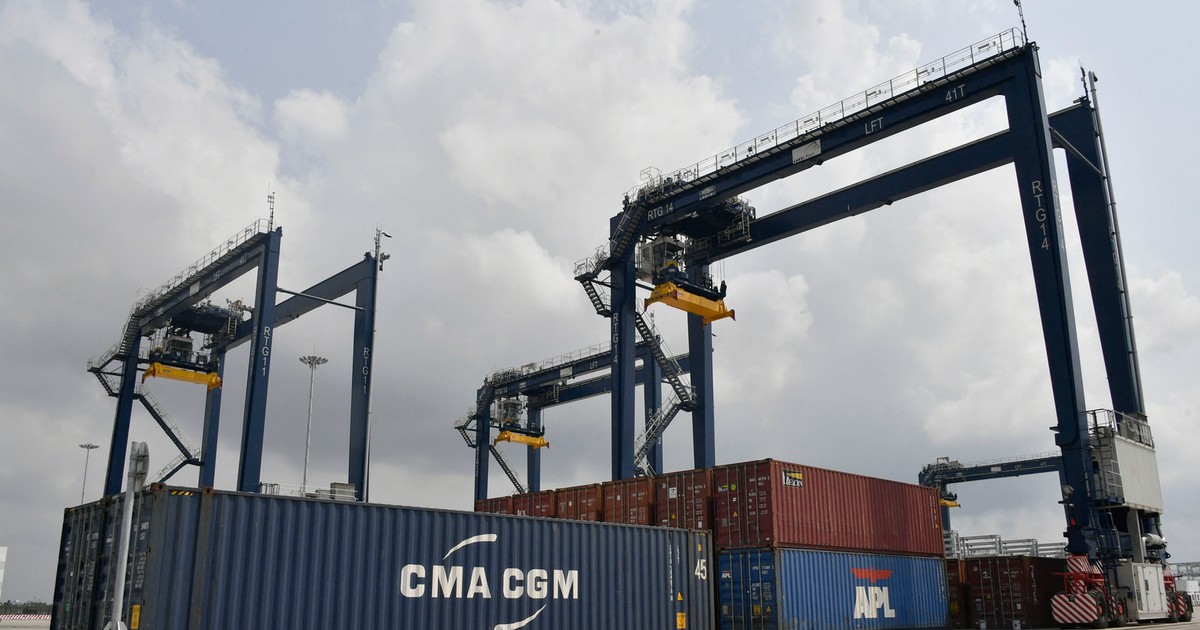
Nigeria’s newest deep-sea gateway is rapidly reshaping the country’s maritime landscape, as fresh trade figures place the Lekki Deep Sea Port among the most significant ports in West Africa by cargo value.
According to africa.businessinsider.com, data from port authorities show that Lekki Deep Sea Port recorded about ₦13.46 trillion in combined imports and exports in the first nine months of 2025, translating to nearly $9.3 billion at prevailing exchange rates. The performance marks a major leap for a facility that only recently commenced full commercial operations and is already challenging older, more established ports.
This performance positions the port as the country’s second-largest in trade value, a remarkable rise for a facility that began commercial operations only in 2023.
The latest figures, drawn from Nigeria’s official “Trade by Top 10 Posts/Ports of Operation” data for January to September, show that Lekki’s trade value substantially eclipses that of long-established competitors.
Over the same period, Tin Can Island Port recorded an estimated 9.31 trillion naira in trade, while Onne Port logged 6.76 trillion naira. Apapa Port remains dominant nationally, with trade values far above those of the rest.
At an end-of-year briefing with media in Lagos, Wang Qiang, Managing Director of Lekki Port LFTZ Enterprise Limited, said the figures reflect growing confidence among global shipping lines and cargo owners.
He noted that container volumes have climbed steadily since September, helping the port reach around half of its designed capacity much earlier than analysts expected.
“The pace of growth underscores how quickly the market is recognising the value of modern infrastructure,” he said.
Wang said the deep-water facility’s deeper draught, automation, and ability to handle larger vessels have been key factors in its swift ascent.
When fully scaled, the port’s design aims to accommodate substantial container and bulk shipments, helping to reposition Nigeria’s maritime sector within West Africa and beyond.
Captain Jedrzej Mierzewski, Chief Executive Officer of Lekki Freeport Terminal, described the trade figures as unprecedented in Nigeria’s maritime history, especially for a port with fewer years in operation than most of its rivals.
He pointed to barge operations as an important alternative to congested road haulage, with around ten per cent of cargo currently moving by inland waterways to ease pressure on Lagos’s road network.
While celebrating the results, executives also stressed that sustained growth hinges on improvements in hinterland connectivity. Wang highlighted the importance of completing major infrastructure projects such as the Lagos-Calabar Coastal Road and expanding rail links to support burgeoning industrial activity along the Lekki corridor. Without such enhancements, he warned, trade bottlenecks could persist despite the port’s automation.
Another area flagged for urgent attention is digital integration among government agencies. Although the port itself operates fully automatically, Wang said delays will persist unless agencies such as the Nigeria Customs Service adopt integrated digital processes across the cargo clearance chain.
Looking ahead to policy changes in 2026, Mierzewski urged the Federal Government to streamline the tax regime applicable to importers and exporters. He cited international practices, such as Germany’s 30-day value-added tax payment window after cargo clearance, as a model that could spur efficiency and investment confidence at Nigerian ports.
The rapid rise of Lekki Deep Sea Port marks a shift in Nigeria’s maritime trade landscape, with analysts noting that the new facility is drawing high-value cargo away from legacy ports and reshaping how goods flow into and out of Africa’s largest economy.
