
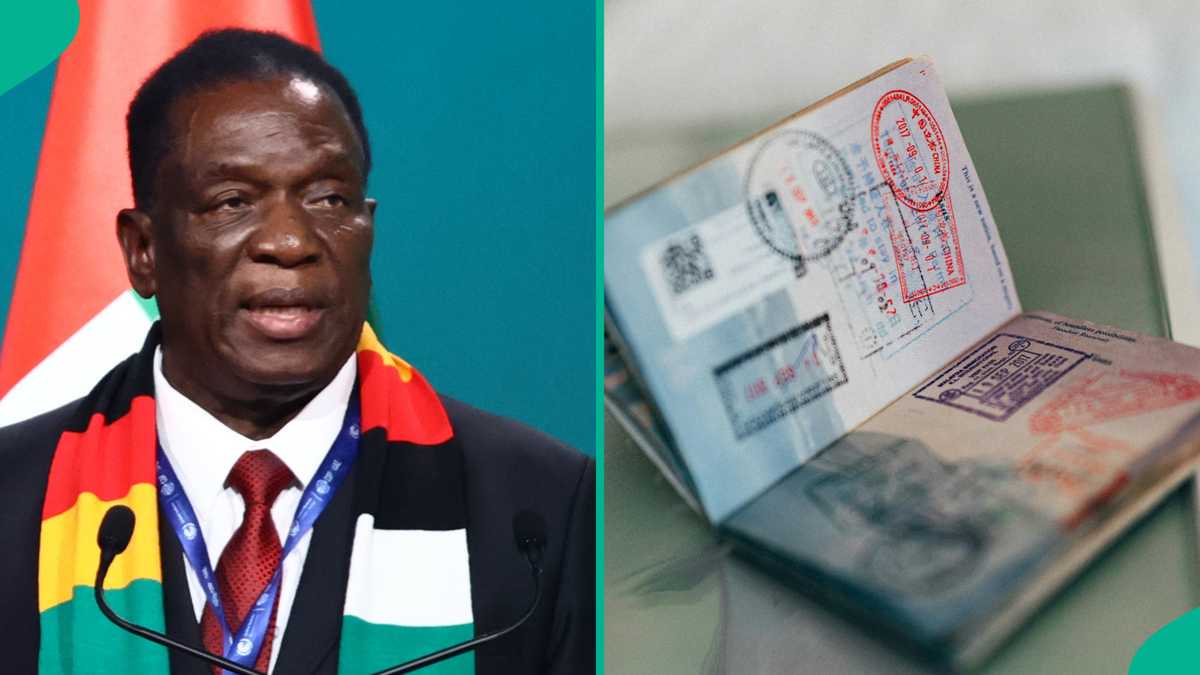
Zimbabwe has released its updated 2026 visa-on-arrival policy, confirming that citizens of nine African countries are eligible to obtain visas upon arrival at the country’s ports of entry, as part of efforts to facilitate travel and boost tourism.
According to Legit.ng, the eligible African countries are Algeria, Burundi, Cape Verde, Egypt, Equatorial Guinea, Ethiopia, Rwanda, São Tomé and Príncipe, and Senegal. Travellers from these countries no longer need to obtain a visa before departure and can instead apply for and receive their visas upon arrival in Zimbabwe.
The policy also allows eligible visitors to complete their entry declarations online before travelling, helping to speed up immigration procedures at border entry points and airports. Zimbabwe offers three categories of visas on arrival. The standard single-entry visa is valid for one month and is available to most eligible travellers. A double-entry visa permits two entries within a three-month period, while a multiple-entry visa, valid for six months, is available only to citizens of the United Kingdom, the United States and Canada.
READ: Africa: Zimbabwe Tourism Sees 11% Growth as Arrivals from China Surge
The latest announcement forms part of Zimbabwe’s broader efforts to simplify travel procedures, promote tourism and encourage business travel by making entry into the country more convenient for eligible visitors. However, several major African countries, including Nigeria, Ghana, Kenya and South Africa, are not included on the visa-on-arrival list. Citizens of these countries are advised to consult Zimbabwe’s standard visa requirements before making travel plans.
Zimbabwe’s visa policy also distinguishes between countries eligible for visa-free entry and those eligible for visa on arrival, with each category subject to different immigration rules and conditions. The government encourages travellers to verify the applicable requirements through its official immigration channels before departure. The updated visa regime is expected to support Zimbabwe’s tourism industry by making it easier for visitors from eligible markets to enter the country while enhancing its appeal as a destination for leisure, business and regional travel.
