
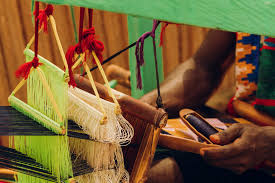
IMANI Africa has identified Ghana’s artisanal craft sector as a major but underexploited economic opportunity, arguing that local craftsmanship could become a powerful engine for job creation, exports, and sustainable development if given greater policy attention and investment support.
According to imaniafrica.org, drawing insights from the 2021 Population and Housing Census and the 2025 Non-Traditional Export report, the policy think tank said Ghana’s economic future may not rely solely on industrialisation and technology, but also on unlocking the commercial potential of the country’s vast network of local artisans and creative producers.
With 16.1 percent of the national workforce engaged in craft and related trades, the sector is not merely a cultural relic but a cornerstone of Ghanaian livelihood that demands urgent policy intervention.
The sheer scale of the artisanal workforce is staggering. According to the 2021 PHC, over 1.6 million Ghanaians identify as craft workers. This makes it the third-largest employment category in the country. It is a sector that anchors the rural economy and provides a vital safety net for the youth, who make up half of this workforce. Yet, the 2025 GEPA NTE report shows a sharp contrast in export performance. When industrial ceramics were reclassified into the manufacturing sector, the remaining “real” handicrafts recorded just over 2.4 million dollars in export earnings.
This gap between the size of the workforce and its export contribution is not a sign of failure but a signal of untapped potential. It suggests that while we have the hands to create, we lack the policy infrastructure to bridge the gap between a village workshop in Bolgatanga and a high-end boutique in Accra, Paris, Berlin, or New York.
The global shift towards handmade products
International bodies like the World Economic Forum and the World Trade Organization are increasingly highlighting the “orange economy” or the creative economy as a pillar of future trade. There is a global movement away from mass-produced plastic toward sustainable, indigenous, and story-driven products. Ghana’s Bolga baskets, hand-woven Kente and Fugu, and traditional leatherwork fit perfectly into this new global consumer demand for authenticity and environmental stewardship.
Strategic policy could transform these local trades into high-value exports. The 2024 World Trade Report emphasizes that digital trade and intellectual property protections are the new tools for artisanal success. By implementing policies that provide artisans with digital literacy and protection against the imitation of indigenous designs, Ghana can ensure that the economic value of our heritage remains with the creators.
A blueprint for strategic intervention
A dedicated policy for the arts and crafts sector should focus on three specific areas. First, there must be a move toward quality standardization. As noted in the GEPA report, compliance with international standards is the primary barrier to entry for many small businesses. Government-led certification and authentication programs could help local smock weavers and basket makers meet the rigorous demands of the European, American, and other African markets.
Second, the sector requires targeted financial inclusion. Most of the 1.6 million craft workers operate in the informal economy with limited access to credit. Tailored micro-credit schemes would allow artisans to purchase better raw materials and invest in semi-automated tools that increase productivity without stripping away the handcrafted essence that gives the product its value.
Finally, we must leverage cultural diplomacy. The 2025 GEPA report showed that when Ghanaian artisans attended international fairs like Ambiente and IATF, they secured orders worth millions of dollars. This proves that the world wants what Ghana makes. A formal policy that integrates craft exports into our foreign trade missions would turn every Ghanaian embassy into a showroom for our national talent.
Conclusion
The 2021 census has given us the data, and the 2025 export reports have shown us the market reality. We have a workforce of millions ready to produce and a global market hungry for authentic African craft. By moving beyond viewing the arts as mere culture and treating them as a strategic economic asset, Ghana can create a resilient, inclusive, and green export economy that leaves no artisan behind. The hands that weave our history are more than capable of building our future.
