
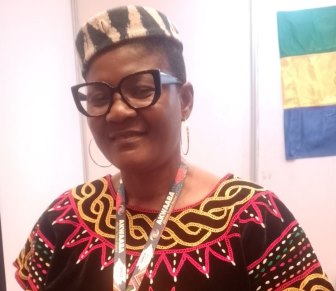
At 22nd Akwaaba, Flora Travel & Tours CEO Says Africa Must Remove Visa, Connectivity and Infrastructure Barriers to Unlock Its Tourism Potential
Echoing from Lagos, Nigeria: Africa must do more to encourage Africans to travel within the continent while presenting its diverse tourism assets more effectively to the rest of the world, Agatha, Chief Executive Officer of Flora Travel & Tours Co. Ltd., Cameroon, has said.
Speaking in an interview with ATQ News at the 22nd Akwaaba African Travel Market held at Eko Hotels, Lagos, Agatha described herself as an Africanist and passionate promoter of African tourism, with particular interest in strengthening intra-African travel and promoting Central Africa as a tourism region.
According to her, Africa possesses extraordinary tourism resources, but much of the continent remains under-exploited because destinations are not sufficiently promoted and Africans still face significant barriers when travelling from one African country to another.
Her message at Akwaaba was therefore both a promotion of Africa’s tourism potential and a call for practical action to make intra-African travel easier.
Promoting Africa From Within
Agatha said her work is driven by two interconnected objectives: encouraging Africans to travel within Africa and attracting international visitors to the continent.
She described the African tourism exhibition circuit as an important mechanism for achieving this.
From Akwaaba in West Africa to tourism platforms in East and Southern Africa and international travel exhibitions outside the continent, she said African tourism stakeholders need to consistently present their destinations to potential travellers and buyers.
“We are promoting Africa because Africa is a beautiful continent,” she said, stressing that the continent needs greater visibility.
For Agatha, the question is not whether Africa has tourism products.
The question is whether those products are being adequately presented, connected, and marketed.
Africa Has 54 Countries, But Many Remain Unknown
One of her major concerns is the limited awareness of many African destinations.
Although the continent has 54 countries, she argued that many people—both Africans and visitors from outside the continent—are familiar with only a relatively small number of destinations.
She believes Central Africa is particularly affected.
Countries such as the Central African Republic, Chad, the Republic of Congo, the Democratic Republic of Congo and São Tomé and Príncipe, among others, do not receive the level of tourism visibility she believes they deserve.
The result, she said, is that Africa’s tourism story is often incomplete.
A continent with enormous cultural and geographical diversity is frequently reduced to a handful of better-known destinations.
Agatha wants that narrative to change.
Cameroon: “Africa in Miniature”
At the centre of her tourism advocacy is Cameroon.
Agatha described her country as “Africa in miniature,” pointing to its combination of landscapes, cultures, communities and traditions.
Yet she believes Cameroon remains under-marketed internationally.
According to her, when Cameroon is mentioned, many people immediately associate the country with football.
But she insists that Cameroon has a much broader tourism identity.
“Cameroon is beyond soccer,” she said. “It’s a tourist destination.”
She pointed to the country’s cultural heritage as one of its many tourism assets.
Even the traditional clothing she wears, she explained, represents only one aspect of Cameroon’s extensive cultural diversity. She noted that the country has hundreds of different traditional dress styles, many of which attract attention when displayed outside Cameroon.
For Agatha, these cultural expressions are not simply decorative.
They are tourism products.
They provide an entry point into the story of a people, a destination and a continent.
Putting Central Africa on the Tourism Map
Agatha’s focus on Central Africa has led her to develop the Cameroon International Tourism Fair (CITF) as a platform for promoting the region.
She explained that while West, East and Southern Africa have established tourism exhibitions that attract international participation, Central Africa needs stronger platforms of its own.
Akwaaba, she noted, has become a major tourism exhibition platform in West Africa, while other regions have developed their own recognised tourism events.
Her question is therefore simple: what major platform is bringing Central Africa together?
The Cameroon International Tourism Fair is her response.
She said the event is now approaching its sixth edition, with the objective of creating a stronger marketplace where tourism businesses, destinations and other stakeholders can meet and promote Central Africa.
She also disclosed that the Cameroon International Tourism Fair has already inspired another regional initiative—the Gabon International Tourism Fair**, scheduled for November 2026.
The next seed edition of the Cameroon International Tourism Fair is expected in March 2027.
For Agatha, the emergence of these platforms represents an important step towards making Central Africa more visible within the continent’s tourism economy.
The Media Must Tell More African Stories
Agatha believes tourism promotion cannot succeed without the media.
She called on African media organisations to play a stronger role in presenting the continent’s positive tourism stories and exposing audiences to destinations they may know little about.
“Africa is under-exploited when it comes to tourism,” she said.
In her view, the media can help change that by consistently telling stories about Africa’s destinations, cultures, heritage, food, people and tourism businesses.
She also argued that African countries need to collaborate more closely in telling their own stories.
For her, the objective should not be to promote one country at the expense of another.
Instead, African destinations should promote one another and collectively increase the visibility of the continent.
Visa Barriers Remain a Major Challenge
While Agatha is optimistic about Africa’s tourism potential, she is critical of some of the structural barriers restricting intra-African travel.
Visa requirements, she said, remain a significant obstacle.
She described visa processes between African countries as cumbersome and argued that more should be done to make travel easier for Africans.
Her position is that if Africa wants to function as a genuine tourism market, Africans must be able to move more easily between countries.
The ability to travel from Cameroon to Nigeria, Nigeria to Tanzania, Ghana to Kenya or other destinations across the continent should, in her view, become considerably easier.
Poor Connectivity and High Airfares
Air connectivity was another major concern raised by the Flora Travel & Tours CEO.
She said limited direct flight connections between African countries make intra-African travel difficult and expensive.
According to Agatha, high airfares can make travelling within Africa financially unattractive, particularly when travellers compare the total cost of visiting another African destination with travelling outside the continent.
She also pointed to taxes and other charges affecting airlines as issues that African governments should examine.
Her argument is that affordable and reliable connectivity is fundamental to tourism development.
A destination cannot fully benefit from tourism if travellers cannot easily reach it.
Infrastructure and Security
Agatha also identified infrastructure and security as areas requiring stronger attention.
She argued that some African destinations still lack the roads, facilities and other infrastructure required to support tourism growth.
She also called for greater security cooperation among African countries.
Rather than allowing security concerns to further divide the continent, she said African countries should collaborate to create an environment where tourism can develop.
For her, tourism cannot flourish in isolation from broader national development.
“Africa Should Work as One”
Agatha’s proposed solution is greater continental cooperation.
“Africa should work as one,” she said, calling for a stronger united front on tourism.
She advocated greater cooperation in areas including:
* Visa facilitation for African travellers
* Air connectivity and aviation
* Tourism infrastructure
* Security cooperation
* Joint media promotion
* Cross-border tourism partnerships
She also suggested that African countries and businesses should explore stronger collaboration among airlines and work towards reducing the cost of intra-African travel.
Her vision is one in which the continent’s tourism industry functions as an interconnected marketplace rather than a collection of isolated national markets.
Akwaaba’s Influence on Her Tourism Journey
Agatha said her participation in Akwaaba has provided both professional connections and inspiration for her own tourism initiatives.
She described her attendance at the exhibition as her third or fourth time and said each edition has offered opportunities to meet tourism stakeholders from different parts of the continent.
But beyond networking, she said the consistency of Akwaaba Convener Ikechi Uko has influenced her personally.
She recalled hearing about Uko’s persistent efforts to engage Ghana’s tourism leadership and eventually bring Ghana’s Tourism Minister to Akwaaba after repeated attempts.
That story resonated with Agatha because she has faced similar challenges while developing the Cameroon International Tourism Fair.
She said event organisers often have to spend considerable time attempting to reach government officials and administrators whose support or participation can be important to tourism initiatives.
Her experience at Akwaaba taught her that building a successful tourism platform requires patience, consistency and determination.
“For you to even operate as a convener for an event, you have to be patient, you have to be consistent, you have to be focused and deliberate and intentional,” she said.
Akwaaba as a “Big Brother”
Agatha described Akwaaba as a “big brother” to the Cameroon International Tourism Fair.
As an event organiser herself, she said she does not attend Akwaaba only as a participant but also observes and learns from how the exhibition is organised.
The exchange, she noted, is valuable for strengthening tourism platforms across Africa.
Rather than seeing tourism exhibitions as isolated events, Agatha sees them as part of a larger network through which African tourism professionals can exchange ideas, build relationships and support one another.
“I Can Even Pat My Back and Go”
By the second day of the 22nd Akwaaba African Travel Market, Agatha said she had already achieved many of her objectives for attending.
She highlighted the quality of tourism stakeholders she had met and the number of new connections established.
Some of the people she met, she said, had also expressed interest in attending her tourism events in Cameroon.
“For me, it’s an accomplishment,” she said, describing the networking opportunities as highly valuable.
Her experience demonstrates the commercial and professional importance of tourism exhibitions as marketplaces where relationships can be established beyond the exhibition floor.
Her One Request to Akwaaba
Asked what she would like Akwaaba to add to future editions, Agatha offered one specific recommendation: greater attention to international delegates.
She suggested creating dedicated seating and giving international participants greater priority during major activities.
Her reasoning is that international delegates have travelled to Nigeria to experience the country’s tourism industry and culture and should therefore be appropriately recognised and accommodated during the event.
However, when asked what Akwaaba should remove, she said she had no significant recommendation.
“I think he’s on the right track,” she said of Ikechi Uko’s stewardship of the exhibition.
Her principal request, she reiterated, was simply for more attention to international delegates.
Building an Africa That Travels Within Itself
Agatha’s message from the 22nd Akwaaba African Travel Market is ultimately about unlocking a market that already exists: Africans themselves.
Africa does not need to invent its tourism attractions.
The continent already has diverse cultures, landscapes, food, heritage, wildlife, traditions and communities.
What it needs, she argued, is stronger connectivity between those assets and the people who want to experience them.
That means easier movement across borders.
More affordable flights.
Better infrastructure.
Stronger security cooperation.
More deliberate destination marketing.
And an African media industry committed to telling the continent’s tourism stories.
Her work through Flora Travel & Tours and the Cameroon International Tourism Fair reflects that philosophy.
From Lagos to Cameroon, and from Central Africa to the wider continent, Agatha’s message is clear: Africa’s tourism future will depend on Africans becoming more intentional about discovering, promoting, and supporting one another.
Cameroon is more than football. Central Africa is more than an overlooked region. And Africa, in Agatha’s vision, is not merely a collection of destinations—it is one vast tourism story waiting to be fully discovered.
_By Sam Opoku_
