
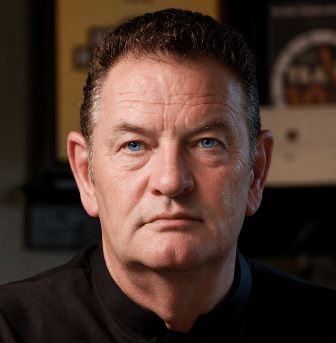
As Carnival Calabar unveiled its 2026 theme, “Rethinking Our Collective Destiny,” one voice at the gathering offered a reminder that the festival’s influence stretches far beyond Cross River State—and even beyond Nigeria’s borders.
The unveiling of the Carnival Calabar 2026 theme at Eko Hotels & Suites in Victoria Island, Lagos, was filled with the usual energy that accompanies the countdown to Africa’s biggest street festival. Tourism stakeholders exchanged ideas, cultural enthusiasts reflected on past editions, and government officials outlined their vision for the future.
Yet amid the discussions about tourism growth, economic opportunities, and cultural promotion, one remark stood out for its sincerity.
“I say our, like you’ve noticed I’m not Nigerian, but I am Calabar.”
The words came from Paul Kavanagh, General Manager of the Wheatbaker Hotel and a hospitality executive whose professional journey in Nigeria includes leadership roles at Obudu Mountain Resort and Tinapa. It was a simple statement, delivered almost casually during an interview with ATQ News, but it revealed something deeper about Carnival Calabar’s enduring appeal.
For Kavanagh, Calabar is not merely a destination. It is a place that has become part of his identity.
And perhaps that is why the newly unveiled theme, “Rethinking Our Collective Destiny,” feels particularly fitting for a festival that continues to connect people across cultures, professions, and nationalities.
A Festival Rooted in Place, Yet Global in Reach
When asked whether Carnival Calabar’s influence extends beyond Cross River State, Kavanagh did not hesitate.
“Oh, absolutely. First and foremost, Carnival and Festival is for Calabar and it is for the people of Cross River. But it extends way beyond Calabar. In fact, it extends around the world because it’s about raising the profile of Calabar, raising the profile of Nigeria.”
His response captured one of the defining characteristics of the carnival.
While deeply rooted in the traditions and identity of Cross River State, Carnival Calabar has evolved into a global cultural platform. Over the past two decades, it has welcomed visitors from across Nigeria and beyond, becoming one of the country’s most visible tourism assets.
For many international visitors, the carnival serves as an introduction to a different narrative about Nigeria—one defined not by headlines but by creativity, hospitality, culture, and celebration.
Kavanagh sees this role as increasingly important.
“It is the biggest street festival in the whole of Africa.”
Whether visitors arrive from neighboring African countries, Europe, North America, or the Nigerian diaspora, the carnival offers an opportunity to experience a side of Nigeria that often receives less international attention.
The Journey Through Lagos
As General Manager of one of Lagos’ leading hotels, Kavanagh also sees firsthand how Carnival Calabar influences travel patterns across the country.
The impact is not always direct, but it is significant.
During the festive season, many Nigerians living abroad return home for what has become popularly known as “Detty December.” Lagos often serves as the first stop on that journey.
According to Kavanagh, many of those visitors eventually continue on to Calabar.
“They will spend the week before Christmas in Lagos and the week after Christmas in Calabar. And then they’ll come back out through Lagos as they depart Nigeria.”
His observation highlights an important aspect of festival tourism.
Major cultural events rarely benefit only their host destination. They create travel corridors that support airlines, hotels, restaurants, transport providers, and tourism operators across multiple cities.
In that sense, Carnival Calabar functions not only as a Cross River event but as a contributor to Nigeria’s broader tourism ecosystem.
Twenty-One Years of Shared Memories
This year marks the 21st edition of Carnival Calabar, a milestone that invites reflection on its legacy.
For Kavanagh, some of his most cherished memories are not necessarily tied to the grand parade itself.
Instead, he recalls the wider festival experience that surrounds the carnival season.
“My favorite memory of Calabar Carnival was actually watching Aṣa in the festival about two weeks before Carnival.”
The comment offers an important reminder that Carnival Calabar is more than a single-day event.
Over the years, it has expanded into a diverse calendar of activities that includes the Children’s Carnival, the Bikers’ Carnival, music concerts, cultural showcases, and the increasingly popular dry runs that build anticipation long before the main parade.
These events create opportunities for participation across different age groups and interests, ensuring that the carnival remains accessible to a broad audience.
Reflecting on these experiences, Kavanagh spoke about what they collectively represent.
“All of that positivity, all of that joy, all of that celebration of our nation’s culture, our nation’s history.”
The statement aligns closely with the spirit of the 2026 theme.
“Rethinking Our Collective Destiny” is, at its core, a call to examine how communities move forward together while remaining connected to their roots. Carnival Calabar provides a living example of that balance.
Its colourful costumes and creative performances embrace innovation and contemporary expression, yet they remain anchored in cultural memory and heritage.
Bridging Tradition and Modern Identity
One of the most fascinating tensions within modern cultural festivals is the challenge of remaining authentic while evolving with changing times.
Carnival Calabar has navigated that journey for more than two decades.
The carnival’s bands continue to interpret themes through elaborate costumes, choreography, and storytelling that draw from history, folklore, and contemporary realities. At the same time, digital platforms and social media have expanded the festival’s reach far beyond the streets of Calabar.
Kavanagh sees that expansion as essential.
“The wider that social media can carry that message around the world, the better.”
His perspective reflects the changing nature of cultural promotion in the twenty-first century.
Today’s festivals are experienced not only by those physically present but also by global audiences watching online. Every image shared, every performance streamed, and every story told contributes to how a destination is perceived internationally.
For Calabar, that visibility has become a powerful tool for cultural diplomacy and tourism promotion.
The Role of Government and Industry
Kavanagh also used the occasion to highlight the importance of collaboration between government and the private sector.
In his view, creating a thriving tourism industry requires reducing barriers and making travel more accessible.
“The easier they make it for the private sector to flourish, would be the best way.”
He specifically pointed to visa accessibility and regulatory processes as areas where improvements could encourage more visitors to explore Nigeria.
While his comments reflected personal insight rather than policy recommendations, they echoed a broader conversation within the tourism industry about competitiveness and visitor experience.
The success of festivals such as Carnival Calabar often depends not only on cultural programming but also on how easily visitors can access destinations and move around the country.
A Story Bigger Than the Festival
As the unveiling ceremony drew to a close in Lagos, the significance of Carnival Calabar’s new theme lingered in the room.
“Rethinking Our Collective Destiny” is ultimately a conversation about shared aspirations—about how communities define themselves and imagine their future.
For Paul Kavanagh, that future is inseparable from the cultural stories that continue to shape Calabar.
His declaration, “I am Calabar” may have drawn smiles from those listening, but it also captured something profound about the festival’s enduring power.
The greatest achievement of Carnival Calabar may not be the size of its crowds, the scale of its parades, or even its status as Africa’s biggest street festival.
It may be its ability to make people feel connected—to a place, to a culture, and to one another.
As the carnival enters its third decade, that sense of belonging remains one of its most valuable legacies, and perhaps its strongest guide for the future.
By: Sam Opoku
