
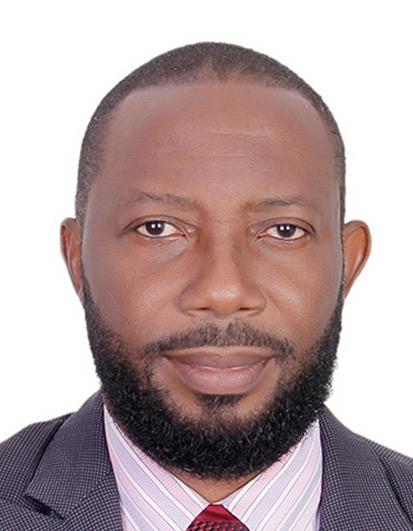
Captain Warredi Enisuoh, Executive Director, Operations and Technical, Tantita Security Services, has called for the deployment of smart surveillance systems, drones and improved port designs to tackle insecurity and protect the movement of goods across Nigeria.
Enisuoh, who is chairman of the JustNews second edition of the Transport Summit, said security awareness, technology and improved logistics infrastructure were essential to addressing the country’s security challenges.
Speaking on the summit’s theme, “Navigating Global Disruption and the Road Ahead: Mobility, Energy, and Trade Facilitation for Resilient Future,” he said security education should be introduced into the school curriculum to prepare children for the growing threats facing the country.
“We should start teaching insecurity in school now. Because those who will be kidnapped tomorrow are free today, if you ask me,” he said.
According to him, public awareness is a critical part of security because criminals often exploit people’s lack of awareness to carry out attacks.
He also called for changes to the design and operation of Nigerian ports, arguing that existing logistics infrastructure was not adequately structured to address security threats.
“The design needs to change. Because sometimes even the design can kind of address your insecurity,” he said, adding that container stacking arrangements and surveillance systems could help prevent criminals from exploiting port facilities.
Enisuoh advocated the use of facial recognition cameras linked to command centres to identify and track individuals within ports and other strategic locations.
He also recommended the deployment of drones equipped with heat-detection technology to monitor vulnerable sections of roads and other areas prone to kidnapping.
“We can fly it with drones. We have drones, as I said, that can detect body heat,” he said.
He proposed that states deploy drones to patrol designated areas, not only to combat kidnapping but also to secure the movement of goods.
The Tantita executive director further identified poor road conditions as a security risk, noting that delays caused by bad roads could expose travellers and goods to attacks.
On aviation security, Enisuoh said airports had performed better than maritime facilities, citing fencing, access controls and auditing systems as measures that had strengthened security in the aviation sector.
He said the maritime industry could learn from the aviation sector’s approach to security management.
On intermodal transportation, Enisuoh said Nigeria had historically failed to plan its transport infrastructure around the integration of different modes of transport.
He noted that some countries had developed airports and seaports close to each other, allowing air and maritime cargo to be handled through integrated logistics systems.
“Here we are still operating in silos,” he said.
He urged Nigeria to incorporate multimodal transportation into future infrastructure planning, adding that ports and airports should be redesigned or upgraded as they age and become inadequate for modern demands.
Enisuoh also called for deeper ports capable of accommodating larger vessels, arguing that this could make ship movements easier to monitor and improve operational efficiency.
He cited the Port of Los Angeles as an example of automation, where robots handle operations such as cargo discharge and container stacking, while digital systems identify drivers and verify container numbers.
According to him, reducing human intervention through automation could improve security and limit opportunities for fraud.
On oil and gas security, Enisuoh said Nigeria could reduce pressure on the sector by developing its other mineral resources and regulating them effectively.
He argued that expanding mineral exploration could increase national wealth and create alternative economic opportunities.
However, he warned that oil theft and maritime crime were not solely the work of local operators, stressing the need for stronger protection of Nigeria’s waters.
Enisuoh disclosed that Tantita had arrested two ships within the preceding 48 hours, adding that the company had introduced long-range drones capable of flying from Warri to Ghana for maritime surveillance.
“We have to be more aware our maritime patrols should increase,” he said.
He added that protecting Nigeria’s waters was important not only for oil security but also for fisheries, alleging that fish caught in Nigerian waters were sometimes processed offshore and sold locally as imported products.
Enisuoh said stronger maritime patrols, improved surveillance and the deployment of technology would be necessary to address the range of security threats affecting Nigeria’s transport and logistics systems.
