
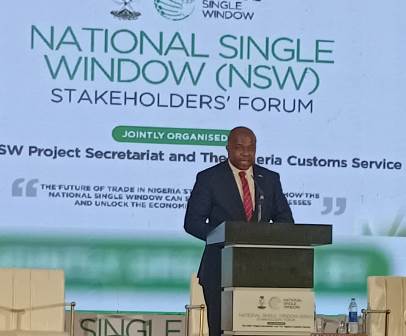
The Registrar and Chief Executive Officer of the Council for the Regulation of Freight Forwarding in Nigeria (CRFFN), Dr. Kingsley O. Igwe, has called on stakeholders across all sectors of trade and logistics to urgently adopt the National Single Window (NSW) platform, describing it as a critical step toward transforming Nigeria’s economy and positioning the country as a leading trade hub in Africa.
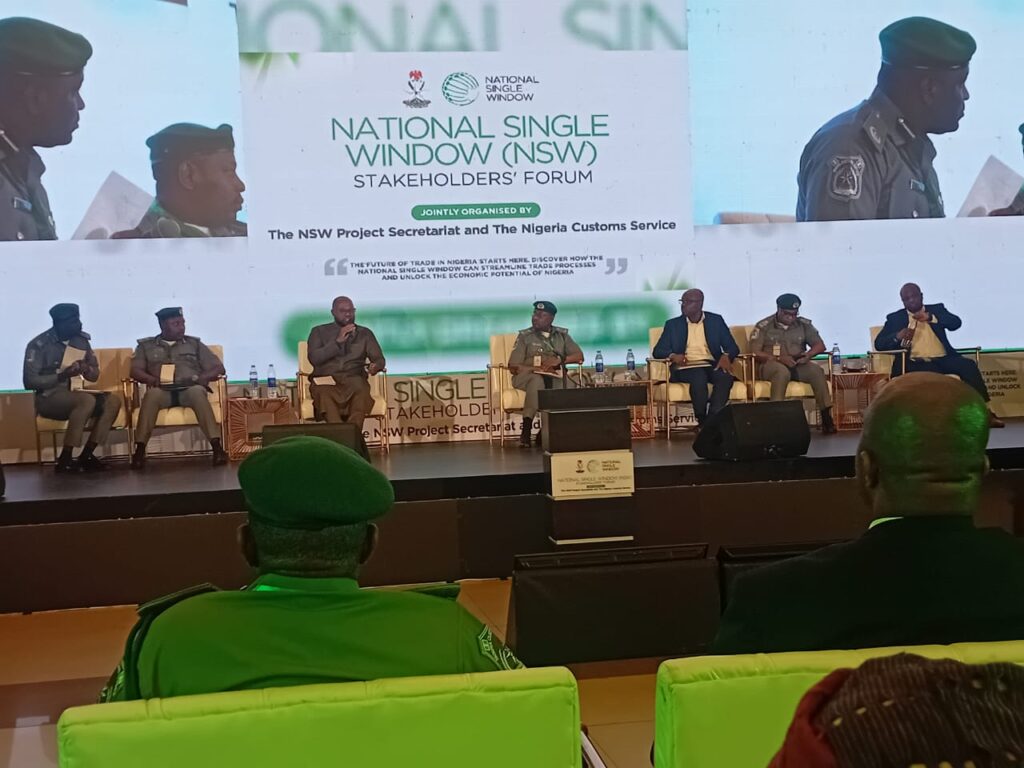
Speaking at the National Single Window Project Stakeholders’ Forum held in Lagos and jointly organized by the National Single Window Secretariat, the CRFFN, and the Nigeria Customs Service, Dr. Igwe emphasized that the NSW represents a “national economic lifeline” capable of reducing logistics costs by up to 30 percent, enhancing transparency, and improving Nigeria’s global competitiveness.
He explained that the platform — a digital one-stop system that integrates all trade-related documentation and approvals into a single interface — has been successfully implemented in countries like Singapore, South Korea, and Rwanda, yielding remarkable results in efficiency and investment growth.
“Nigeria is Africa’s largest economy and the gateway to West and Central Africa, yet our businesses continue to struggle under fragmented processes, duplication of documentation, and costly delays. The National Single Window is the game changer that will end these inefficiencies,” Dr. Igwe stated.
The CRFFN boss outlined the wide-ranging benefits of the NSW for various sectors:
- Large Corporations would enjoy faster transactions, lower costs, and greater global competitiveness.
- Small and Medium Enterprises (SMEs) would gain simplified access to trade tools and markets, helping them formalize and scale their operations.
- Manufacturers would see faster clearance of raw materials and equipment, boosting productivity and output.
- Government agencies would benefit from real-time data, reduced leakages, and improved ranking in the Ease of Doing Business Index.
- Freight forwarders and logistics operators would experience reduced paperwork, predictable operations, and digital cargo tracking.
Beyond the operational benefits, Dr. Igwe stressed that the full adoption of the NSW would help Nigeria realize the objectives of the African Continental Free Trade Area (AfCFTA) by harmonizing trade processes with continental and international best practices.
He, however, cautioned that the success of the initiative would depend on collaboration and commitment among stakeholders, urging government agencies, private sector operators, and financial institutions to embrace digitalization and align their operations with the system.
“The time for half-measures has passed. If Nigeria is to rise as a competitive logistics and trade hub, the National Single Window must not only be adopted but also owned and championed by every stakeholder,” he said.
Dr. Igwe concluded by describing trade as “the engine of growth” and logistics as “the fuel that drives it,” stressing that the National Single Window would ensure that fuel flows freely through a transparent, digital, and efficient ecosystem.
“The future of Nigeria’s economy depends on it. The time to adopt the National Single Window is now,” he declared.
