
In 1973, Mzee Jomo Kenyatta handed this nation a building that was decades ahead of its time. The Kenyatta International Convention Centre, with its cylindrical tower and its Amphitheatre shaped like a traditional hut, announced to the world that a young African republic could host the world.
For half a century it did exactly that. UNCTAD 14 in 2016. TICAD VI, the first Tokyo International Conference on African Development ever held on African soil. The Sustainable Blue Economy Conference in 2018, with more than 18,000 delegates. The Africa Climate Summit in 2023, with some 20,000. And in May this year, the Africa Forward Summit, where more than 30 Heads of State and over 4,000 delegates gathered in Nairobi for the first Africa-France summit ever held in an Anglophone country.
KICC carried Kenya’s diplomatic and business tourism ambitions on its shoulders for fifty years. But fifty years is a long time, and the world’s meetings industry has moved on. Kigali built a showpiece. Addis Ababa, Cape Town and Durban kept investing. Nairobi kept squeezing ever larger events into a venue designed for the 1970s.
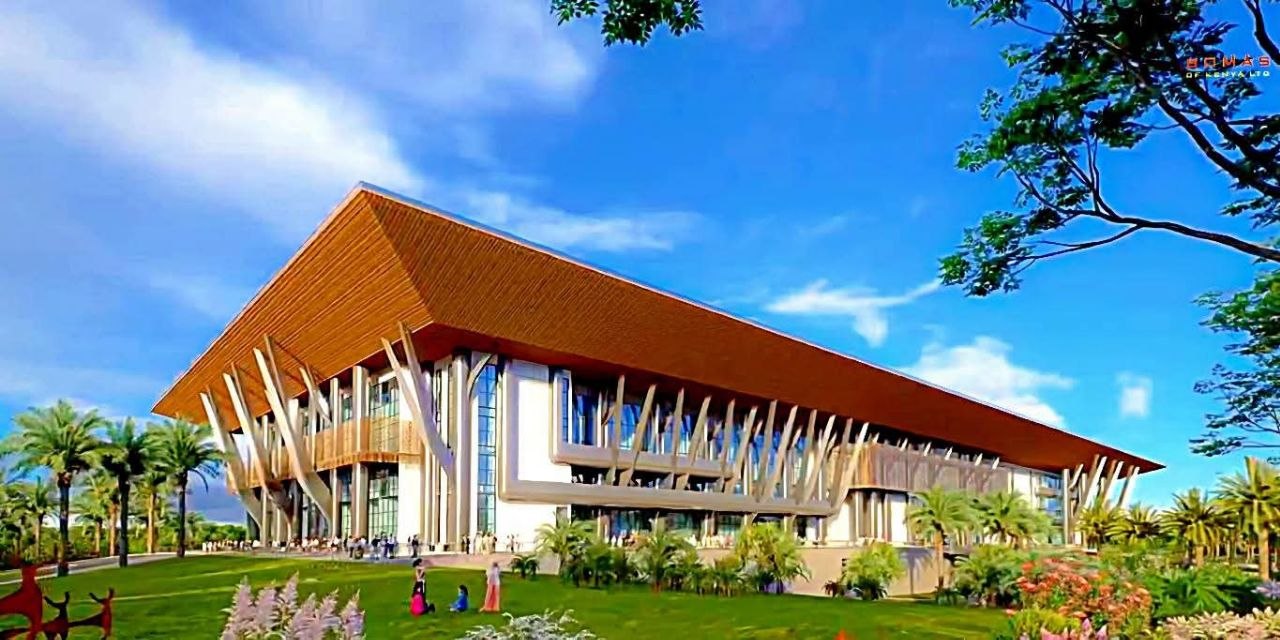
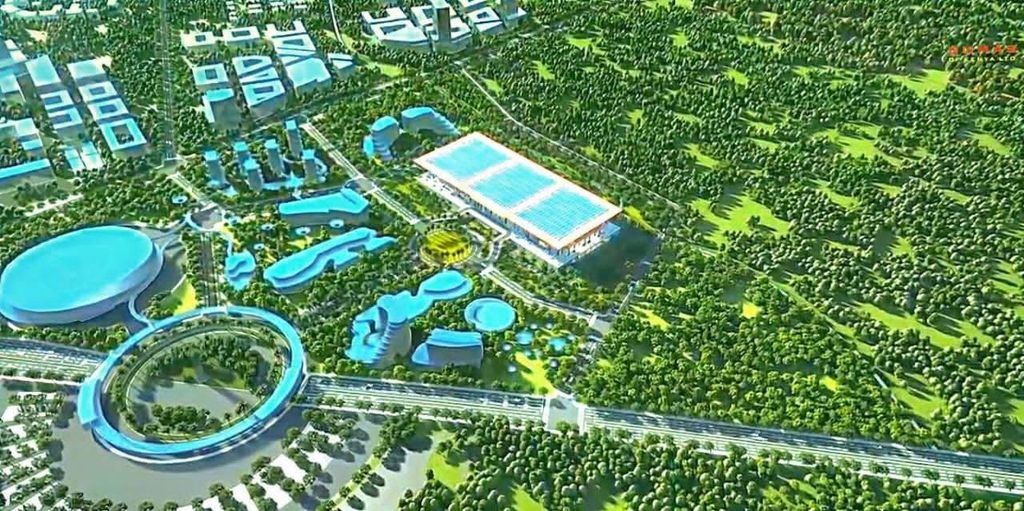
That is why the Bomas International Convention Complex matters. Rising on more than 323,500 square metres at the junction of Lang’ata and Magadi Roads, the BICC is designed to hold 11,000 people at a time: a 5,000 seat convention hall, a 3,500 seat auditorium, a ballroom, some 35 meeting rooms and a presidential pavilion able to host up to 30 Heads of State. It is solar powered. Two five-star hotels are planned on site. The main structure is up, and the United Nations, the Africa Cup of Nations and the Kenya Bureau of Standards have already booked it.
Mzee gave us KICC. President William Ruto is giving us Bomas.
The real story of a convention centre is not the building. It is what happens to an entire economy when 8,000 delegates land in Nairobi in the same week.
1 It starts at JKIA. Every one of those delegates arrives on an airline, pays airport and landing charges, and is met by a taxi, a shuttle or a chauffeur-driven car. That is before anyone has picked up a lanyard.
2 Then comes the bed. Put 8,000 delegates in Nairobi for an average of four nights and you have generated 32,000 bed nights in a single week. That fills hotels from Westlands to Upper Hill, from Karen to Lang’ata, and spills into serviced apartments, guest houses and Airbnbs across the city. When Nairobi sells out, the overflow goes to Machakos, Naivasha and Kajiado. Occupancy jumps, and so do average room rates. Every revenue manager in this country knows exactly what a city-wide compression week does to the bottom line.
READ: Africa: Kenya Tourism Stakeholders Celebrate 30 Years of Ecotourism Kenya at EcoWarrior Awards 2026
3 Then come the eateries. Delegates do not eat conference sandwiches for dinner. They go out. The nyama choma joints, the fine dining rooms, the rooftop bars, the coffee shops and the Lang’ata Road institutions a stone’s throw from Bomas all fill up. Behind every plate is a farmer, a butcher, a fishmonger, a baker and a supplier.
4 Then come the hundreds of trades nobody sees: interpreters, audiovisual technicians, printers, event planners, florists, security firms, decorators, photographers, tailors, Maasai Market traders, curio sellers and the boda boda rider who delivers the forgotten charger at midnight.
5 Kenya’s own industry estimates put the spend of an international delegate at roughly Sh376,000 per conference trip of three to six days. Multiply that by 8,000 delegates and a single large convention injects something in the order of Sh3 billion into the economy. In one week. From one event. And Bomas is built to host many such events a year, sometimes several at once.
7 Why a delegate is worth more than a tourist
This is the part many people miss. A conference delegate is the most valuable visitor any destination can attract, and the reason is simple: somebody else is paying. The overwhelming majority of delegates are sponsored by their companies, governments, multilateral agencies, NGOs and professional associations. Their flights, hotels and per diems are covered. They are not haggling over a package rate negotiated by a tour operator in Europe twelve months in advance.
They book premium rooms, eat at good restaurants, take taxis rather than walk, and buy gifts to take home. International studies of Kenya’s meetings market have long put average spend per delegate at several thousand US dollars per conference, well above the typical leisure tourist.
READ: Africa: Kenya Tourism Partners Rally Behind 5.5 Million Visitor Target at KATO Gala
And unlike leisure travel, conferences are largely immune to the seasonality that has plagued Kenyan tourism for decades. A medical congress does not care about the long rains. A global summit does not wait for the wildebeest migration. Conference business fills the low season, keeps staff employed all year round and stabilises cash flow for every hotel in the capital.
8 The pre and post conference dividend
Here is where Kenya holds a card no other convention city on earth can play. The BICC sits minutes from Wilson Airport, the busiest light aircraft hub in East Africa. A delegate can walk out of the closing plenary on Thursday afternoon and be in the Maasai Mara by sundown on a scheduled light aircraft. Or take a tour vehicle to Amboseli to see elephants beneath Kilimanjaro, Lake Nakuru for rhino and flamingo, or Naivasha for a boat ride and a walking safari on Crescent Island. Or fly to Mombasa, Diani, Malindi, Watamu or Lamu for a few days on the Indian Ocean. Or take the SGR to the coast.
9 Nairobi is the only capital city in the world with a national park within its boundaries, and Bomas sits right on its doorstep. A delegate can see a lion in the morning and chair a session after lunch. Add the Giraffe Centre and the Sheldrick elephant orphanage in Karen and you have a destination that sells itself before the conference has even ended.
10 Every pre and post conference extension turns a four night city stay into a ten night Kenyan holiday. If just one in five of those 8,000 delegates extends, that is 1,600 additional safari and beach travellers, many bringing a spouse, booking lodges, camps, light aircraft seats, guides, drivers and beach hotels. That money does not stay in Nairobi. It reaches Narok, Kajiado, Nakuru, Kwale, Kilifi and Lamu. It reaches the community conservancies that protect our wildlife. It reaches the village.
From delegate to repeat visitor to investor. The multiplier does not stop when the delegate flies home.
11 In more than thirty years in this industry I have seen it again and again. A delegate who has a great experience goes home and talks. Some come back with their families for a proper holiday. Some recommend Kenya as the venue for their association’s next congress. Some fall in love with this country so completely that they return as investors. They open offices, set up regional headquarters, buy into hotels and lodges, fund startups and partner with Kenyan businesses.
Nairobi already hosts the UN Environment Programme, UN-Habitat and hundreds of regional headquarters. Many of those decisions began with a conference. A convention centre is not just a tourism asset. It is the most effective investment promotion tool a country can build.
Answering the critics
Let me be fair. The project has its critics, and some of their questions are legitimate.
The deadlines have slipped. The original April 2026 completion date moved to September and now to December, and the Africa Forward Summit had to move to KICC. Reported cost estimates have climbed from Sh31.5 billion toward figures as high as Sh42 billion. Members of Parliament have questioned the Ministry of Defence’s role in delivering it. Culture lovers worry about the future of Bomas as the home of Kenya’s heritage.
These concerns deserve straight answers, and the government owes Kenyans full transparency on costs and contracts. But let us keep perspective.
Major convention centres around the world routinely miss their first deadlines. The President says the project is being funded through the Tourism Levy, money collected from the tourism industry and finally being reinvested in tourism infrastructure. The plans include a heritage zone that keeps the cultural soul of Bomas alive. And KICC does not become redundant. With two world-class venues, Nairobi can host two major events at the same time, which no other city in the region can do.
A delayed building that stands for fifty years is far better than a cheap one that was never built.
What we must do to cash the cheque.
A building alone does not fill itself. If Kenya is serious about turning Bomas into billions, the hard work begins now.
1 Bid aggressively. The Kenya National Convention Bureau must be resourced to chase rotating international association congresses: medical, scientific, engineering, legal, financial. These are booked three to seven years ahead. The bidding should have started yesterday.
2 Remove visa friction. No delegate should struggle with an online entry process or an extra fee. Conference delegates registered for approved events should enjoy fast-tracked, low cost entry.
3 Expand air connectivity. More direct flights to JKIA, and a strong Kenya Airways, are the arteries of the meetings industry
4 Fix the last mile. Dualling the road between Bomas and Karen is a start. Delegates must move between hotels, the venue and the airports without losing two hours in traffic.
5 Build the delegate package. Hotels, airlines, DMCs, lodges and beach resorts must work together on ready-made pre and post conference itineraries, sold at the point of registration.
6 Run it professionally. Bring in experienced venue management, protect it from political interference, and publish annual performance data so Kenyans can see the return on their investment.
7 Train our people. Utalii College and our hospitality schools must produce the event managers, chefs, technicians and front of house teams a world-class venue demands.
Give him his flowers
Every generation of leadership leaves behind landmarks. Mzee Jomo Kenyatta gave us KICC. Mzee Moi gave us Kasarani. Mwai Kibaki gave us the Thika Superhighway, Uhuru gave us Nairobi Express way and the Dongo Kundu bypass at the coast. These were all criticised in their day, and today we cannot imagine Kenya without them.
The Bomas International Convention Complex will join that list. Twenty years from now, when a global summit opens in Nairobi and 11,000 delegates fill its halls, nobody will remember the missed deadlines. They will remember who had the vision and the courage to build it.
Politics will come and go. Elections will be won and lost. But infrastructure endures, and so does the economic multiplier it creates. On this one, President Ruto William Samoei Ruto deserves credit. Love him or hate him, give the man his flowers.
As always, I choose to remain an optimist
Mohammed Hersi.
