
THE marketing of nations is the strategic approach to building wealth for a nation. National branding is a very delicate task that requires a fair deal of knowge of a country, its people and tact. Jay Wang argues that “despite the growing interest in how countries promote their national image, the potential and role of branding in a nation’s communication has often been assumed but not demonstrated”.
Zambia has been struggling in coming up with a brand that sticks, sells and stands the test of time. Every time I travel abroad and I am asked which country I come from, and I mention “Zambia”, then some people say: “Oh! South Africa?” So Zambia is presumed to be South Africa or in South Africa.
According to Wang, storytelling is the foundation for brand communication. Co-creating a nation brand is by demonstrating how a nation and its communication can enrich its audience’s lives. It is, therefore, paramount that the strategic use of stereotypes provides delightful surprises in the communication.
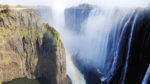
We need, as a country, to come up with something both tangible and intangible that will define us as Zambians. Is it possible to have one intangible cultural heritage that can speak for Zambia? What national heritage can we preach? Let us for a moment forget the Victoria Falls. What else does Zambia have? What else can Zambia develop?
What brand archetype can Zambia communicate? What makes Zambia unique and different from other African countries? What personality does Zambia portray? These are the questions that can give us the answers that will put our nation on the world map of being a preferred tourism destination. For our brand to be strong and stand the test of time, it needs to be different, relevant, esteem and familiar.
‘The incredible India’, ‘Turkey unlimited’, ‘Egypt, where it all begins’, ‘Japan, endless discovery’, and ‘Tanzania, the land of Kilimanjaro, Zanzibar and the Serengeti’ are just some examples of great tourist destinations.
For a successful national branding, it is important that the Government ensures that its policies and practices are co-ordinated with the desired image of the country through tourism, foreign investment and other major industrial enterprises. We say that our country is rich in natural resources, then we can say ‘Zambia! The land of possibilities’.
As a country at town or provincial level, we need to promote each town with its endowments. Ndola is known as ‘The friendly city’, Solwezi – ‘The town that never sleeps’, Livingstone – ‘The tourist capital’.
According to Anholt (2004), national branding is the practice of applying brand strategy and other marketing techniques and disciplines to the economic, social, political and cultural development of cities, regions and countries.
So, what core elements do we have as Zambia in terms of our physical environment, public places, entertainment, recreation attractions, nature of our people, natural attractions, traditional customs and festivals or ceremonies? These will define the core elements of place branding.
We can mention a few resources that Zambia has: abundant water, wonderful climate, waterfalls, rich cultures, fun, friendly people, traditional ceremonies, heritage sites and now the Samfya beach. This is too much resource to not sing and shout about. Zambia indeed is ‘The land of endless bliss’.
WHY BRAND NATION?
Due to globalisation, countries’ cultures, products and services, and reputation are all fusing into one global community. This has created a competitive urge in terms of tourism, attracting investment and foreign exchange in turn. Visitors, investors and residents all tend to seek cities where aspects of comfort, economic development, social and cultural aspects and political stability satisfy their individual and differentiated preference.
National branding, therefore, is aimed at creating a formidable market environment for foreign direct investment, tourism, trade and political relations.
HOW CAN WE BRAND ZAMBIA?
What should make one come to Zambia as a tourist and not go to another country? We must as a country, through the relevant government wings and corporate world, increase the itinerary for our visitors.
Let’s preach our culture. Let’s introduce virtual tourism. This is where we can give our tourists an experience of the Victoria Falls knife bridge, take them on the Zambezi water rapids, bungee jumping, a taste of Mukuni Village, the national parks, various traditional ceremonies, the northern waterfalls, the Kariba Dam, various state-of-the-art manufacturing plants, the Samfya beach, all packaged virtually and all can be experienced in Lusaka without an individual having to physically see all these places.
We can also re-create state-of-the-art historical sites. What about the legend of Nyami Nyami? We can create a Nyami Nyami centre that can host many mystical artifacts that the country has. Mukuni Village can also be given a facelift. The corporate entertainment and hotel industry must be encouraged to venture into other parts of the country by giving them incentives. And as citizens of Zambia, let us change our attitudes and start supporting local tourism by becoming local tourists.
We must, therefore, communicate the right image and position of Zambia in the minds of people globally as a desired destination. ‘Zambia! Embrace you in our culture’.
Source: daily-mail.co.zm
