
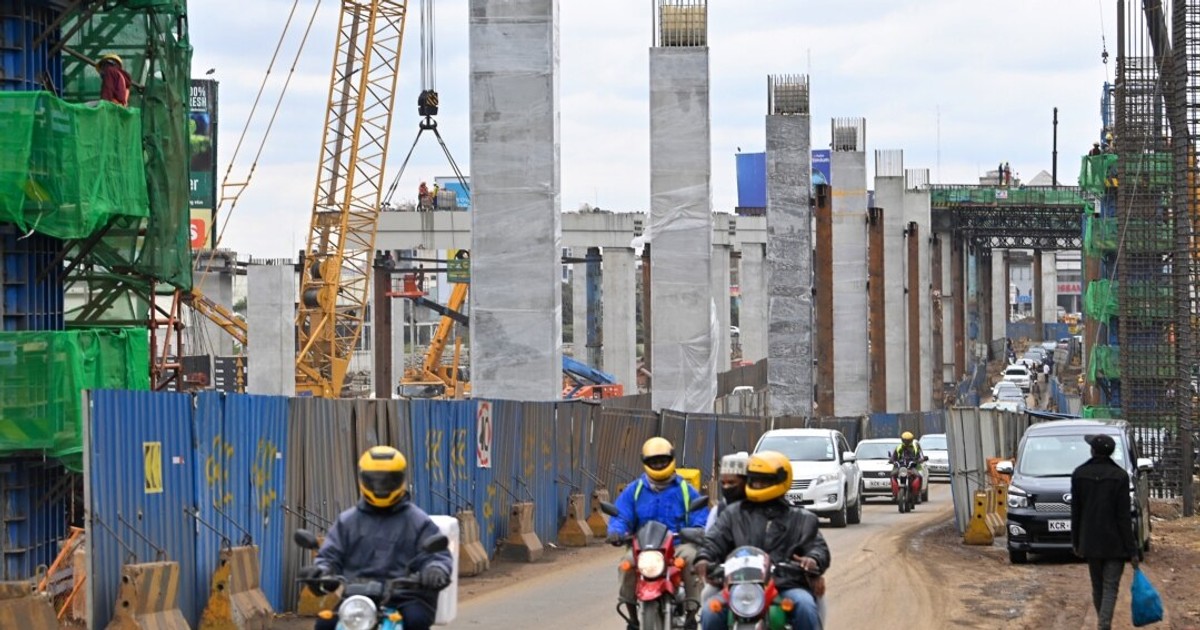
China is re-establishing its footprint in East Africa’s infrastructure landscape as Kenya moves ahead with a $1.5 billion highway expansion, signalling the revival of large-scale Chinese-funded projects in the region after a period of slowed engagement.
According to africa.businessinsider.com, the dual-phase project will be financed through a debt–equity public-private partnership (PPP) model, a structure that Beijing and African governments are increasingly adopting as concerns grow over traditional sovereign borrowing and rising debt pressures.
“We don’t have any room to borrow any more money,” Kefa Seda, director general of the Public-Private Partnerships directorate at Kenya’s finance ministry, told Reuters.
Strategic transport corridor upgrade
The highway upgrade targets one of Kenya’s most important trade routes: the corridor linking the Port of Mombasa to the country’s western region and to landlocked neighbours, including Uganda, via Nairobi.
The expansion is expected to ease congestion, reduce travel time and support regional trade flows.
After more than a decade of investing billions in African infrastructure, China sharply reduced its lending around 2019 as debt sustainability concerns mounted in countries like Kenya.
But Beijing is now recalibrating its approach. At last year’s Africa–China summit, it pledged $50 billion in credit and investments over three years, signalling a renewed strategic push.
Under the project’s revised financing structure, 75% of the capital will be sourced from debt, and 25% from equity. The first phase, valued at $863 million, will be carried out by China Road and Bridge Corporation (CRBC) in partnership with Kenya’s National Social Security Fund (NSSF).
This phase will upgrade 139 kilometres of existing single-lane highway into four- and six-lane dual carriageways.
NSSF will contribute 45% of the equity stake in this phase.
The second phase, valued at $678.56 million, will be undertaken by Shandong Hi-Speed Road and Bridge International, a subsidiary of Shandong Hi-Speed Group. This portion will convert a 94-kilometre single-lane stretch into a six-lane expressway.
The contractors have until the end of 2027 to complete construction, after which a 28-year toll concession will allow them to recover their investment and earn returns.
